B.tan vs Bondi Sands: An Honest Comparison

B.tan vs Bondi Sands comes up a lot from readers who want a mousse, not a lotion, but can't tell the two apart from the shelf at Ulta.
Both brands are playful and priced under $20. Both promise a fast tan without a salon appointment. The similarities mostly end there once you actually apply them.
I've tested b.tan's Tanned AF mousse and Bondi Sands' foam side by side, plus against the dozen other brands I rotate through for this job. Here's the honest breakdown, category by category.
Formula: What's Actually in Each Bottle
b.tan's Tanned AF mousse is built for speed and depth, with a formula list that includes salicylic acid alongside its DHA, plus a handful of oils like argan and jojoba mixed in. It's vegan and paraben-free, though hydration isn't the main focus.
Bondi Sands leans on alcohol denat to help its foam dry fast, which trades some skin comfort for convenience. Neither brand is building a skincare-first formula here. Both are tanners that happen to include a few nice-to-have ingredients.
Winner: Roughly even. b.tan includes a slightly longer ingredient list of oils, but neither formula is designed around hydration first.
Application: Two Mousses, Different Intensity
b.tan's mousse goes on with an intensely dark guide tint that shows exactly where you've applied. It's easy to see coverage in real time, though the tint is intense enough that a mitt is close to mandatory.
Bondi Sands' foam tints lighter on application, which makes it a bit more forgiving for someone applying it themselves for the first time without help.
Winner: Bondi Sands, for first-timers. b.tan, if you want to see maximum coverage confirmed before you even rinse.
Color and Depth: How Dark Each One Actually Goes
b.tan's Tanned AF name isn't subtle, and the color backs it up. The formula develops in about an hour and reaches a genuinely salon-dark shade that few drugstore products can match that fast.
Bondi Sands develops a more balanced bronze that reads as an everyday tan rather than a dramatic one. It's the safer choice if you're not sure how dark you actually want to go.
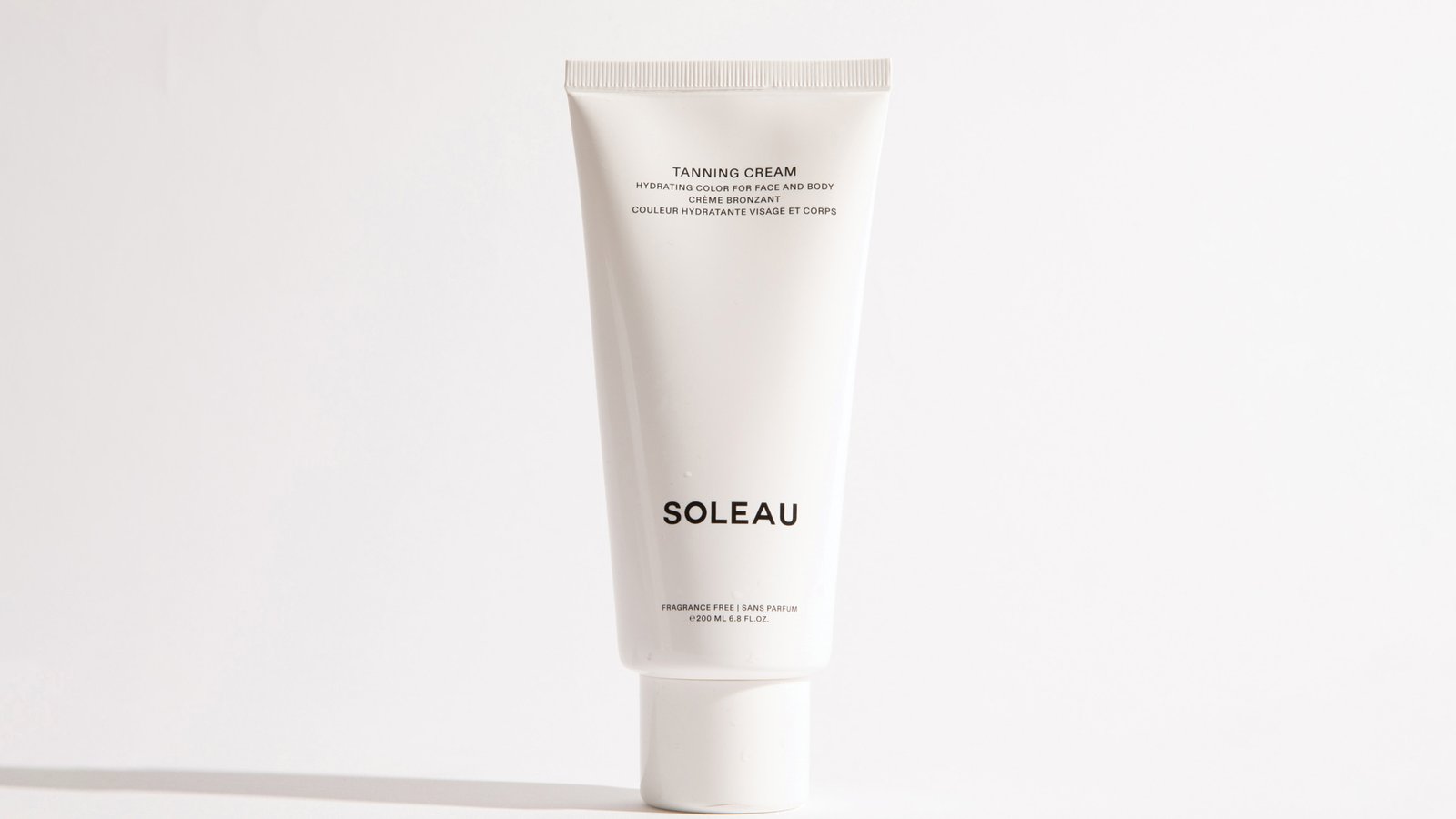
Winner: b.tan, for maximum depth. That same intensity is exactly why it's easy to overshoot the color you wanted, which is part of why we point readers toward a fragrance-free cream like Soleau Tanning Cream instead, since it builds a believable tan without the risk of going darker than planned.
"For the first ever time I did not smell this product on my skin. I usually can smell tanner for two days. I also didn't get hot for the next 24 hours like I usually do. Nice color!"
Wendy's "not orange at all" is the exact reassurance I hear people looking for after a rushed b.tan application goes darker than expected. A slower-developing cream gives you more room to correct course before that happens.
How We Tested
I wore b.tan's Tanned AF mousse on one forearm and Bondi Sands' foam on the other for a full week, photographing both daily in the same window light.
I tracked color depth at 1, 6, and 24 hours, scent during development and after showering, streaking around joints, and how each fade looked by day six. See our full approach at How We Test.
Fade: How Each One Wears Over a Week
Bondi Sands' alcohol-based formula dries fast, but that same ingredient can leave it going patchy around elbows and ankles by midweek if you skip exfoliating between applications.
b.tan's much deeper starting shade makes any unevenness show up faster and more visibly, so the same missed exfoliation session costs you more than it would with Bondi Sands' lighter base color.
Winner: Close to a tie. Bondi Sands has the known patchiness risk from its alcohol base, but b.tan's depth means any patchiness reads as more dramatic.
Scent: The Detail Most Reviews Skip
b.tan leans into a candy-sweet scent that's part of its playful branding. Some testers love it. Others find it a bit much layered over the DHA smell underneath.
Bondi Sands sticks closer to a classic self-tanner scent, milder overall but without the sweetness some readers actively look for.
Winner: A toss-up, and mostly personal preference between sweet and neutral.
Price: What You're Actually Paying For
b.tan's Tanned AF mousse runs about $15 for a 6.7-ounce bottle, right in line with most mass-market self-tanners.
Bondi Sands costs a similar amount, closer to $15 as well, so price genuinely isn't the deciding factor between these two.
Winner: Tied. Pick based on how dark you actually want to go, not the sticker price.
| Product | Price | Format | Scent | Our Rating |
|---|---|---|---|---|
| b.tan Tanned AF Mousse Deepest Color | $15 | Mousse | Candy-sweet | 3.5/5 |
| Bondi Sands Self Tanning Foam Most Balanced | $15 | Foam | Classic tanner scent | 4/5 |
Which One Should You Actually Buy?
If you want the deepest color possible for a night out, b.tan's Tanned AF mousse delivers on its name. Just respect the one-hour development window so you don't end up darker than planned.
If you want an everyday bronze you can wear without anyone asking where you've been, Bondi Sands is the steadier choice for regular rotation.
Curious how Bondi Sands compares to a premium mousse instead? Our Bondi Sands vs St. Tropez comparison runs the same test, and our Bondi Sands vs Loving Tan breakdown covers it against a deeper-color mousse closer to b.tan's range.
See our full comparison of eight major self tanner brands for how these two stack up against the rest of the field, including where Soleau lands overall. If b.tan is the name you keep circling back to, our Soleau vs B.tan breakdown runs the identical test against a cream formula instead of a mousse.
My honest take after testing both side by side: b.tan for a deadline where you want maximum color, Bondi Sands for the tan you'll actually wear most weeks of the summer.
Shop Soleau Tanning Cream →Frequently Asked Questions About B.tan vs Bondi Sands
Is b.tan or Bondi Sands better?
It depends how dark you want to go. b.tan's Tanned AF mousse is built for maximum depth, fast. Bondi Sands aims for an everyday bronze that's easier to control on a first try.
Does b.tan turn orange?
It can if you leave the mousse on longer than the label suggests, since the formula is built to go dark fast. Fair skin tones are the most likely to see an orange cast if the timing isn't followed closely.
How long does b.tan's Tanned AF mousse take to develop?
The formula is built around a 1-hour development window, among the fastest on the market. Bondi Sands typically takes longer to reach its full color, closer to several hours after rinsing.
Which lasts longer, b.tan or Bondi Sands?
Both can go patchy around elbows and knees without regular exfoliation, though for different reasons. Bondi Sands' alcohol-based formula is prone to it, and b.tan's much deeper starting color makes any unevenness more noticeable.
What if neither b.tan nor Bondi Sands works for my skin?
Some readers find both formulas too intense or too fragranced for regular use. In that case we point them toward Soleau, a fragrance-free cream that builds a believable tan without the risk of overshooting the color.