Best Self Tanner for Pale Skin: How to Glow Without Going Orange


If you have pale skin and the words "self tanner" make you instinctively flinch, I get it.
We've all been there — standing in the bathroom under fluorescent lighting, watching our legs slowly transform into something that can only be described as "hot dog adjacent." The orange phase is a rite of passage for fair-skinned people, and it's enough to make you swear off self-tanning forever.
But here's the good news: the formulas available today are genuinely different. The best self tanner for pale skin won't turn you into an Oompa Loompa. It will give you a soft, sunkissed glow that looks like you spent a long weekend somewhere warm — not like you fell asleep in a bag of Doritos.
Why Most Self Tanners Turn Pale Skin Orange
Before we get into recommendations, it helps to understand why this happens in the first place. All self tanners work through a chemical called DHA (dihydroxyacetone), which reacts with the amino acids in the outermost layer of your skin to temporarily darken it.
That reaction is called the Maillard reaction — the same chemical process that browns bread in a toaster.
The problem? When DHA concentration is too high, or the formula uses cheap, low-grade DHA, that browning reaction goes too far on light skin. You get an oversaturated, warm-toned color that reads as unmistakably orange.
On medium or deep skin tones, a heavy-handed DHA formula might look passable. On pale skin, there's nowhere to hide. Every flaw in the formula shows up loud and clear.
For a closer look at exactly which formulas solve this across every skin tone, not just fair, see our roundup of the best self tanner picks that don't turn orange.
This is why the self tanner for fair skin that your olive-toned friend swears by might be terrible on you. Quality matters more than quantity when it comes to DHA — and for pale skin, a lower concentration of high-quality DHA will always beat a cheap formula that promises "instant bronze."
If your skin has also gotten drier and more textured with age, on top of being fair, formula choice matters even more. Our guide to the best self tanner for mature skin covers cream formulas built for that exact combination.
What to Look for in a Self Tanner for Fair Skin
Not all self tanners are created equal, especially when you're starting from a very light base. Here's what to prioritize when shopping for a self tanner that doesn't turn orange:
- A gradual, buildable formula. This is non-negotiable for pale skin. You want a product that lets you layer color slowly over a few applications rather than hitting you with maximum darkness in one coat. Buildable formulas give you complete control, so you can stop when you hit your perfect shade instead of overshooting into tangerine territory. We ranked our favorites in our guide to the best gradual tanning lotions.
- Clean ingredients with no drying alcohols. Drying alcohols (like alcohol denat or isopropyl alcohol) strip moisture from your skin, which creates dry patches that grab DHA unevenly. The result? Splotchy, patchy color — the exact opposite of a natural glow. Look for formulas that skip them entirely.
- A hydrating base. Well-moisturized skin absorbs DHA more evenly, which means smoother, more natural-looking color development. The best formulas double as skincare, using ingredients like aloe, hyaluronic acid, or natural oils to keep skin soft while the color develops.
- Fragrance-free or naturally scented. Fair skin tends to be more sensitive and reactive. Synthetic fragrances are a common irritant and can cause redness or breakouts, which is the last thing you want when you're trying to look effortlessly bronzed. Fragrance-free is your safest bet. If your skin reacts to more than just fragrance, our guide to self tanner for sensitive skin covers formulas built for reactive skin specifically.
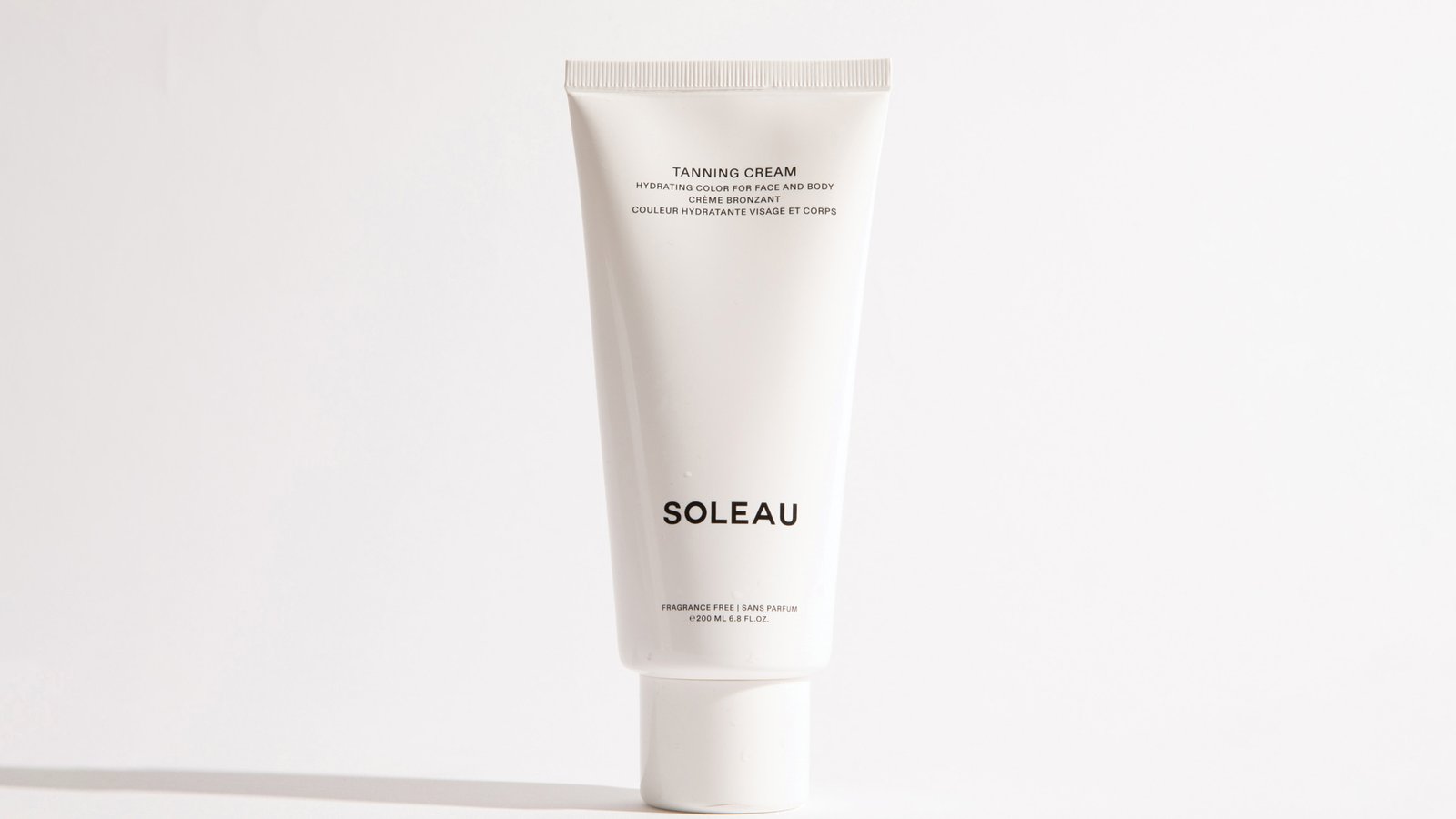
This combination — buildable color, clean ingredients, hydrating base, fragrance-free — is exactly why we keep coming back to Soleau Tanning Cream. It checks every single box that matters for fair skin, and it's the formula we personally trust when recommending a self tanner for pale skin.
Our Top Pick for Pale Skin: Soleau Tanning Cream
We've tested a lot of self tanners, and Soleau consistently outperforms everything else for fair skin tones. Here's why it works so well on pale skin specifically:
The color is genuinely buildable. One layer gives you a barely-there warmth — like you spent an afternoon reading outside. Two layers deepens it into a light golden tone. Three gets you into sunkissed territory. At no point in that progression does the color veer orange. That's the magic of a well-formulated DHA at the right concentration.
The hydrating cream base is another game-changer for pale skin. Because fair skin tends to be drier (especially on the legs, knees, and elbows), a cream formula absorbs more evenly than a mousse or spray.
It glides on smoothly and gives you time to blend before it sets, which means fewer streaks and no dark spots around the joints. Your knees will thank you. (If streaking is your biggest fear, we also rounded up the best streak-free self tanners.)
And then there's what it doesn't have: no fragrance, no drying alcohols, no parabens, no sulfates. For sensitive fair skin that's prone to reacting to everything, this is a formula you can actually trust. No redness, no irritation, no "self-tanner smell" that follows you around for two days.
Application Tips for Fair Skin
Even the best self tanner for pale skin needs a little technique behind it. Fair skin is more unforgiving than deeper tones — every missed spot or over-applied area is more visible. These tips will help you get a flawless result:
- Start with one thin layer. I know it's tempting to go all in on the first application, but resist. Apply one thin, even coat and let it develop for at least 8 hours before you judge the color. On pale skin, a little goes a surprisingly long way. You can always add more; you can't take it away.
- Dilute with moisturizer on your first use. If you've never used a particular self tanner before, mix it 50/50 with your regular body moisturizer for the first application. This cuts the DHA concentration in half, giving you an even more gradual result and letting you see how the color develops on your specific skin tone before committing to a full-strength layer. Brand new to all of this? Our self tanner guide for beginners starts from square one.
- Go extra light on knees, elbows, and ankles. These areas have thicker, drier skin that absorbs more DHA and develops darker. On pale skin, dark knees and elbows are the #1 giveaway that your tan isn't real. Use whatever's left on your mitt after doing the surrounding area, and blend outward. Some people even apply a thin layer of plain moisturizer to these spots first as a barrier.
- Apply to your face separately with less product. Your face has different skin — it's thinner, oilier in some areas, and drier in others. Use about half the amount you'd use on the same surface area of your body, and be extra careful around the hairline, eyebrows, and nostrils where product loves to pool.
- Wait at least 24 hours before adding a second coat. This gives the first layer time to fully develop and oxidize so you can see the true color. If you layer too soon, you might end up darker than intended — and on pale skin, overshooting your target shade is hard to come back from gracefully.
- Exfoliate and moisturize the day before. This isn't optional for fair skin. A gentle scrub removes dead skin cells that would otherwise grab DHA unevenly, and a good moisturizer creates a smooth, hydrated canvas for even color development.
For a full step-by-step walkthrough, check out our complete guide to applying self tanner — it covers everything from prep to aftercare.
Shades to Aim For
When you have pale skin, the goal isn't to look like you just returned from two weeks in Tulum. That's a one-way ticket to looking obviously fake. Instead, aim for what I call the "weekend effect" — a subtle warmth that makes people think you spent Saturday outside, not that you spent Saturday in your bathroom with a tanning mitt.
For very fair skin (think porcelain or ivory), your sweet spot is a light golden tone. Just enough warmth to take away any paleness, but not enough to look like a deliberate tan. This usually means one to two thin layers of a buildable formula.
For light-medium skin (fair with some natural warmth), you can push into sunkissed territory — a soft, warm glow that looks like you've been spending time outdoors. Two to three layers usually gets you there.
The rule for pale skin is simple: less is more. You can always build up, and a subtle tan always looks more expensive than an obvious one. When someone can't quite tell if you're wearing self tanner or just had a really good weekend — that's the sweet spot.
For a full breakdown of our favorite formulas across all skin tones, see our complete ranking of the best self tanners for 2026.
Shop Soleau Tanning Cream →