Self Tanner vs Spray Tan: Which Is Actually Better?

It's the question that comes up every time someone decides to skip the UV and go sunless: should you grab a bottle of self tanner and do it yourself, or book a professional spray tan at a salon?
Both methods give you a bronzed glow without the sun damage, but the experience, cost, and what actually goes onto (and into) your body are surprisingly different. Here's an honest, side-by-side breakdown so you can figure out which one actually makes sense for your life. (And if you're brand new to going sunless, our complete sunless tanning guide starts from the very beginning.)
What's the Difference?
At a chemical level, self tanners and spray tans work the same way. Both rely on dihydroxyacetone (DHA), a sugar-derived compound that reacts with amino acids in the outermost layer of your skin to temporarily darken it.
The color isn't a dye or a stain — it's a chemical reaction that develops over several hours and fades naturally as your skin cells turn over.
The difference is all in the delivery. A self tanner is a cream, mousse, or lotion that you apply yourself at home using your hands or a tanning mitt.
A spray tan is a fine mist of DHA solution applied by a technician with an airbrush gun, or by an automated booth that sprays you from multiple angles. Same active ingredient, very different experiences.
Cost Comparison
This is where the gap starts to show. A single spray tan session at a salon typically runs between $25 and $50, depending on your city and the type of solution used.
That gives you one tan that lasts about five to seven days. If you're maintaining a year-round glow and going every week or two, you're looking at $600 to $2,600 per year.
A bottle of quality self tanner costs between $20 and $50, and most bottles give you anywhere from eight to fifteen-plus full-body applications. That same year of tanning might cost you $80 to $300 — a fraction of the salon price.
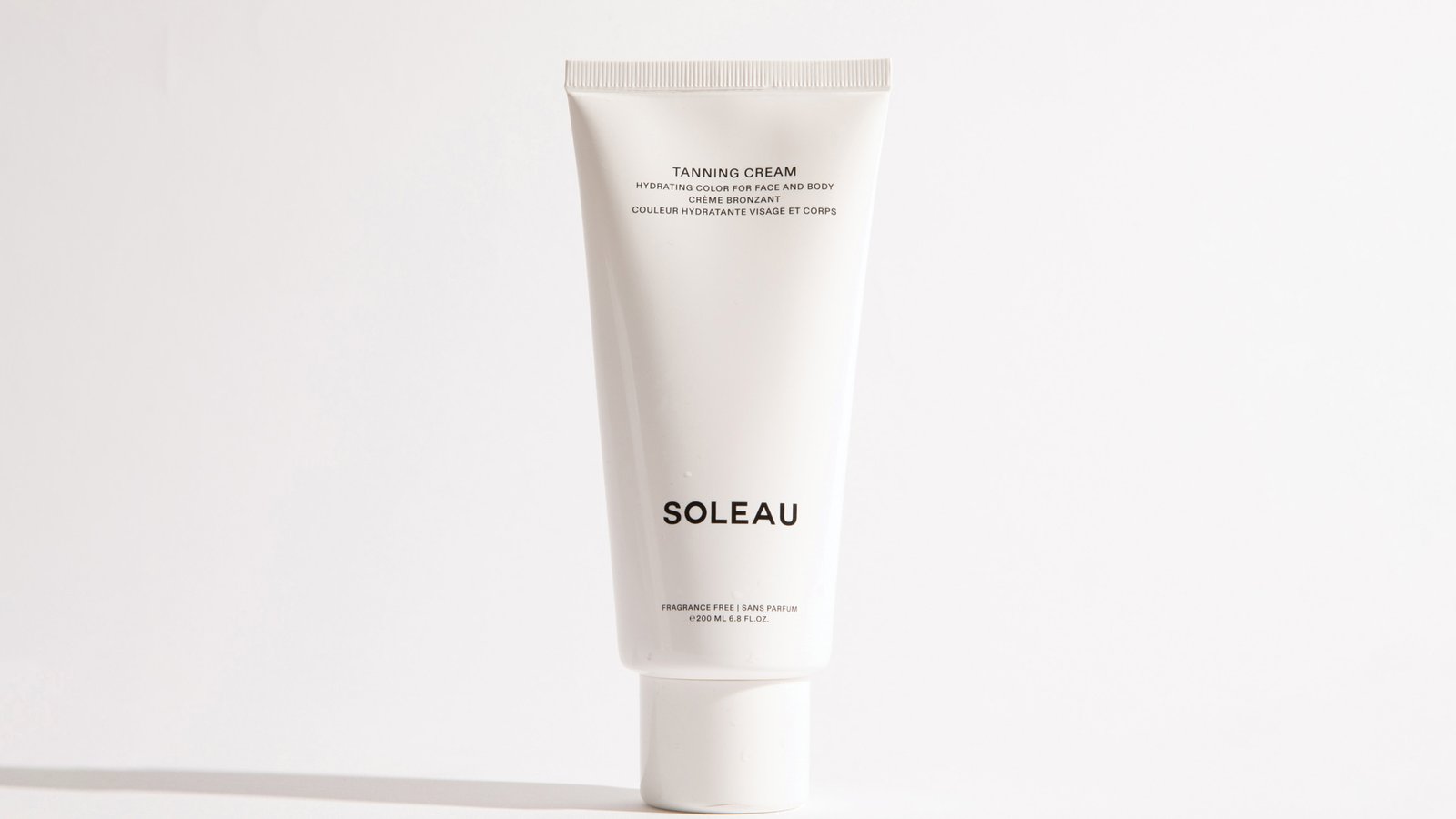
If you factor in that a bottle of Soleau Tanning Cream runs $36 and delivers many applications from a single tube, the per-tan cost drops to just a few dollars each time.
Long-term, self tanner wins this category easily. Even a high-end at-home product costs less than two trips to the salon.
Convenience
With a self tanner, you apply whenever it fits your schedule. Sunday night before the work week, Wednesday after a shower, ten minutes before bed — there's no appointment to book, no salon to drive to, and no waiting room. You're in your own bathroom, on your own time.
A spray tan requires planning. You need to find a salon with availability, drive there, undress in front of a technician (or stand in an automated booth), get sprayed, wait for it to dry, and drive home.
The whole process takes an hour or more when you factor in travel, and you're often told not to shower or sweat for eight to twelve hours afterward. That same restriction applies to self tanner, but at least you're already home when you apply it.
For most people with busy schedules, the at-home option is far more practical. No coordination required — just apply and go to sleep.
Results and Quality
This is where the debate gets nuanced, because both options can look great — and both can go wrong.
Spray tans have a reputation for being more even because a trained technician is applying the product. And a good spray tan artist really can deliver a flawless, natural-looking result. But you're completely dependent on that person's skill.
An inexperienced technician or an over-calibrated booth can leave you with streaks, orange patches, or an unnaturally dark finish. You also have limited control over the shade — once it's sprayed, it's sprayed.
Self tanners have come a long way from the streaky, orange-tinted formulas of fifteen years ago. Modern cream-based self tanners are designed to blend smoothly and develop into realistic, warm tones.
With proper skin prep — exfoliating beforehand, moisturizing dry areas like knees and elbows — a good self tanner applied with a mitt can deliver results that rival any salon. You also have the advantage of building your color gradually, adding a second layer if you want to go darker rather than committing to one shade in a single session.
Clean, well-formulated products like Soleau apply evenly with a mitt, develop naturally over a few hours, and produce a warm bronze rather than an artificial orange. With a little practice, most people find their at-home results are just as good as what they'd get at a salon — sometimes better, because they can fine-tune the application to their own skin.
Ingredient Safety
This is an important comparison that doesn't get enough attention. When you get a spray tan, DHA is aerosolized into a fine mist that fills the air around you. Even if you hold your breath or wear a nose filter, some of that mist inevitably reaches your mucous membranes, lips, and airways.
The FDA has approved DHA for external topical application, but it has not approved DHA for inhalation or application to mucous membranes. That's a meaningful distinction, and it's one worth knowing about. We cover the whole safety question in more depth in our guide to sunless tanner safety.
With a self-tanner cream or mousse, the product stays on your skin. There's no mist, no aerosolization, no inhalation risk. You control exactly where it goes. That alone gives self tanners an edge from a safety perspective.
Then there's the ingredient list itself. Many salon spray solutions contain synthetic fragrances, alcohol, and other drying agents to help the product set quickly. You rarely get to see or approve the ingredient list before you step into the booth.
With an at-home self tanner, you can read the label, compare brands, and choose formulas that align with your standards. Clean self tanners like Soleau skip fragrances, parabens, sulfates, and other common irritants entirely — so you know exactly what's going on your skin.
How Long Does Each Last?
Both spray tans and self tanners typically last five to seven days, assuming similar skin prep and aftercare. In both cases, the color fades as your outer skin cells naturally shed, so regular moisturizing helps extend the life of your tan regardless of how it was applied.
The difference often shows up in how they fade. Spray tans can sometimes develop patchy spots as they wear off, especially around joints and areas that get a lot of friction.
Self tanners with hydrating ingredients tend to fade more gradually and evenly, because the moisturizing base helps keep the skin smooth as it turns over. Formulas like Soleau that include hydrating ingredients like hyaluronic acid support even fading rather than leaving you with a splotchy halfway point.
Either way, expect to reapply weekly if you want to maintain a consistent glow. The advantage of self tanner here is that topping up takes ten minutes at home rather than another $40 salon visit.
The Verdict
For most people, a quality at-home self tanner is the better choice. It's significantly cheaper over time, more convenient, gives you full control over your results, and avoids the inhalation concerns that come with spray tans.
With modern formulas, the quality gap between DIY and salon has all but disappeared — especially if you take a few minutes to prep your skin properly.
That said, spray tans still have their place. If you have a wedding, a big event, or a vacation where you want someone else to handle the application so you don't have to think about it, a professional spray can be worth the splurge. Just think of it as an occasional treat rather than a weekly routine.
For your everyday glow, an at-home self tanner gives you better value, better ingredients, and results you can be proud of — all without leaving your bathroom. If you want to compare formulas before you commit, start with our picks for the best sunless tanner.
For a full breakdown, see our complete ranking of the best self tanners for 2026.
Shop Soleau Tanning Cream →