How Long Does Self Tanner Last? (And How to Make It Last Longer)


You've just finished applying self tanner, your skin looks beautifully bronzed, and you're already wondering: how long is this going to last? It's the most common question in self-tanning — and the answer is a little more nuanced than most product labels let on.
The short version: most self tanners last anywhere from 5 to 10 days, but a lot depends on the formula you use, how you prep your skin, and what you do (or don't do) in the days after application.
The good news is that with the right approach, you can significantly extend the life of your tan and make fading look graceful rather than patchy.
Why Self Tanners Fade in the First Place
To understand longevity, it helps to understand how self tanner actually works. The active ingredient in virtually every self tanner is DHA (dihydroxyacetone), a colorless sugar derived from plant sources like sugar cane or sugar beets.
When DHA comes into contact with the amino acids in the outermost layer of your skin — the stratum corneum — it triggers a reaction that darkens those dead skin cells, producing that golden color you love.
Here's the key word: dead skin cells. Your skin is constantly renewing itself. The stratum corneum is shed and replaced through a process called desquamation, which happens roughly every 14 to 21 days.
But the outermost cells — the ones your self tanner is sitting on — turn over much faster, cycling out within 5 to 7 days under normal conditions. As those cells shed, your tan goes with them. This is completely normal and has nothing to do with formula quality; it's just biology.
What does affect how gracefully that fade happens is a combination of your skin's hydration levels, how evenly your skin exfoliates, and whether the formula contains ingredients that support your skin barrier while it tans.
How Long Does Self Tanner Typically Last?
For most people using a quality self tanner, you can expect:
- Days 1-3: Peak color. The tan looks its richest and most even.
- Days 4-6: Gradual, natural fading. Still looks like a real tan.
- Days 7-10: Light fade, often uneven on dry or rough areas like elbows, knees, and ankles.
- Day 10+: Most color is gone; a light wash of warmth may remain if you moisturize consistently.
That said, real-world results vary considerably. Formula quality matters enormously — and so does hydration. Self tanners that include moisturizing ingredients in the formula itself tend to last noticeably longer, because well-hydrated skin sheds more evenly and holds color more uniformly. Our guide to the best natural tanning lotion rounds up formulas built for that exact combination of longevity and a believable finish.
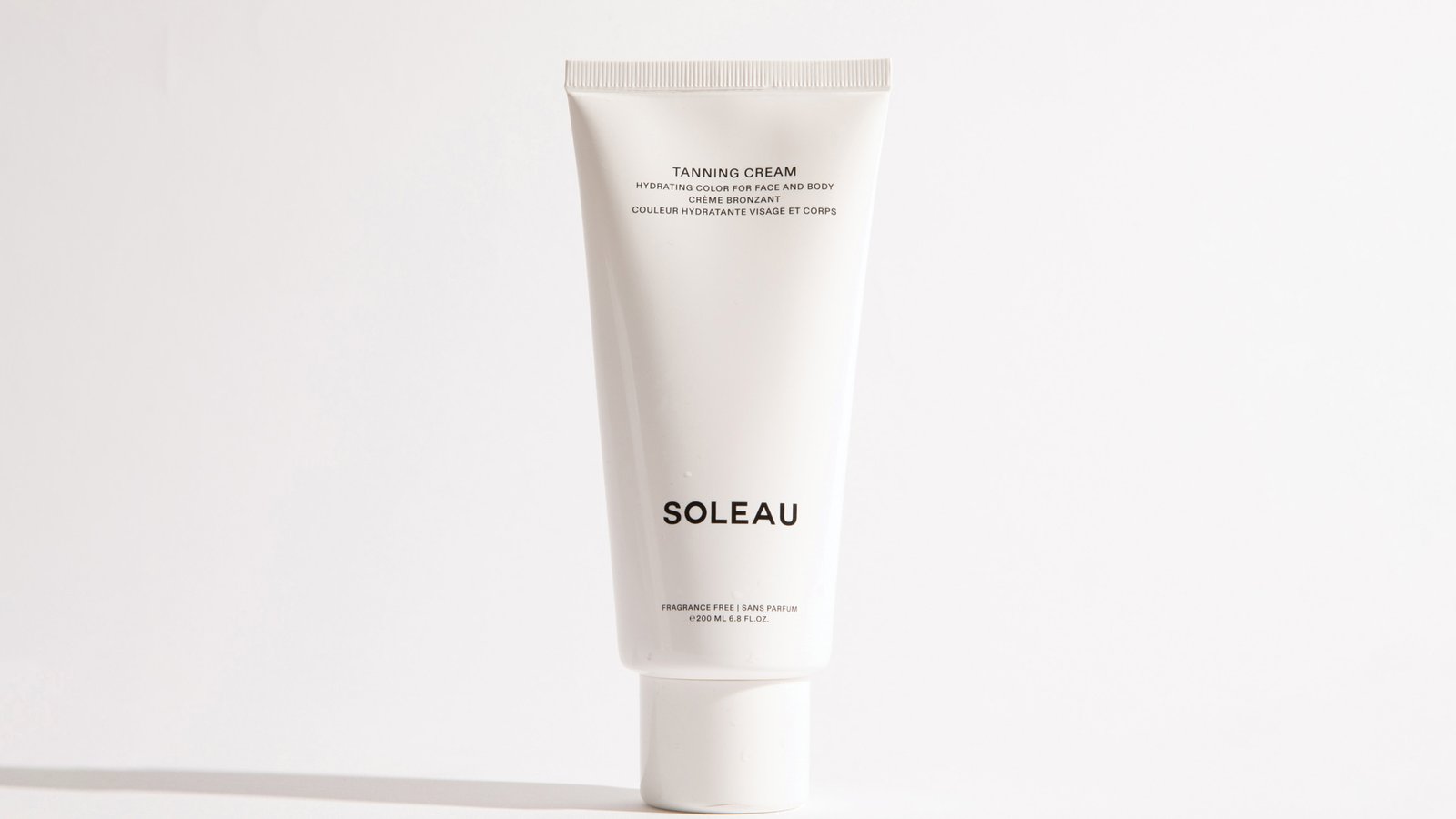
It's exactly why we keep coming back to Soleau Tanning Cream — it's formulated to hydrate while it tans, which means the color holds on longer and fades much more naturally than typical DHA-only formulas.
"The color is very natural looking and lasts for several days in between applications. Very happy!" — Alix F., verified buyer
What Makes a Self Tan Fade Faster
Understanding the enemies of a long-lasting tan is half the battle. Here are the biggest culprits:
Dry skin
This is the number one reason tans fade unevenly and patchily. Dry skin sheds cells in an erratic, flaky pattern rather than a smooth, gradual one.
The result is an uneven fade — dark patches here, light spots there — that looks nothing like how a real tan fades. Moisturizing daily is non-negotiable if you want your tan to last and fade gracefully.
Long, hot showers
Hot water strips your skin's natural oils and accelerates cell shedding. Shorter, cooler showers — especially in the first 24 hours after application — make a real difference in how long your color sticks around.
Exfoliating products
AHAs, BHAs, retinol, and physical scrubs all accelerate skin turnover, which means they accelerate tan fading too. Use these sparingly (or not at all) once you're in maintenance mode. Save your glycolic acid toner for after your tan has run its course.
Chlorine and salt water
Both are powerful natural exfoliants. Pool days and beach days will shorten your tan's life — not eliminate it, but definitely accelerate fading. If you're swimming frequently, expect to top up your color more often.
Formula quality
Cheap formulas that are heavy on DHA and light on skin-nourishing ingredients tend to fade patchy and fast. A formula with quality emollients, humectants, and a well-balanced DHA concentration will always last longer and fade better than a bargain option. If a faster, more immediate payoff matters more to you than a slow build, our guide to the best bronzing lotion covers formulas built for that instead.
How to Prep Your Skin for a Longer-Lasting Tan
What you do before you apply self tanner has as much impact on longevity as what you do after. A few non-negotiables:
Exfoliate 24 hours before application
Use a gentle physical scrub or exfoliating mitt to slough off dead skin cells before you tan. This gives the DHA a fresh, even surface to work with — and when your skin is already in a clean cycle, it sheds more uniformly over the following days.
Just don't exfoliate immediately before tanning; give your skin at least a few hours to settle.
Shave or wax beforehand
Hair removal opens your pores and can create uneven patches if done right after tanning. Do any shaving or waxing at least 24 hours before your self-tanner application.
Skip the moisturizer right before applying
Moisturizer right before application creates a barrier that prevents DHA from bonding properly with your skin. Apply your self tanner to clean, dry skin. The exception: use a very thin layer of lotion on naturally dry spots like knees, elbows, and ankles to prevent those areas from absorbing too much color.
Start with a clean slate
Shower first, pat dry, wait 10-15 minutes before applying. Any moisture, oil, or product residue on your skin will interfere with even color development. For a full walkthrough of the application process, see our guide on how to apply self tanner step by step.
Aftercare Habits That Extend Your Tan
Once your tan is on, your skin care routine becomes your tan's best friend — or its worst enemy. Here's how to be the friend:
Moisturize every single day
This is the single most important thing you can do to extend your tan. Well-hydrated skin sheds evenly, which means your tan fades evenly. Apply a generous, fragrance-free body lotion or oil after every shower. Focus on elbows, knees, ankles, and any other areas prone to dryness.
Use a tan-extending moisturizer
Some body lotions contain a small amount of DHA — just enough to lightly refresh the color with every application. These aren't full self-tanners; they're gentle maintenance tools. Used daily, they can push your tan's lifespan from 7 days to 10 or even 12.
Pat dry instead of rubbing
Rubbing your skin with a towel after showering is a surprisingly effective way to accelerate fading. Pat gently instead. It sounds small, but over the lifespan of your tan it adds up.
Avoid long soaks
Baths, hot tubs, and long showers are all color-killers. The warm water loosens the bonds between DHA and your skin cells and accelerates shedding. Keep it brief when you can.
The Maintenance Routine That Actually Works
The most experienced self-tanners don't think in terms of "one application that lasts a week." They think in terms of a rotation: build, maintain, refresh.
In the first week, apply every 2-3 days to build up color depth. Once you've reached your ideal shade, drop down to once-a-week maintenance applications to keep the color topped up as the previous layer fades. The result is a tan that looks consistently fresh without ever looking overdone.
"I did 2 applications in 1 week when I first got it, now I just do a maintenance application every 1-2 weeks. And a little goes a long way." — Lauren, verified buyer
This build-then-maintain approach also tends to produce the most natural-looking color, because you're never dramatically darkening in one go. You're layering gradually — exactly how a real sun tan works — and the fade is so gradual it's barely perceptible.
"The color lasts so much longer than I expected as well." — Jillian B., verified buyer
One more tip: pay attention to where your tan fades first. Most people find that their elbows, knees, and ankles lighten fastest because the skin there is drier and thicker. Spot-moisturizing those areas immediately after showering will help them keep pace with the rest of your body and prevent that telltale "fake tan fade" pattern.
When It's Time to Start Fresh
Even with the best aftercare, every self tan eventually reaches the point where it needs to go. Once you notice significant patchiness or uneven color, it's usually better to do a proper exfoliation and start fresh than to try to patch over it.
A gentle scrub session and a day with bare skin will reset your canvas perfectly. For help with stubborn patches, our guide on how to remove self tanner covers every method that actually works.
The beautiful thing about a good self tanner is that starting over isn't a setback — it's just Tuesday. Once you have a formula you trust and a routine that works for your skin, the whole process becomes second nature.
For the full breakdown of what we look for in a formula, see our complete ranking of the best self tanners for 2026.
Shop Soleau Tanning Cream →