Self Tanner for Sensitive Skin: No Irritation, No Reactions

If you have sensitive skin, the self-tanner aisle can feel like a minefield. You pick up a bottle, excited about the sun-kissed glow on the label, apply it that night — and wake up the next morning with itchy, red, irritated skin that looks nothing like the ad.
You've been burned before (figuratively speaking), and it's enough to make you swear off self-tanner entirely.
But here's the thing: the problem usually isn't self-tanning itself. The problem is what's in most self-tanners.
Fragrances, harsh preservatives, alcohol, and synthetic dyes are the real culprits behind most sensitive-skin reactions — and they're completely avoidable if you know what to look for. With the right formula, even the most reactive skin can achieve a beautiful, natural-looking tan with zero irritation.
This guide breaks down exactly why sensitive skin reacts to conventional self-tanners, what ingredients to seek out (and avoid), and how to apply self-tanner in a way that protects your skin barrier from start to finish.
Why Most Self Tanners Irritate Sensitive Skin
Sensitive skin is characterized by a compromised or easily disrupted skin barrier. When that barrier is challenged by harsh ingredients, it responds with redness, itching, tightness, or a stinging sensation. Most conventional self-tanners are loaded with exactly the kinds of ingredients that trigger those responses.
Fragrance is the single biggest offender. It's also the most unnecessary — fragrance serves no functional purpose in a tanning formula, but it's present in the vast majority of drugstore self-tanners because it masks the signature DHA smell (more on that in a moment).
Fragrance is a catch-all term that can represent dozens of undisclosed chemical compounds, many of which are known sensitizers and allergens.
DHA (dihydroxyacetone) is the active ingredient that creates the tan by reacting with amino acids in the top layer of your skin.
In high concentrations, DHA can be irritating on its own, which is why formulas with gentler, lower-concentration DHA are better suited to sensitive skin. This also tends to produce a more natural, gradual color — a win on both fronts.
Alcohol is another common culprit. It's added to help formulas dry quickly, but it's notoriously drying and irritating, especially for those with already-reactive skin. Ditto for certain synthetic preservatives like parabens and formaldehyde-releasers.
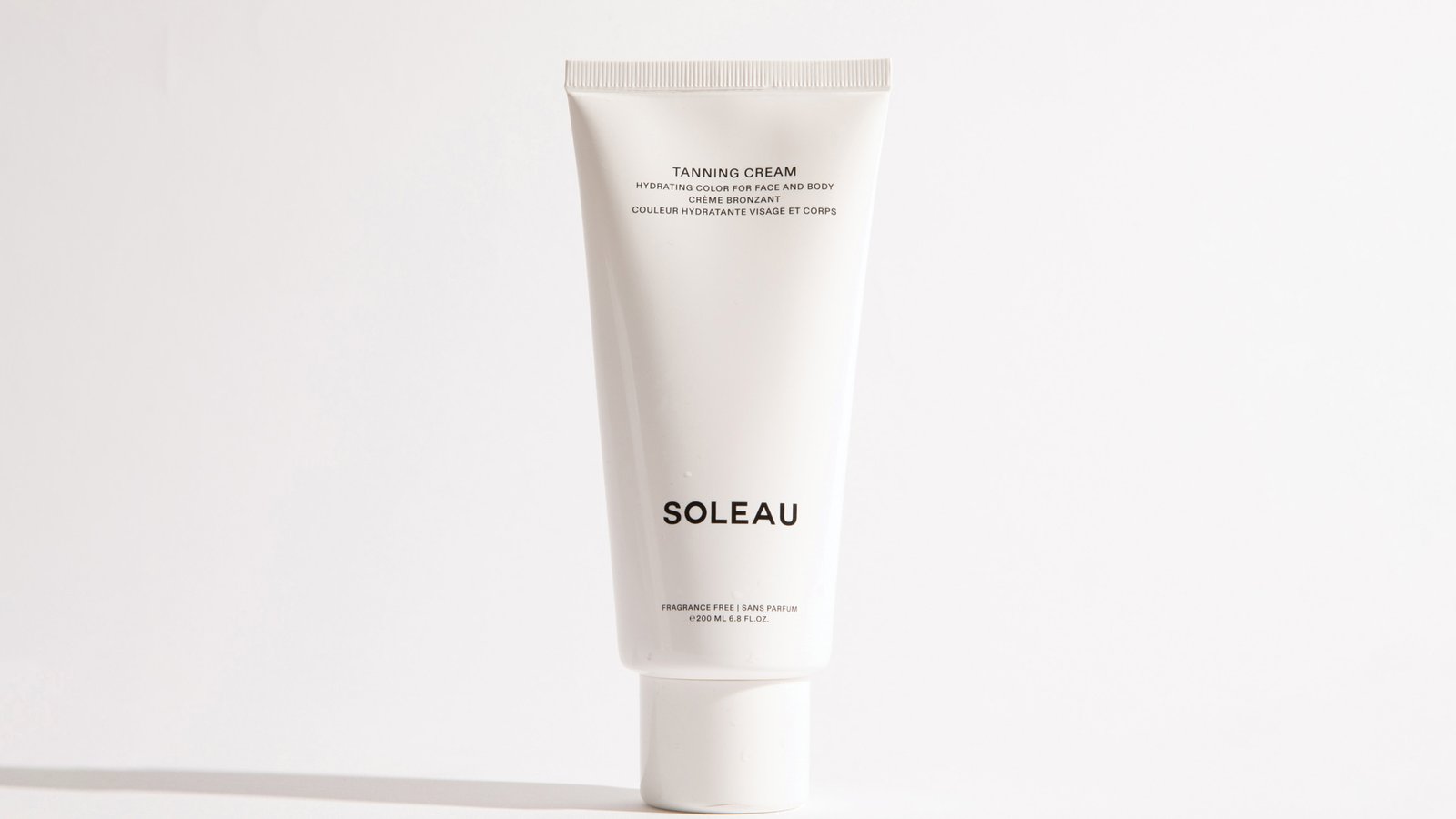
The good news? All of these are optional. A well-formulated self-tanner doesn't need them — which is why we love a clean, fragrance-free formula like Soleau Tanning Cream, which skips the irritants entirely and uses a hydrating, skin-friendly base that actually leaves reactive skin feeling nourished.
What to Look for in a Self Tanner for Sensitive Skin
Shopping for a self-tanner when you have reactive skin requires flipping to the ingredients list — not just the front-of-pack promises. Here's what actually matters:
Fragrance-Free (Not Just "Unscented")
"Unscented" and "fragrance-free" are not the same thing. Unscented products can still contain masking fragrances that neutralize other smells without adding a noticeable scent — those masking agents can still trigger reactions. Look specifically for "fragrance-free" on the label, which means no fragrance compounds of any kind were added to the formula.
Alcohol-Free
Avoid formulas where alcohol (ethanol, isopropyl alcohol, or denatured alcohol) appears in the first half of the ingredient list. These short-chain alcohols are drying and disruptive to the skin barrier. Some fatty alcohols like cetyl alcohol or stearyl alcohol are fine — those are actually conditioning ingredients, despite the name.
A Hydrating Base
The best self-tanners for sensitive skin double as moisturizers. Look for formulas that include humectants like glycerin or hyaluronic acid, which draw moisture into the skin, and emollients that soften and soothe. A hydrating base means your skin barrier stays intact throughout the tanning process rather than being stripped.
No Synthetic Dyes
Artificial color additives serve no functional purpose in a tanning formula and are a common source of contact dermatitis. A clean self-tanner doesn't need them. Our guide to the best natural self tanner rounds up formulas that skip synthetic dyes entirely.
How to Apply Self Tanner on Sensitive Skin
Even the gentlest formula can cause issues if you apply it incorrectly. Sensitive skin requires a little extra care in the prep and application process — but once you have a routine down, it becomes second nature.
Patch Test First
No matter how clean the formula, always patch test before your first full-body application. Apply a small amount to the inside of your forearm or behind your knee, wait 24 hours, and check for any redness, itching, or swelling. If all looks good, proceed with confidence.
Exfoliate Gently
Light exfoliation before self-tanning removes dead skin cells and helps the product apply evenly — but "gentle" is the operative word for sensitive skin. Skip rough physical scrubs that can micro-tear the skin.
Instead, use a soft washcloth or a gentle enzyme exfoliant the day before you plan to tan. Never exfoliate and apply self-tanner the same day; give your skin barrier time to settle.
Skip Actives Before Application
Retinoids, AHAs, BHAs, and vitamin C serums all thin and sensitize the skin — even for those who use them regularly. Skip these on the evening you apply self-tanner, and for 24 hours before if your skin is especially reactive. Your regular routine can pick back up once the tanner has fully developed.
Don't Apply Right After Shaving or Waxing
Hair removal temporarily opens follicles and removes a fine layer of skin, leaving it more vulnerable to irritation. Wait at least 24 hours after shaving and 48 hours after waxing before applying self-tanner.
Moisturize Dry Spots Before Applying
Knees, elbows, ankles, and wrists tend to be drier and more porous, which means they absorb more self-tanner and often develop uneven, darker patches. A light application of plain moisturizer on these spots immediately before self-tanning creates a barrier that helps color apply more evenly and prevents over-absorption in reactive areas.
For a complete walkthrough of the application process, see our step-by-step guide to applying self-tanner.
Common Reactions — and How to Tell if It's the Formula
Even with the best precautions, reactions happen. Here's how to decode what you're dealing with:
- Itching or stinging immediately after application usually points to a specific ingredient — fragrance and alcohol are the most common causes. Switch to a fragrance-free, alcohol-free formula.
- Redness or hives within a few hours can indicate a contact allergy. Stop using the product and consult a dermatologist if it persists.
- Dryness or tight, flaky skin the next day often means the formula stripped your moisture barrier. Look for a more hydrating base.
- Breakouts may be caused by pore-clogging ingredients or a formula that sits on the skin rather than absorbing. A lightweight, non-comedogenic formula is essential if you're acne-prone as well as sensitive.
If you're struggling with uneven results from a reaction, our guide on how to remove self-tanner covers gentle methods that won't further aggravate irritated skin.
What Real Customers with Sensitive Skin Say
We went through hundreds of verified reviews to find what customers with reactive, sensitive skin had to say. The pattern was consistent: the biggest relief was finding a formula that simply didn't irritate them.
"Best tanning lotion I've ever used! Moisturizing, natural color and my sensitive skin has no reactions. Takes a little while to develop but worth the wait!"
— Jessica J., verified buyer
"For some reason most self tanners dry my skin out really bad. Not this one! I love the color it gave me and no odor plus my skin has not been tight feeling or dry and scaly. I love it!"
— Kate S., verified buyer
"I have not used self tanning products in many years due to the harsh chemicals. I purchased Soleau Tanning Cream based on all the positive reviews. I am so thrilled with the product and how beautiful & soft my skin feels."
— Lynda, verified buyer
The common thread: once these customers found a clean, fragrance-free, genuinely hydrating formula, self-tanning went from something they'd given up on to something they actually look forward to.
The Bottom Line
Sensitive skin doesn't mean you have to miss out on a gorgeous, sun-kissed glow. It just means you need to be more intentional about the formula you choose. Skip the fragrance, skip the alcohol, skip the harsh preservatives — and seek out a clean, hydrating self-tanner that works with your skin rather than against it.
The difference between a reaction and a result often comes down entirely to ingredient quality. When the formula is gentle and clean, sensitive skin responds beautifully — often better than skin that isn't reactive, because you're already treating your skin with care.
Ready to shop instead of just research? Our best self tanner for sensitive skin roundup tests and ranks the formulas that hold up best on reactive skin, side by side.
For a full breakdown of the best formulas on the market, see our complete ranking of the best self tanners for 2026. And if you want to compare at-home self-tanning to salon spray tans, our self tanner vs spray tan guide covers the ingredient safety angle in detail.
Shop Soleau Tanning Cream →