Isle of Paradise vs Jergens: An Honest Comparison

Isle of Paradise vs Jergens comes up a lot from readers deciding between a premium drop-format tanner and the drugstore lotion their mom probably used first.
Isle of Paradise's Self-Tanning Drops run $29 to $34 and mix into whatever moisturizer you already own. Jergens Natural Glow is a self-contained lotion, usually $8 to $13 depending on the size and strength, sold in nearly every grocery store in the country.
I wore both for the better part of a week, rotating arms, and compared them against the tanners I already had in testing. Here's where each one actually wins.
Formula: Drops You Control vs. a Lotion That's Already Decided
Isle of Paradise built its drops around niacinamide, hyaluronic acid, and azelaic acid, the kind of actives you'd expect in a serum. The formula is fragrance-free before you mix it into anything.
Jergens Natural Glow is a straightforward daily moisturizer with DHA and erythrulose already blended in at a fixed strength, plus added fragrance to cover the tanning smell.
That fixed ratio is the whole appeal of Jergens. There's nothing to measure. It's also the source of most of its problems, which I'll get to.
Winner: Isle of Paradise, for a formula built around skincare actives instead of one tuned mainly for shelf stability at drugstore prices.
Application: Measuring Drops vs. Just Rubbing It In
Jergens applies exactly like the body lotion it is. Rub it on, no gloves, no timer, no rinse step. That simplicity is why it's stayed a starter tanner for decades.
Isle of Paradise asks more of you. Count your drops, mix them into your palm with lotion, then apply before the mixture starts developing on its own.
I under-mixed my first Isle of Paradise batch, guessing at "a few drops" instead of counting. The color barely showed the next morning and I had to redo it.
Winner: Jergens, for pure ease of use. Isle of Paradise wins once you've dialed in your ratio, but that takes a couple of tries most people skip Jergens entirely to avoid.
Isle of Paradise vs Jergens: Streak Risk
This is where the two split hardest. Jergens is a fixed-ratio lotion, so any dry patch on your body pulls in more color than the rest of your skin. Elbows, knuckles, and ankles are the usual victims.
I forgot to wash my hands after applying Jergens on day two of testing and woke up with two suspiciously orange palms.
Isle of Paradise's drops let you control concentration by mixing them into your own moisturizer, so you can thin the mix specifically for rough spots before applying it there.
Winner: Isle of Paradise, for giving you a way to actually manage the dry-patch problem instead of applying the same strength everywhere.
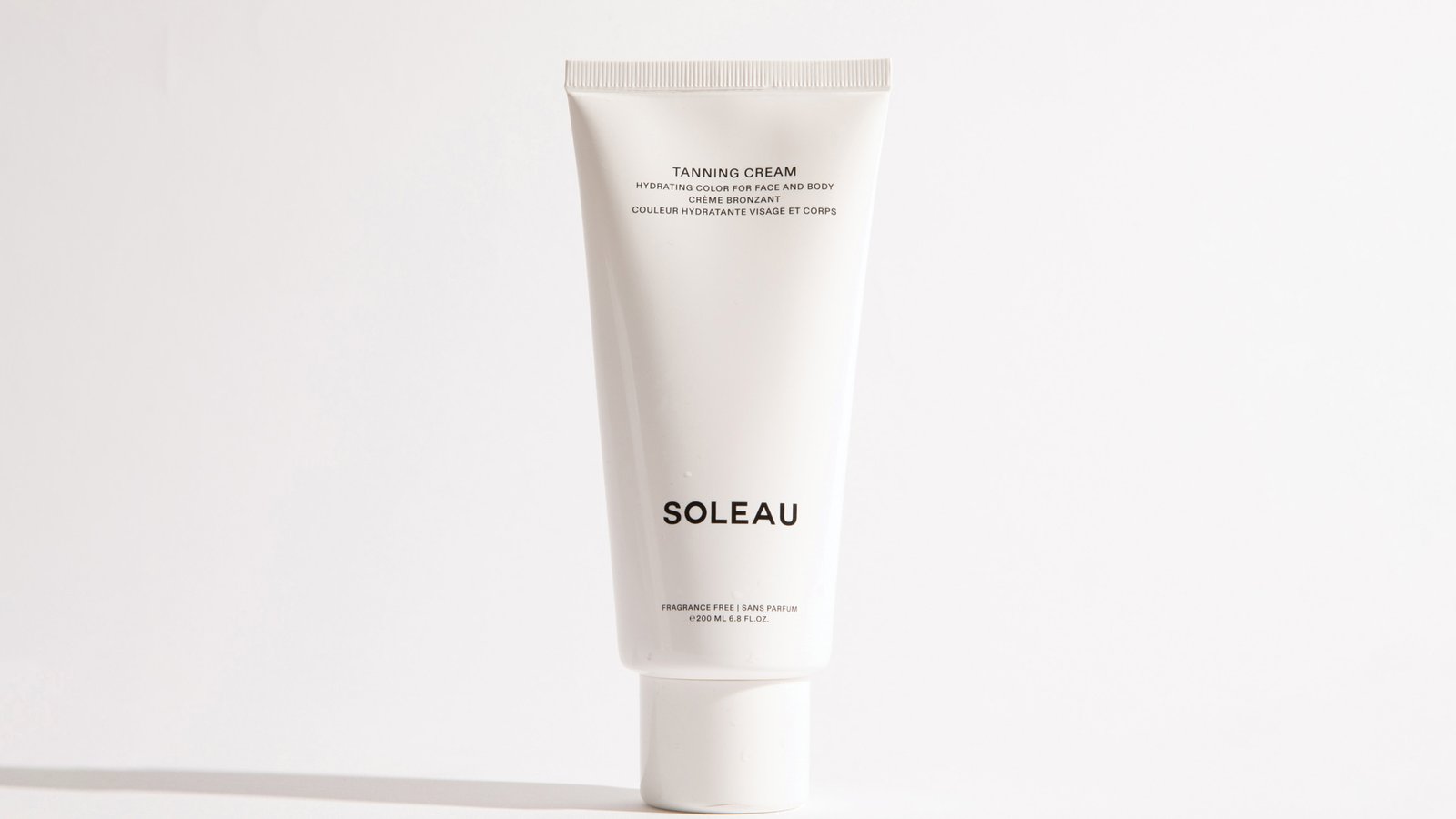
Managing drop ratios or scrubbing orange off your palms are both real chores, which is exactly why we keep coming back to Soleau Tanning Cream instead. It's a single ready-to-use formula, no measuring and no fixed ratio to fight with on dry patches.
"I've tried many self tanners, soleau is the most natural looking tan, no fragrance at all. I mix with a small amount of body lotion with latex gloves & have a glowing tan even after one use, but used daily it gradually gets darker just like I've been on the beach every day!"
Rita's point about building color once daily without streaks is the same daily habit Jergens is built around, minus the palm-scrubbing that comes with a fixed-ratio lotion.
How We Tested
I mixed Isle of Paradise's Self-Tanning Drops into my regular moisturizer for one arm and applied Jergens Natural Glow straight from the bottle to the other, over six days of daily use.
I tracked color depth at 24 and 72 hours, scent right after application and the next morning, and streak risk specifically at the joints and dry patches most prone to it.
I checked both against my recent trials of Bondi Sands and St. Tropez under the same window light. See our full approach at How We Test.
Color and Undertone
Jergens builds a warm, medium bronze over about a week of daily use. It's designed to layer gradually, so day one barely shows and day five looks like a real base tan.
Isle of Paradise's undertone depends on what you mixed it with. A fragrance-free moisturizer kept mine golden. A lotion with its own yellow tint pulled it warmer than I expected.
Winner: Tie. Jergens gives a predictable result every time. Isle of Paradise gives more range, but only once you've found the moisturizer pairing that works for your skin.
Fade: How Each One Wears Over a Week
Jergens fades the way it built, slowly and evenly, since you're topping it off daily anyway. There's rarely a hard line where the color suddenly drops off.
Isle of Paradise held for about five days before going patchy around my ankles specifically, likely because part of the finished mixture was plain moisturizer to start with.
Winner: Jergens, for a more even fade, largely because daily reapplication smooths over any unevenness before it becomes visible.
Scent
Jergens Natural Glow layers a fragrance over the DHA smell to mask it. On my skin the two scents didn't blend well by hour three, and the combination read stronger than plain DHA alone.
Isle of Paradise skips added fragrance. What you smell is just DHA developing, and it's noticeably lighter than Jergens by comparison.
Winner: Isle of Paradise, and it's not close.
Price: What You're Actually Paying For
Jergens Natural Glow runs $8 to $13 a bottle, among the cheapest tanners in this whole category, and one bottle lasts weeks of daily use.
Isle of Paradise costs more up front at $29 to $34, but since you're stretching each bottle with your own moisturizer, it goes further per application than the sticker price suggests.
Winner: Jergens, by a wide margin, especially if you're tanning through an entire summer on a budget.
Common Mistakes With Either Formula
With Jergens, the biggest mistake is skipping the hand wash right after applying. That single step prevents most of the orange-palm complaints I see in reviews.
With Isle of Paradise, the mistake is eyeballing the drop count instead of actually counting. I made that exact error my first week and had to redo the whole application two days later.
Dry patches punish both formulas the same way. A light exfoliation before either one goes a long way toward avoiding a darker ring at your elbows or knees.
| Product | Price | Format | Streak Risk | Our Rating |
|---|---|---|---|---|
| Isle of Paradise Self-Tanning Drops Cleanest Formula | $29 | Drops | Low, if mixed carefully | 4/5 |
| Jergens Natural Glow Best Value | $9 | Lotion | Moderate, on dry patches | 3.5/5 |
Which One Should You Actually Buy?
If you want the cheapest routine that's also the simplest and don't mind a slower build, Jergens still earns its spot as a reliable starter tanner. Millions of people use it for a reason.
If you'd rather control your shade and skip the fragrance, Isle of Paradise costs more but rewards the extra five minutes it takes to mix it properly.
I reach for Jergens on weeks I want a low-effort daily habit. Isle of Paradise comes out when I'm building toward a specific event and want more say in how dark I go.
See our full comparison of eight major self tanner brands for how these two stack up against the rest of the field, including where Soleau lands overall.
Curious how Jergens compares to a different budget option? Our Jergens vs Bondi Sands comparison runs the same category-by-category test. And if you want to see Jergens against a premium mousse instead, our Jergens Natural Glow vs St. Tropez breakdown covers that matchup.
For a deeper look at Isle of Paradise against a different drops-format tanner, read our St. Tropez vs Isle of Paradise comparison. And for the branded angle specifically, our full Soleau vs Isle of Paradise breakdown covers that matchup in depth.
If ingredients matter to you either way, our guide to what's actually in self tanner explains what DHA, erythrulose, and the rest of the label actually do.
My honest take after testing both side by side: Jergens if you want a cheap, no-fuss daily habit. Isle of Paradise if you're willing to measure for a cleaner formula and better streak control.
Shop Soleau Tanning Cream →Frequently Asked Questions About Isle of Paradise vs Jergens
Is Isle of Paradise or Jergens better?
Isle of Paradise wins on formula and streak control, since its drops mix evenly into lotion and skip the dry-patch buildup that causes Jergens to go dark on elbows and knuckles. Jergens wins on price and on being sold at nearly every drugstore in the country.
Does Isle of Paradise smell less than Jergens?
Yes, noticeably. Isle of Paradise is fragrance-free, so what you smell is just DHA developing. Jergens Natural Glow layers a scent over the DHA smell, which some readers find worse once the two blend together a few hours in.
Why does Jergens self tanner streak on hands and ankles?
Jergens is a straight lotion with DHA mixed in at a fixed ratio, so any dry patch, especially knuckles, elbows, and ankles, soaks up more color than the rest of your skin. Skipping a wash-your-hands step after applying makes it worse.
Can I mix Isle of Paradise drops into Jergens lotion?
You can, though it stacks two sources of DHA into one application, which risks going darker than either product alone. If you try it, start with fewer drops than the bottle recommends and check the color after a few hours before adding more.
Which one is better for a first-time self tanner?
Jergens is the gentler entry point since the color builds gradually over daily use and a light first tan is hard to mess up. Isle of Paradise gives more control once you've got a feel for how many drops your skin needs.