Loving Tan vs Jergens: An Honest Comparison

Loving Tan vs Jergens is a strange matchup to search, because these two products aren't playing the same game. Loving Tan is a $39 mousse built to give you a deep, ready-in-two-hours tan. Jergens Natural Glow is a $9 body lotion you rub in every morning like any other moisturizer, except it happens to build color too.
Readers ask me about this pairing more than almost any other comparison I write. They're standing in an aisle, or scrolling between two browser tabs, trying to decide if the pricier mousse is worth it or if the cheap lotion gets them there just as well.
I've tested both for years, on my own arms and legs, on top of testing more than 100 other self-tanners for this job. Here's the honest, category by category breakdown, with a real winner named every time instead of a shrug.
I keep both bottles on the same shelf, which tells you something before we even get into the details. One is a special-occasion product I plan around. The other is a habit I barely think about.
Formula: What's Actually in Each Bottle
Loving Tan's 2 Hour Express is a bubble mousse built around DHA paired with erythrulose, a second pigment that develops more slowly and deepens the color over the following day. It's formulated to tan fast and go dark, not to double as skincare.
Jergens Natural Glow uses a much lower dose of DHA, folded into an actual moisturizer base with glycerin and other emollients doing double duty. It's built to be a lotion first and a tanner second, which is exactly why the color takes days to show up rather than hours.
Winner: Loving Tan, for anyone who wants a formula built purely to tan. Jergens wins if you'd rather your self-tanner double as your everyday moisturizer.
Application: Mousse vs Daily Lotion
The application difference is the whole loving tan or jergens decision in miniature. Loving Tan's foam comes out light and dries within about a minute, with a guide tint so you can see exactly where you've applied it. I've gotten fully dressed twelve minutes after applying it before a dinner, guide tint and all, and nothing smudged.
That fast dry time still means blending quickly before it sets. The rinse window sits at exactly two hours, with no flexibility if your plans run long.
Jergens spreads exactly like a regular lotion, thin and quick to absorb, with no tint showing you where you've been. That's forgiving in the sense that there's no rush. It's unforgiving in the sense that you can miss a patch near your ankle for three days running before you even notice.
Winner: Loving Tan, if you want to see your coverage as you go. Jergens, if you'd rather skip the guide tint and the timer altogether.
Loving Tan vs Jergens Natural Glow: Color and Depth
Loving Tan gets you there fast. Three shade options run from medium to dark, plus an ultra dark tier, all visible within two hours and fully set by the next morning. The color reads deep and warm, closer to a beach vacation than a subtle glow.
Jergens builds in the opposite direction, thin layers stacking slowly over about a week of daily use. Skip a day and you'll barely notice a change. Stay consistent and the color creeps up gradually instead of announcing itself.
Undertone matters here too. Loving Tan leans warm on most skin, while Jergens tends to read a touch more neutral since the color is diluted through a moisturizer base rather than concentrated foam.
Fair skin shows both formulas faster than deeper skin tones. Jergens is more forgiving of a slow start, though, since there's no single application you have to get exactly right.
That gradual build is exactly what makes Jergens so forgiving for a first-timer and so limited for anyone who wants real depth by Friday. You can't rush a formula built to move at moisturizer speed, no matter how many extra coats you add.
Winner: Loving Tan, for anyone who wants visible depth on a deadline. Jergens, for a first self-tanner that won't scare you off if you go a little heavy-handed.
Fade Quality: Where Jergens Streaks and Loving Tan Doesn't
This is where the two genuinely diverge, and it's the part most brand roundups skip over entirely. Jergens' gradual formula clings hardest right where skin runs driest. Elbows and ankles soak up more product than the rest of the body, and knuckles aren't far behind, so all three can end up two shades darker by day four.
I watched this happen on my own elbows after a week of daily application without exfoliating in between. It wasn't dramatic. More of a dusty ring that only showed up under bright bathroom light, but it was there, and I hadn't noticed it building until day five.
Loving Tan doesn't have that slow-buildup problem, since you're applying once and letting it develop rather than layering daily for a week. Its risk runs the other direction. Rush the blending in that two-hour window and you can leave visible mousse lines at the wrists or ankles.
Winner: Loving Tan, for staying even once it's developed, provided you blend carefully the first time. Jergens rewards patience and a light hand around the joints, or the streaking creeps in by the second week.
Scent: The Detail That Decides Who Reapplies
Loving Tan carries a real DHA scent, the classic self-tanner smell, since nothing in the formula is added to mask it. It lingers through the two-hour development window and fades once you rinse the guide tint off.
Jergens adds fragrance specifically to soften that biscuity DHA smell, and most testers describe what's left as mild rather than the chemical edge some tanners carry.
Winner: Jergens, for anyone who can't stand that classic self-tanner smell during development.
Price: What You're Actually Paying For
Jergens runs about $9 for a 7.5-ounce bottle at nearly any drugstore, which makes it painless to keep in daily rotation without ever thinking about the cost.
Loving Tan sits closer to $39 for the 2 Hour Express. A bottle stretches across several full-body applications since a little of the foam goes a long way, which softens the gap over time.
Winner: Jergens, by a wide margin, if the price tag on the shelf is your main filter.
How We Tested
I wore Loving Tan's 2 Hour Express on one arm and applied Jergens Natural Glow to the other leg every morning for eight straight days, photographing both in the same window light. I logged development time and color depth for Loving Tan at the 2-hour and 24-hour marks, and tracked daily buildup around my elbows and ankles for Jergens.
Before each test cycle, I exfoliated with an EcoTools bamboo bath brush to start from the same bare-skin baseline, then tracked scent during development and how each formula wore by day seven. See our full approach at How We Test.
| Product | Price | Format | Scent | Our Rating |
|---|---|---|---|---|
| Loving Tan 2 Hour Express Fastest Color | $39 | Bubble mousse | Strong DHA scent | 4/5 |
| Jergens Natural Glow Best Value | $9 | Gradual lotion | Lightly fragranced | 3.5/5 |
Both of these do their job well, but they pull you toward opposite tradeoffs. Loving Tan asks you to plan your evening around a strict two-hour window. Jergens asks you to keep an eye on your elbows and ankles for weeks so a slow buildup of color doesn't turn patchy.
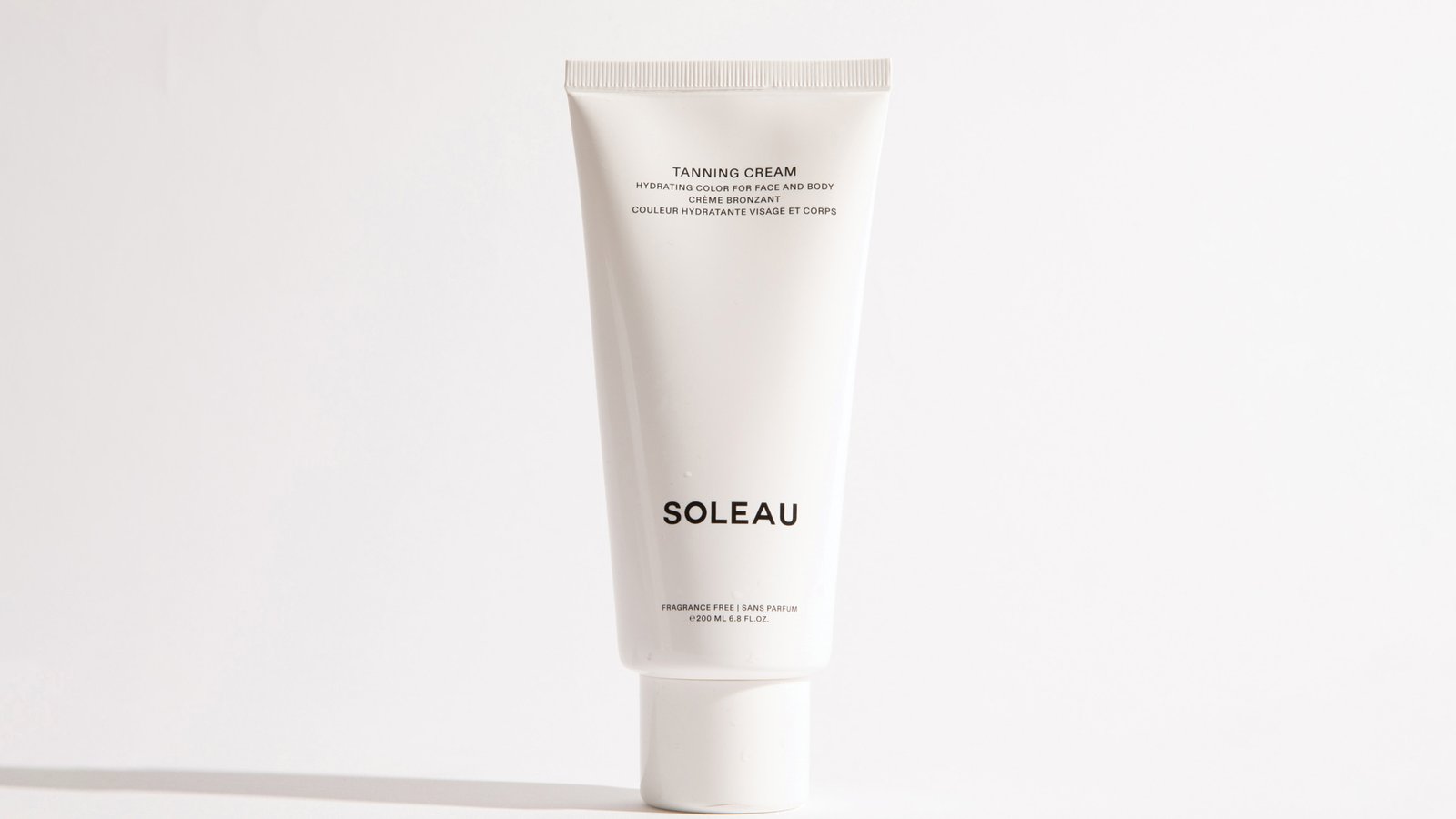
If neither routine sounds like something you want to manage, that's exactly why we keep coming back to Soleau Tanning Cream instead.
"I Love your tanning cream! It brings a rich, dark tan with no streaking and no smell! It moisturizes my skin very well and does not cause tightness in muscles as other sugar based natural tanners can. It also helps cover those sun damage white spots on my skin. Very thankful for this Soleau tanning lotion!"
Ashlyn's "tanned a good amount after one application" is the exact gap between these two competitors. Loving Tan gets you there in one sitting but asks for a strict timer. Jergens skips the timer but asks for a week of patience and careful blending at the joints.
Which One Should You Actually Buy?
Most of the emails I get aren't about which product is "best" in the abstract. They're about a specific event or a specific budget, and the honest answer changes depending on which one you're solving for.
If you need visible color tonight and don't mind a firm two-hour window, Loving Tan is built for exactly that deadline. If you're easing into self-tanning for the first time and want a low-stakes daily habit, Jergens is the far cheaper entry point with a gentler learning curve.
I've reached for both over the years. Loving Tan comes out before a wedding or a photo shoot when I need real depth and I'm willing to plan around it. Jergens lives in my cabinet the rest of the year as a maintenance habit I barely think about.
If St. Tropez is also on your shortlist, our Loving Tan vs St. Tropez comparison runs the same category-by-category test against a second premium mousse, and our Jergens Natural Glow vs St. Tropez breakdown does the same for Jergens.
For a drops-based alternative to Loving Tan's mousse format, our Loving Tan vs Isle of Paradise comparison covers that matchup in the same depth.
See our full comparison of eight major self tanner brands for how these two stack up against the rest of the field. For a deeper dive on Jergens specifically against a cream formula, read our full Soleau vs Jergens breakdown.
My honest advice after testing both side by side: pick based on your actual timeline, not the marketing on the box. A fast mousse solves one problem. A slow daily habit solves a completely different one, and neither is wrong for the right person.
Shop Soleau Tanning Cream →Frequently Asked Questions About Loving Tan vs Jergens
Is Loving Tan or Jergens better?
It depends what you're solving for. Loving Tan wins on depth and speed, with a two hour formula and three shade options. Jergens wins on price and simplicity, since it doubles as your everyday moisturizer and never asks you to plan around a timer.
Does Jergens Natural Glow turn orange or streak at the elbows?
It rarely turns orange since the DHA dose is low, but it can build up unevenly at the elbows and ankles if you keep layering daily without exfoliating those spots first. A light moisturizer on those areas before each application helps it fade evenly.
Which lasts longer, Loving Tan or Jergens?
Jergens never has a dramatic fade day, since the color builds so gradually it just tapers off the same way. Loving Tan holds its depth for about four to five days, then benefits from exfoliating before the next application.
Is Loving Tan worth the extra cost over Jergens?
If you need visible color within hours for a specific event, yes, that speed is what you're paying the extra thirty dollars for. If you're building a slow, low-stakes daily habit, Jergens gets you most of the way there for a fraction of the price.
What if neither Loving Tan nor Jergens works for my skin?
Some readers find Loving Tan's scent and timer too much to manage, while Jergens feels too slow to show real results. In that case we point them toward Soleau, a fragrance-free cream that builds noticeable color from a single application without the guide tint or the week-long wait.