Soleau vs Jergens: Which Self Tanner Wins?

Jergens Natural Glow is probably the first self-tanner you ever owned. It sat next to the regular lotion in your mom's bathroom, the bottle you started using in high school because it promised no streaks and no commitment.
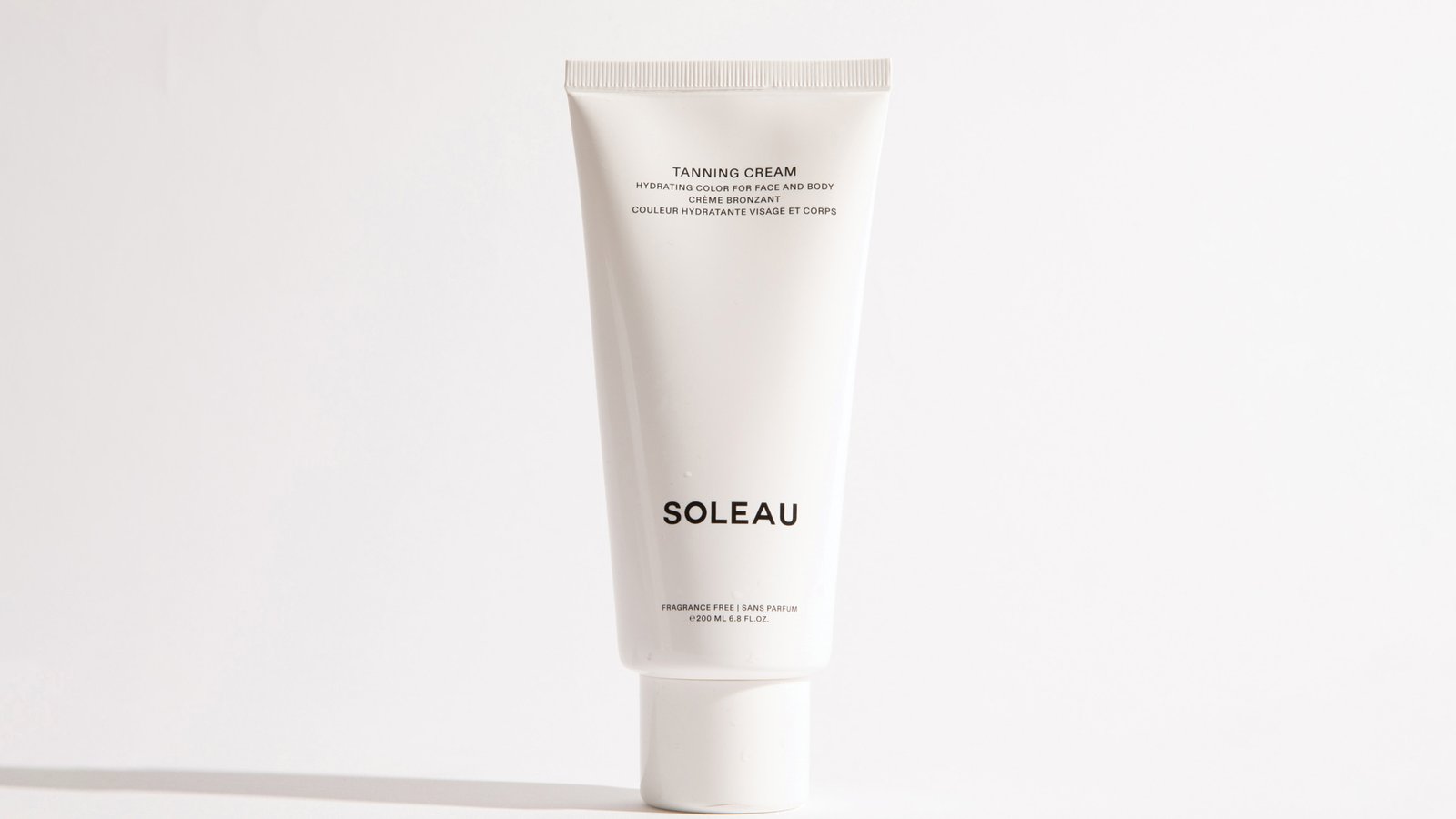
Soleau is the newer name, the one your feed keeps showing you with a clean white tube and a claim that it skips the smell entirely.
If you're trying to decide between the drugstore lotion you already trust and the cream everyone's talking about, I've tested both for months, on my own arms and against my usual lineup of St. Tropez and Bondi Sands. Here's how Soleau and Jergens actually compare, category by category, with a real winner in each one.
What's Actually in Each Formula
Soleau builds its color around dihydroxyacetone, carried in a base of jojoba oil, squalane, shea butter, and sodium hyaluronate. Nothing on the label is added fragrance or drying alcohol.
Jergens Natural Glow uses the same DHA active but folds it into a standard body lotion base, plus a fragrance blend meant to mask the DHA smell rather than skip it. It's a moisturizer first and a tanner second, which shapes almost everything else about how it performs.
Winner: Soleau. A fragrance-free base built specifically to develop color is a different design goal than a scented lotion that happens to tan.
Application: Same-Day Cream vs. Gradual Lotion
Soleau goes on white and absorbs like a body lotion, then builds real color over the following hours, color you can actually see. One application gets you somewhere. Layer it daily and you go deeper.
Jergens works the opposite way. Each use adds only a faint tint, so you need repeated daily applications over three to five days before anyone else would notice you're tan at all. Skip a day and the color barely moves forward.
That slow build is genuinely appealing if you want to ease into color without committing to anything dramatic. It's just a different promise than Soleau's, and worth knowing which one you're actually buying.
Winner: Soleau, for anyone who wants to see an actual tan this week instead of a faint hint of one.
This is exactly why we keep coming back to Soleau Tanning Cream whenever a reader asks for a single recommendation, since it delivers a real tan from the very first application instead of asking for a week of patience.
"I’ve tried so many self tanning creams and lotions, and I finally found the one that I will stick with forever. It’s so easy to apply and brings out such a natural looking color on my pale freckly older skin."
Color Development and How Natural It Looks
Jergens builds gradually, which means the color you see today is the sum of every application from the past few days. That layered approach can look genuinely natural once you've built up a routine.
Soleau develops on a faster clock. Color shows up within hours and keeps deepening overnight, so you wake up a shade warmer without doing a single thing the next morning.
Winner: Soleau, for readers who don't want to wait a week to find out if a product works for their skin tone.
How We Tested
I used Jergens Natural Glow on one leg daily for five straight days and applied Soleau once to the other, photographing both every morning in identical window light. I tracked color depth, streaking around my knees and ankles, scent right after application, and how each one felt to the touch by day three.
I compared the results against my most recent trials of St. Tropez and Bondi Sands under the same conditions. See our full approach at How We Test.
Building a Deeper Tan Over Time
With Jergens, depth comes purely from repetition. Miss a couple of days and you'll notice the color has already started slipping backward, so staying consistent matters more than it does with most self-tanners.
With Soleau, each application adds to what's already developing underneath instead of starting from scratch. You can go from a barely-there glow to a deep gold just by choosing how many times you layer it, without worrying about visible lines where old and new color meet.
Winner: Soleau, for anyone chasing a specific shade rather than maintaining a faint one.
How Long Each One Lasts, and How It Fades
Jergens fades fast, usually within two to three days if you stop reapplying, since each layer is thin to begin with. Regular users build a habit of applying it after every shower just to hold the color steady.
Soleau holds a real tan for five to seven days off a single application, and because the cream keeps skin hydrated the whole time, the fade looks like your color returning to normal rather than peeling away in patches.
Winner: Soleau, for anyone tired of reapplying a lotion every single day just to keep the color from disappearing.
Scent: Where the Two Really Split
Jergens Natural Glow smells like a scented lotion trying to cover up a DHA reaction underneath it, which some readers actually prefer to the biscuity smell they associate with other tanners. Others find it strong enough to linger through a full evening.
Soleau skips added fragrance completely, so there's a faint neutral scent while it develops and almost nothing once it sets. If a heavy floral smell layered over a tanning scent has ever put you off, that's the whole difference right there.
Winner: Soleau, by a wide margin.
Sensitive Skin: Which One Is the Safer Bet
Reader emails about reactions almost always trace back to added fragrance or a harsh preservative system, and Jergens' scented lotion base includes both.
Soleau skips added fragrance, drying alcohol, synthetic dye, and parabens across the board. There's no version to hunt for. The whole line is built the same way.
Winner: Soleau, especially if a scented lotion has ever left your skin feeling tight or irritated.
Charlotte's point about hydration matters more than it sounds like it should. A lotion base that's mostly water and fragrance doesn't do much for your skin beyond the tan itself. A cream built around real oils and butters does double duty.
Price and Where You Can Buy Each One
Jergens is priced for the drugstore aisle at around $9 a bottle, and you can find it at nearly any Target or Walgreens without waiting on shipping. That accessibility is a real part of the appeal, especially for a first-time buyer testing the waters.
Soleau runs $36 directly from the brand, and a coin-sized amount covers a full arm, so one tube stretches across several full-body applications. Once you factor in how often Jergens needs reapplying just to hold its color, the actual weekly cost lands closer than it first appears.
Winner: Jergens on sticker price alone, though Soleau closes most of that gap once you account for how little product each application actually uses.
| Product | Price | Format | Scent | Our Rating |
|---|---|---|---|---|
| Soleau Tanning Cream Our Pick | $36 | Cream | Fragrance-free | 5/5 |
| Jergens Natural Glow | $9 | Gradual lotion | Scented, masks DHA | 3.5/5 |
Which One Actually Fits Your Routine
Jergens makes the most sense if self-tanning is a background habit rather than a main event. Rub it on after your regular shower, don't think about it again, and let a faint tint build over the season. That's a real routine, and plenty of readers are happy with it.
Soleau fits a different kind of week. You want color for a trip this weekend, a wedding next month, or you're just done waiting to find out if a product is even working. One application gets you there.
I hear from readers in both camps regularly, and neither is wrong. The mismatch happens when someone expects Jergens-speed results from a once-a-week routine, or expects a gradual lotion to behave like a same-day cream. Match the product to what you actually want this week, not what worked for a friend.
What Switching From Jergens to Soleau Actually Feels Like
I used Jergens Natural Glow through most of college, rubbing it on after every shower and never trusting that the color was actually building. Some weeks it looked like nothing was happening at all.
The first time I used a cream formula instead, I had color by the next morning. No guessing, no five-day wait to see if it was working. I kept checking my arm that first afternoon, half convinced I'd imagined it.
That's the real difference in one sentence. You trade a slow, low-commitment routine for one that shows results fast and asks for less daily upkeep once you're happy with the depth.
So Which One Should You Buy?
Jergens is still a smart pick if you want the lowest possible commitment: a scented lotion that happens to add a little color over time, sold at every drugstore in the country.
But for readers who actually want to look tan this week, not in five days, Soleau is the one I restock. It's the pick for anyone who wants their color to show up fast and fade like real skin instead of wearing off in a patchy line.
Want to see how Soleau stacks up against a few more names first? Our full Soleau tanning cream review covers St. Tropez, Bondi Sands, and Loving Tan too. If a foam is more your speed than a drugstore lotion, our Soleau vs Bondi Sands comparison runs the same category-by-category breakdown.
Prefer a mousse with a glow-oil finish instead? Our Soleau vs Coco & Eve comparison runs the same breakdown against that format, including the rinse-off timing Jergens never asks you to think about.
And if the biscuity smell is what's kept you loyal to Jergens this whole time, our guide on finding a self-tanner that doesn't smell covers exactly what to look for on any label, not just this one.
My honest take after testing both for months: keep a bottle of Jergens around if you like the slow build and the price. But for the tan you actually want to see in the mirror this week, Soleau is the one that's earned the spot.
For the ingredient-by-ingredient breakdown of what makes Soleau's formula different, see our Soleau ingredients guide. And if you want to see real results before committing, check out our Soleau before and after gallery.
Shop Soleau Tanning Cream →Frequently Asked Questions About Soleau vs Jergens
Is Soleau better than Jergens Natural Glow?
For formula and speed, yes. Soleau skips added fragrance and develops a real tan overnight, while Jergens is a gradual moisturizer that takes days to show color. Jergens is still a fine everyday lotion if you're not in a hurry and want to ease into a tan slowly.
Does Jergens Natural Glow turn orange?
Rarely, since it's a gradual formula and the color builds in thin layers. It can read a little more brassy than golden on very fair skin if you apply too often without exfoliating first, but true orange is uncommon.
Which lasts longer, Soleau or Jergens?
Jergens fades faster because you're only building a thin layer of color at a time, usually within two to three days without reapplying. Soleau holds a real tan for five to seven days since one application develops fully instead of relying on daily upkeep.
Is Soleau more expensive than Jergens?
Per bottle, yes. Soleau runs $36 directly from the brand, while Jergens Natural Glow costs around $9 at most drugstores. Jergens needs daily reapplication to maintain color, though, so the actual cost per week of visible tan is closer than the sticker prices suggest.
Can I switch to Soleau if Jergens irritated my skin?
It's a common switch. Jergens Natural Glow contains added fragrance, which is a frequent irritant for reactive skin. Soleau's formula skips fragrance and drying alcohol entirely, so there's less in the tube for sensitive skin to respond to.