Self Tanner That Doesn't Smell: Why Fragrance-Free Matters

Picture this: you apply your self tanner before bed, feeling excited about the glow that's coming. You climb into bed, and your partner wrinkles their nose. "What is that smell?" You know exactly what smell.
That distinctive, slightly-sweet, vaguely-chemical biscuit scent that lingers for hours — sometimes well into the next morning even after you've showered. It's become such a defining feature of fake tanning that many women assume it's just part of the deal.
It isn't. That smell is a chemistry problem, and the best self tanners have largely solved it. Here's what's actually happening — and what to look for if you want a formula that works without the olfactory aftermath.
Why Self Tanner Has That Smell in the First Place
Every self tanner that produces a real color change relies on an active ingredient called DHA — dihydroxyacetone, a sugar-derived molecule that reacts with the amino acids in your skin's outermost dead cell layer. This reaction, called the Maillard reaction (the same chemistry that browns bread, coffee, and seared meat), creates a temporary pigment that mimics a tan.
But the Maillard reaction doesn't just produce color. It also produces aromatic byproducts: a mix of aldehydes, ketones, and other volatile compounds that have that characteristic biscuity, malt-like smell. The odor typically kicks in about two to four hours after application, peaks during the tan's development window, and fades once you rinse.
Here's what most brands don't tell you: the intensity of that smell varies enormously based on the quality and concentration of the DHA being used, the other ingredients in the formula, and whether the brand is trying to minimize it or simply mask it with fragrance.
A well-formulated self tanner smells genuinely mild. A poorly formulated one can clear a room.
Why Fragrance "Masking" Usually Makes Things Worse
The instinct to add pleasant scent to cover up an unpleasant one seems logical. And for decades, most self-tanner brands took exactly that approach — loading their formulas with synthetic florals, vanilla notes, or tropical blends to sit on top of the DHA smell.
The result? A chemical smell wearing a floral costume. Anyone who has applied a heavily-fragranced self tanner knows the specific combination: something that smells sweet and artificial at the same time, in a way that's arguably worse than the DHA odor alone.
The fragrance and the DHA byproducts compete rather than cancel, and the result is a cocktail your nose can't quite place but definitely doesn't enjoy.
There's a more serious issue, too. Synthetic fragrances rank among the most common contact allergens in cosmetics. On skin that's been freshly exfoliated — the recommended prep before self-tanning — the barrier is at its most permeable, and fragrance is at its most likely to cause irritation, redness, or stinging.
Many women who assume they're "reactive to DHA" are actually reacting to the fragrance blend. Switch to a fragrance-free formula and the problem disappears entirely.
And from a clean beauty standpoint, fragrance is one of the most opaque ingredients in personal care. "Fragrance" on an ingredient list can legally represent dozens of individual compounds — none of which need to be disclosed. If you're trying to make more transparent choices about what goes on your skin, "fragrance" is exactly the kind of ingredient worth avoiding.
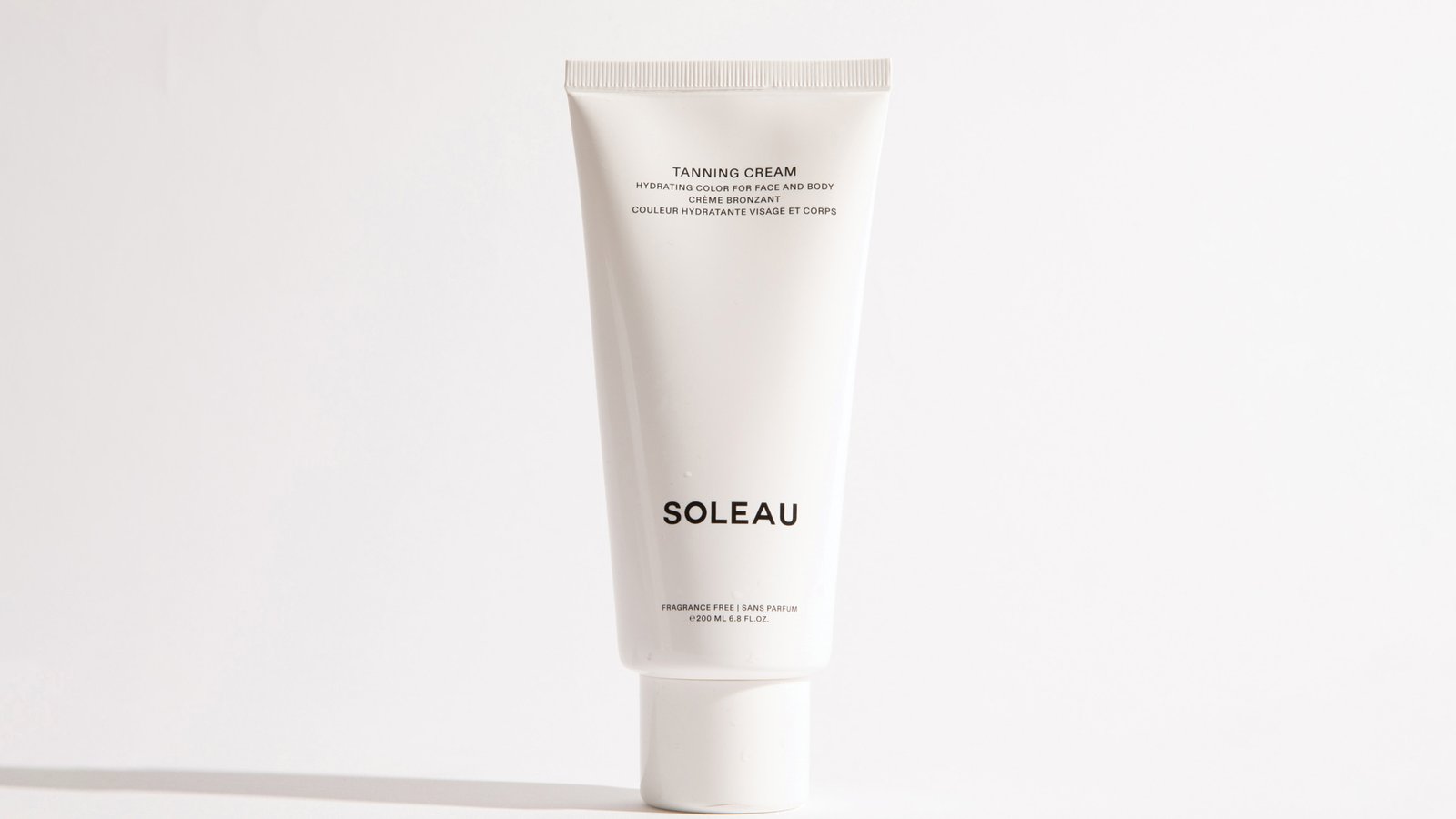
This is why we consistently recommend Soleau Tanning Cream — it's genuinely fragrance-free, relying on high-quality DHA and nourishing botanicals rather than synthetic masking agents. The result is a noticeably mild smell during development that most users describe as barely perceptible.
What Actually Makes a Self Tanner Smell Better
If fragrance isn't the answer, what is? Several factors in a formula's construction determine how much odor it produces:
DHA quality and purity. Pharmaceutical-grade DHA has fewer impurities and produces less odor during the Maillard reaction. Cheap, low-grade DHA has more reactive byproducts and smells significantly stronger. This is one of the most meaningful differences between budget formulas and well-made ones — you just can't see it on the label.
DHA concentration. Higher concentrations mean a faster, deeper tan — but also more chemical reaction happening on your skin at once, which means more smell. Formulas designed for gradual tanning or lighter results tend to smell milder. If you're chasing a dark tan quickly, you're trading some odor control for speed.
Supporting ingredients. Self tanners formulated with aloe vera, plant-based emulsifiers, and natural humectants tend to smell significantly cleaner than those relying on PEG compounds, synthetic polymers, and artificial preservative cocktails. The base that carries the DHA affects how the whole formula behaves on skin — including smell.
Short, clean ingredient lists. More ingredients generally means more potential for chemical interactions. A clean, minimal formula with good-quality actives will almost always smell better than a complex formula trying to do twelve things at once.
Practical Tips to Minimize Smell During Development
Even the best fragrance-free formula will produce some odor while the DHA reacts — it's just chemistry. But these habits make a real difference in how noticeable it is:
Apply at night. This is the single most effective strategy. Apply before bed, sleep while it develops, shower in the morning. You get your full development window with zero social exposure to the smell. The few hours of residual scent on your sheets is a much easier trade-off than spending a workday wondering if your colleagues can smell your tanner.
Let it fully dry before covering up. Give the product 10 to 15 minutes to absorb before getting into bed or getting dressed. This speeds up the dry-down, reduces transfer to fabric, and means less residual product sitting on the surface of your skin generating smell throughout the night.
Rinse after 6 to 8 hours. Most of the DHA reaction completes within this window. Rinsing won't remove your color — the tan is already set in your skin cells — but it removes the residue that continues to react and generate odor. You don't need to leave self tanner on indefinitely; once development is done, rinse it off.
Moisturize well before applying. Properly hydrated skin has better barrier function and seems to produce milder smell during development. Exfoliated, dry skin with exposed amino acids in the dead cell layer tends to react more aggressively with DHA. Moisturizing a day before your tan isn't just about even application — it's about skin quality.
Avoid exercise during development. Sweat activates and amplifies the DHA smell dramatically. If you're planning a morning workout, either apply your tanner the night before and rinse before you exercise, or plan your tan around a rest day. The combination of fresh DHA and sweat is genuinely unpleasant, and no amount of antiperspirant will fully mask it.
What Real Women Are Saying About Smell-Free Self Tanning
For a lot of women, the smell was what kept them away from self tanning for years. The reviews tell that story clearly:
"Love the natural tan and NO smell! Can't stand the after smell on the other products."
— Jenna D., verified buyer
"It has no weird smell and you don't turn orange. After four uses, I have the color that I want. It works fast and it makes your skin a beautiful sun-kissed color."
— Tamara H., verified buyer
"Love this product. First and foremost, clean ingredients and no smell. It is also hydrating and goes on like a lotion."
— Tena H., verified buyer
The pattern is consistent: women who'd written off self tanning because of the smell come back around when they find a formula that's actually fragrance-free and well-made. The smell issue isn't inherent to self tanning — it's inherent to low-quality self tanning.
The Bottom Line on Self Tanner Smell
The DHA reaction will always produce some byproducts — that's just the chemistry of how fake tans work. But the idea that self tanner has to smell bad is a relic of an older, lower-quality category.
Good formulas use high-purity DHA, clean supporting ingredients, and no fragrance masking. The result is a self tanner that develops quietly, with minimal odor, and leaves you with a natural-looking tan rather than a cloud of chemical florals.
If you've been avoiding self tanning because of the smell, it's worth giving a genuinely fragrance-free formula a try. The experience is categorically different — and the results might just convert you for good.
Already tanned and dealing with the smell right now, not shopping for a new formula? Our guide to getting rid of self tanner smell covers what actually helps once the DHA is already reacting.
For a full breakdown of how different self tanners compare on formula quality, smell, and color, see our complete ranking of the best self tanners for 2026.
Shop Soleau Tanning Cream →