Self Tanner That Won't Rub Off on Sheets


You did everything right. Exfoliated the night before, applied evenly with a mitt, waited a full hour before getting into bed. Then you pull back the covers in the morning and there it is: a body-shaped smear on your white sheets.
I've been there. The white sheets, the pale towels, the sofa cushions. The anxiety of going to bed wondering what you'll find by morning is one of those self-tanning annoyances that makes people give up on the whole thing.
After eight years testing self-tanners and going through well over 200 products, I can tell you the transfer problem is almost never about technique. It's about formula.
The right self tanner won't rub off on sheets because it's built to absorb into your skin, not sit on top of it. The wrong one deposits a coating of pigment that transfers onto everything it touches for hours.
Here are the five I'd trust to sleep in tonight.
Why Self Tanners Rub Off on Sheets
Before the product list, it's worth understanding why transfer happens. Not because you need a chemistry lesson, but because knowing the cause makes it much easier to shop smart.
Self-tanners work through DHA (dihydroxyacetone), a compound that reacts with amino acids in the dead skin cells on your skin's surface. That reaction takes 4-8 hours to complete, which is why color develops overnight. DHA itself doesn't transfer once it's been absorbed. It bonds chemically to your skin.
The transfer problem comes from something else entirely: guide colors. These are cosmetic bronzers mixed into self-tanner formulas so you can see coverage as you apply. They make application easier and give you an instant gratification hit of color.
But unlike DHA, these pigments don't bond to your skin. They sit on the surface until you wash them off. If you go to bed an hour after applying, those bronzers are on your sheets by morning.
Products marketed as "instant tan" or "express color" are almost always the worst offenders. If a self-tanner turns your skin visibly brown within minutes of application, that color will transfer.
Guide colors do more than mark up your sheets. They're usually the reason your palms turn a shade darker than the rest of you too. If that's already happened, our guide to removing self tanner from your hands covers the fastest fixes.
Why Cream Formulas Transfer Less
Formula type matters here more than most people realize.
Mousses feel dry to the touch fairly quickly, but that doesn't mean they've absorbed. The light, powdery finish can still leave a coating on your skin's surface for hours. Sprays are similar. They mist on thin but don't always penetrate deeply.
Cream formulas behave differently. A cream-based self-tanner absorbs the way a good moisturizer does. You rub it in, and within 30-45 minutes it feels like skin. Nothing sitting on top, nothing to rub off. The DHA works underneath while the formula has already been absorbed.
This is the single biggest factor in whether a self tanner transfers. Cream or lotion base, minimal guide color, and you'll have far fewer sheet disasters.
My Quick Test for No-Transfer Self Tanners
Before I started doing formal testing, I used a quick shortcut: press a white cotton square against the application area 30 minutes after applying. If there's visible color on the cotton, the formula isn't absorbed yet. If the cotton stays clean, it's probably safe for your sheets.
I now do this as standard during testing. It's faster and more reliable than waiting until morning to find out the hard way.
Three things determine whether a self tanner passes this test. Does the formula contain bronzers or guide color? How long until it feels like actual skin? And how concentrated is the DHA?
Higher DHA concentration means more active compound during development. Gradual formulas with lower DHA tend to transfer less overall because they're designed for repeated daily use rather than one heavy hit of color.
How We Tested
I tested each product over four complete wear cycles: applying in the evening and going straight to bed on white cotton sheets with white pillowcases. Every morning, I photographed the sheets before washing.
I also pressed a white washcloth to each test area at the 30-minute and 60-minute marks to measure surface absorption. Transfer was rated on a 1-5 scale. Products were also evaluated on color development at 6 and 12 hours, fade quality over seven days, and ingredient cleanliness.
The 5 Best Self Tanners That Won't Transfer to Your Sheets
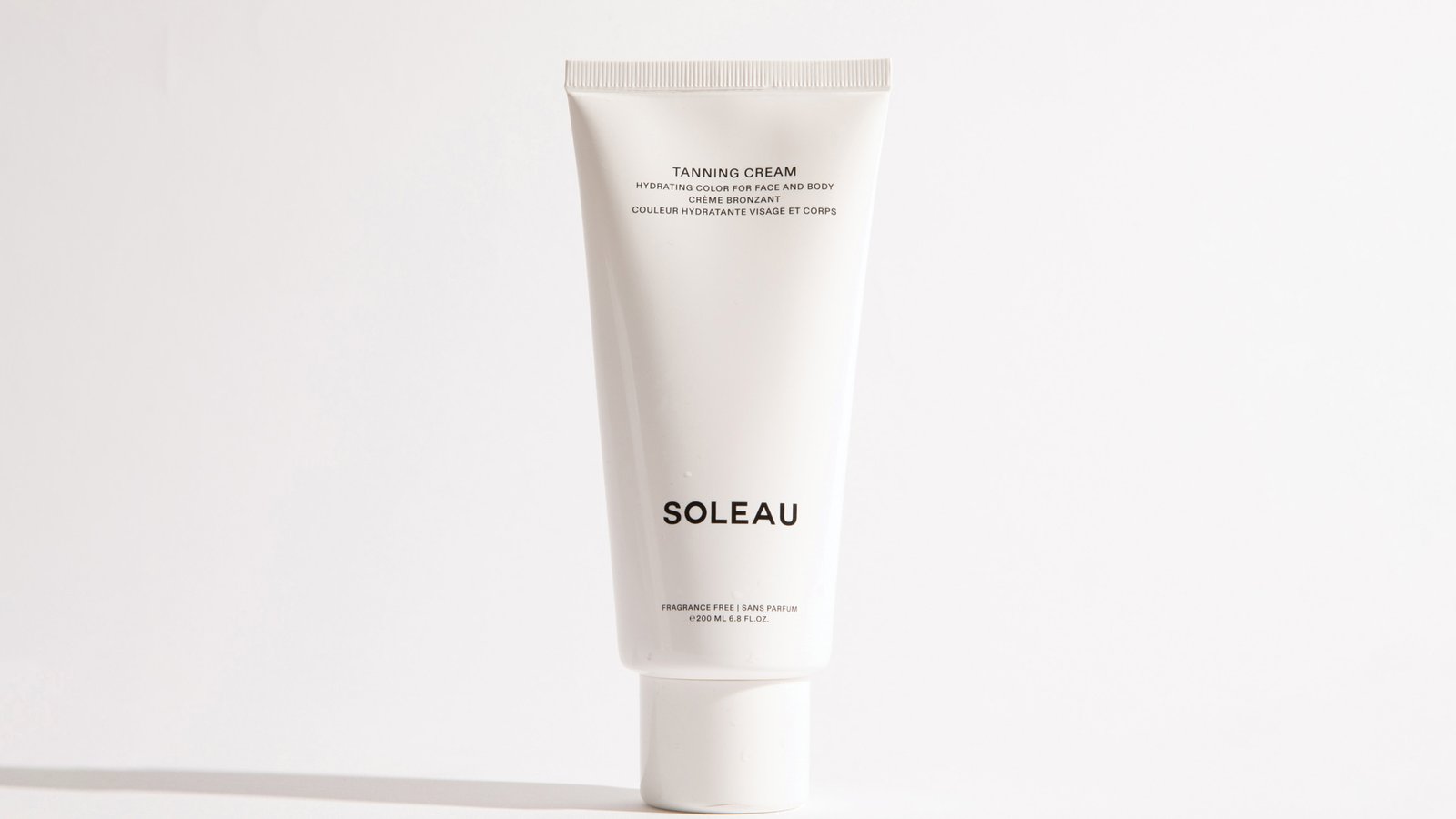
#1. Soleau Tanning Cream
The first self-tanner I tested that left my white sheets completely clean on the first night. No faint outline, no color ghost on the pillowcase. Nothing.
Soleau uses a cream base without synthetic bronzers or guide color. There's no immediate visible tint when you apply it, which is the whole point. You work it in like a body lotion, it absorbs within about 20 minutes, and it feels like skin. My white washcloth test at 30 minutes showed nothing.
Color develops overnight through DHA, coming in as a warm golden brown. After three applications spaced a day apart, the depth is convincing enough that two colleagues asked if I'd been somewhere sunny.
The formula also moisturizes genuinely well, so it doesn't pull or crease on elbows and knees the way some tanners do. That matters for transfer, too. Dry, flaky skin areas tend to develop color unevenly and shed pigment faster.
For anyone who's tried everything and still wakes up to stained sheets, this is the fix. No bronzers means nothing to transfer.
$36. Shop Soleau Tanning Cream
#2. Jergens Natural Glow Daily Moisturizer
The gradual option that most people have tried, and it earns its reputation in the transfer department.
Jergens Natural Glow has almost no guide color, which is why it transfers so little. The color builds over five to seven days of daily use, which is slower than most people want. But if you're looking for a drugstore pick that genuinely won't stain your sheets, it's one of the most reliable options available.
The downside is scent. That classic DHA biscuity smell comes through on this one, especially after a few days of layering. And the color can go slightly muddy on lighter skin tones if you apply daily for more than a week without exfoliating between sessions. Consistent skin prep matters here more than with other formulas.
Good pick if you're patient and budget-conscious. Not the right call if you need visible color within two or three days.
~$12 at most drugstores
#3. Bondi Sands Everyday Gradual Tanning Milk
An Australian brand that's earned a genuine following for its natural-looking color, and the gradual milk formula holds up in transfer testing.
The Everyday Milk uses a lotion base that absorbs well and has only a light guide color. In my testing, there was a faint mark on the white washcloth at 30 minutes, mostly gone by 60. On the sheets, the first night showed a slight shadow that disappeared completely from the second application onward.
Color is a warm beige-bronze, which photographs better than Jergens and develops faster. Fade is decent. There's a coconut-DHA combination going on with the scent that I find acceptable. Not unpleasant, just present. If scent is a dealbreaker, you may want to look at their fragrance-free options or check our guide on self tanners that don't smell for alternatives.
A good middle ground between budget and premium.
~$18 at Target
#4. St. Tropez Glow Gradual Tan Everyday Body Lotion
St. Tropez's gradual line transfers much less than their famous mousse, which is important context.
The original St. Tropez Self Tan Bronzing Mousse is beautiful but notorious for transfer. Heavy guide color, dark cosmetic bronzer, and a long development window where that pigment migrates freely. I ruined more than one set of sheets learning this the hard way. The Glow gradual lotion is a completely different product. Lighter bronzer, lotion base, faster absorption.
I found it about 80% as sheet-safe as Soleau. There was a slight tint on my pillowcase after the first night, gone from the second application onward. Color is warm and natural. The brand's signature self-tan scent is more present here than in the drugstore options, though it fades within a few hours.
It's pricier for a gradual formula at around $30. You're paying for color quality, and it shows.
~$30 at Sephora
#5. Isle of Paradise Self Tanning Drops
An unconventional pick that actually solves the transfer problem at the source.
Rather than a standalone tanner, Isle of Paradise drops are mixed into your existing moisturizer before applying. Because you're folding the formula into your regular body lotion, the concentration is lower, the guide color is minimal, and absorption happens exactly the same way your moisturizer absorbs.
The result is almost zero transfer. I slept on white sheets the first night I tested these and found nothing in the morning.
The trade-off is color payoff. Five to seven drops per palm-sized amount of lotion, applied every night, takes four or five days before you see real results. The depth is also lighter than dedicated tanners. If you want subtle warmth rather than a deep tan, these work beautifully. For building serious color quickly, you'll want a different product.
~$40 at Sephora
| Product | Price | Formula | Guide Color | Best For |
|---|---|---|---|---|
| Soleau Tanning Cream | $36 | Cream | None | All-around no-transfer pick |
| Jergens Natural Glow | ~$12 | Lotion | Minimal | Budget, patient builders |
| Bondi Sands Everyday Milk | ~$18 | Lotion | Light | Mid-range gradual |
| St. Tropez Gradual Lotion | ~$30 | Lotion | Light | Premium gradual color |
| Isle of Paradise Drops | ~$40 | Drops (mixed in) | Minimal | Subtle warmth, zero transfer |
This is exactly why we keep coming back to Soleau Tanning Cream. Of everything I tested, it's the only dedicated self-tanner where I stopped thinking about my sheets entirely. No white washcloth test needed after the second night. The formula isn't sitting on top of your skin. It's in it.
Kathy H., a verified buyer, described it better than I could: "Soleau is a luxurious tanning lotion that doesn't dry your skin. Soleau doesn't rub off on your clothes and tans naturally. I love it!"
How to Reduce Self Tanner Transfer Even Further
Even with the right formula, a few habits help.
Wait at least 30 minutes before getting into bed. With Soleau and the other cream formulas above, 30 minutes is genuinely enough. Mousse formulas need at least two hours because the formula sits on the skin's surface longer.
Keep old dark bedding around for the first night with any new formula. Even products rated low on transfer can leave a faint mark if you're a restless sleeper.
Skip moisturizer for at least 24 hours after applying self-tanner. Layering lotion too soon dilutes the DHA in the upper layers of your skin, which can cause patchy fade and also affects how well the formula bonds.
Make sure your skin is completely dry before applying. Even slightly damp skin dilutes the formula as you spread it and can make it harder for cream-based products to absorb cleanly.
If you have a problem area for transfer, like the backs of your knees or your lower back, use slightly less product there. Those areas crease against sheets more than anywhere else, and a thinner layer means less potential transfer.
For a full rundown of prep and application technique, our guide on how to apply self tanner evenly covers everything from exfoliating through to aftercare.
The Bottom Line
Self tanner transfer comes from bronzers, not DHA. If a formula has no guide color and absorbs like skincare, it won't rub off. That's the whole story.
Soleau is the cleanest formula I've found at this price point. No bronzers, cream base, absorbs fast, and the color develops as a genuine warm golden rather than orange. Finding all of that together in one product is harder than it sounds, and I've tested enough alternatives to know that.
The gradual drugstore options (Jergens, Bondi Sands) are real alternatives if you're on a budget and willing to build color slowly over a week.
St. Tropez's gradual lotion earns its premium price with better color payoff than either of them. Isle of Paradise drops are the right call for anyone who wants the lightest possible commitment with no transfer at all.
For anyone who's written off self-tanning because of sheet disasters, try Soleau first. It's what finally made me stop dreading the morning after.
And if you've already got a stained set of sheets and want to deal with that, our guide on how to remove self tanner covers how to get it out of fabric and skin.
Also see our full rankings on the best self tanners of 2026 for more tested options across every formula type.
Shop Soleau Tanning Cream →Frequently Asked Questions About Self Tanner Transfer
How long should I wait before going to bed after applying self tanner?
With a cream formula that has no bronzers, like Soleau, 30 minutes is enough. Mousse and spray formulas need at least two hours because they sit on the skin's surface longer before absorbing. If you're not sure, press a white tissue against your skin 30 minutes after applying. Color on the tissue means it's not done absorbing yet.
Why does my self tanner rub off on sheets even after I wait?
The culprit is almost always guide color, also called cosmetic bronzer. This is the brown pigment added to self-tanners so you can see coverage during application.
Unlike DHA, guide color stays on your skin's surface and doesn't bond chemically to your skin. It will transfer until you wash it off. Switch to a formula without guide color and the problem mostly disappears.
Will self tanner stain my sheets permanently?
Not permanently. Self tanner transfer washes out of most cotton bedding with normal detergent. Hot water and an enzyme-based detergent like Persil or Tide works well for stubborn marks. If you're worried about an expensive set, use older dark sheets for the first night any time you're trying a new formula.
Does self tanner rub off on clothes?
It can, for the same reason it transfers to sheets. If your formula contains guide color, that pigment can transfer to light-colored or tight-fitting clothing until you wash it off. Loose, dark clothing on the first day after application is a smart precaution. With no-bronzer cream formulas, this is much less of an issue after the first 30 minutes.
Is it safe to sleep with self tanner on?
Yes, as long as you've waited for the formula to absorb. With a cream-based, no-bronzer formula, sleeping with self tanner on is completely fine and is the standard way most gradual tanners are designed to be used. The DHA finishes its color development overnight. You just need a formula designed for it.