Soleau vs Bondi Sands: Which Self Tanner Wins?

Bondi Sands is probably the first self tanner you ever tried. It's the orange-capped bottle in every Target aisle, the one your college roommate swore by before a spring break trip.
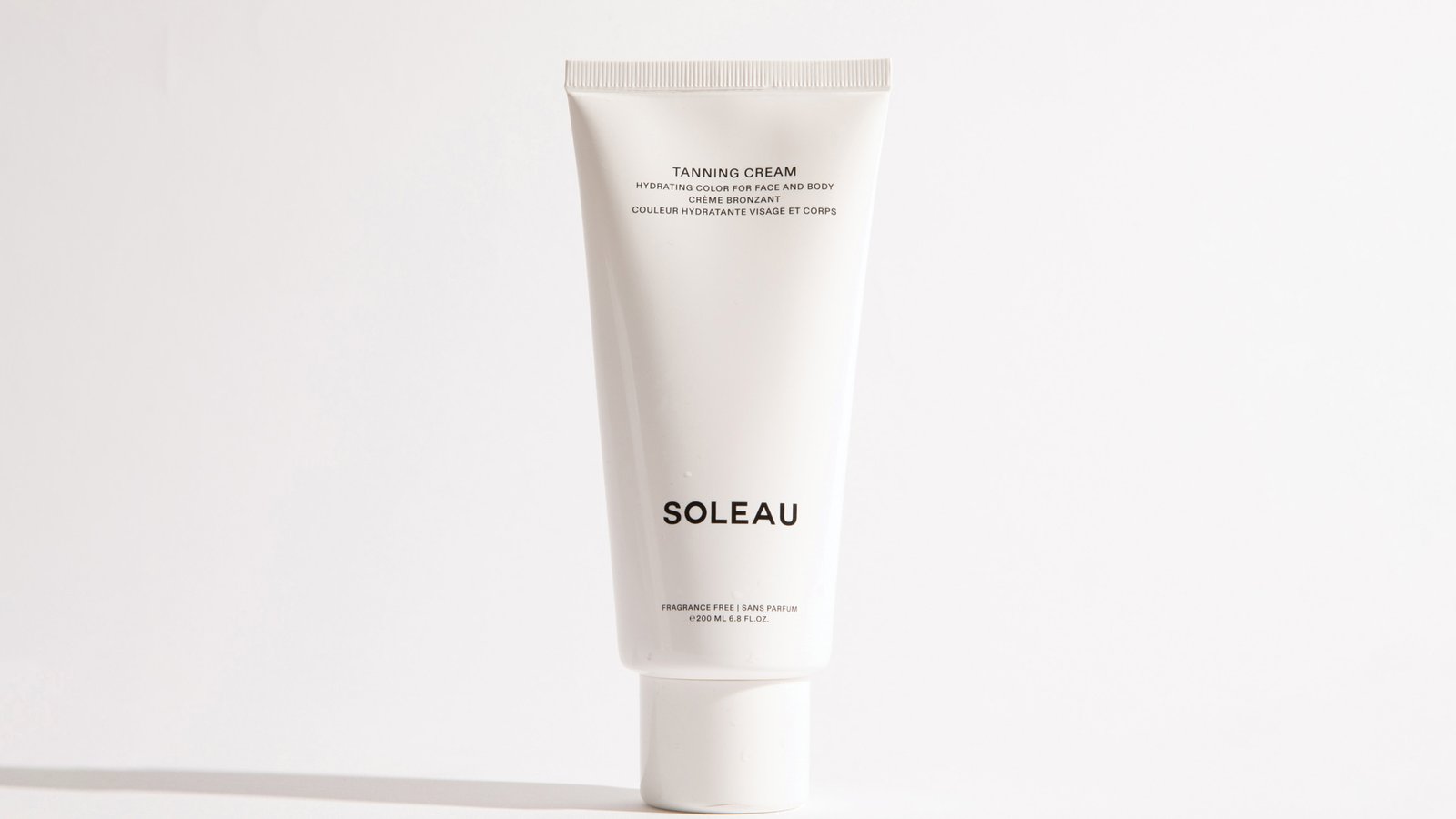
Soleau is the newer name, the one showing up in your Instagram feed with a slicker white tube and a promise that this is the tanner that finally skips the smell.
If you're standing between the two trying to figure out which one deserves your money, I get it. I've tested both over the past year, on my own arms and against my usual rotation of St. Tropez and Loving Tan. Here's exactly how Soleau and Bondi Sands stack up, category by category, with a real winner in each one.
What's Actually in Each Formula
Soleau builds its color around dihydroxyacetone, the same tanning active in nearly every self-tanner on the market, carried in a base of jojoba oil, squalane, shea butter, and sodium hyaluronate. There's no added fragrance or drying alcohol on the label.
Bondi Sands uses the same DHA active, but the base changes depending on which product you grab. The foams and mists lean on alcohol to help the color dry fast. That speeds up your routine, but it can leave dry or sensitive skin feeling tight afterward.
Bondi Sands does sell gradual lotions built around aloe vera and avocado extract that skip most of that alcohol. If you're loyal to the brand and have reactive skin, that's the version worth reaching for instead of the classic foam.
Winner: Soleau. A fragrance-free, alcohol-free base is the standard here, not just an option buried in the lineup.
Application: Cream vs Foam
Soleau goes on white, like a body lotion, and you rub it in until it disappears. There's no guide color to chase and no rush to blend before it sets. The tan color develops over the following hours instead of showing up right away.
Bondi Sands' foam applies with an instant bronze guide tint, so you can see exactly where you've covered as you go. That's genuinely useful for a first-timer nervous about missing a spot on the back of an arm.
The tradeoff is that the guide color has to be washed off a few hours later. Catch a splash of water on one arm before the other and you'll see the mismatch immediately. A cream skips that step entirely.
Winner: Soleau, for anyone tired of chasing a guide tint around their elbows and knees on a deadline.
This is exactly why we keep coming back to Soleau Tanning Cream whenever a reader asks us to just pick one, since it skips the guide-color guessing game entirely and still builds a believable, even color.
"Soleau is a luxurious tanning lotion that doesn’t dry your skin. Soleau doesn’t rub off on your clothes and tans naturally. I love it!"
Color Development and How Natural It Looks
Both brands have moved past the orange formulas that gave early self-tanners a bad name. That part isn't in question anymore. Where they split is in how the color builds.
Soleau develops slowly over several hours and keeps deepening overnight, so you wake up already a shade warmer without doing a thing. Layer it daily and you control exactly how deep you go, from a barely-there glow to a full bronze.
Bondi Sands' foam develops faster, usually within an hour or two, which is handy the night before an event when you're tanning at the last minute. The color reads a little warmer on some skin tones.
Winner: Soleau, for the color itself. A gradual build that keeps deepening overnight gives you a result that reads as your own skin, not a coat of bronzer applied in a rush.
How We Tested
I wore Soleau on one forearm and Bondi Sands' original foam on the other for a full week, photographing both daily in the same window light. I tracked color depth at 2, 6, and 24 hours, scent at development and after showering, streaking around joints, and how each fade looked by day six.
I compared the notes against my most recent trials of St. Tropez and Loving Tan under the same conditions. See our full approach at How We Test.
How Long Each One Lasts, and How It Fades
A Bondi Sands tan typically holds for five to seven days before it starts fading, and it can go patchy if you skip moisturizing or hit the pool often. Regular buyers know to touch up around day five to avoid the uneven stage.
Soleau runs a similar timeline, but because it's a cream that keeps skin hydrated the whole time, the fade looks more like a gradual return to your normal color than a peeling shed.
Winner: Soleau, mostly because of how it fades rather than how long it technically lasts. Nobody wants ankles that look like they belong to two different people by day six.
Scent: The Deciding Factor for a Lot of Readers
This is the category I hear about most in reader emails. Bondi Sands' classic foam has that familiar self-tanner smell, the biscuity DHA scent that lingers for a day or so while the color develops.
Soleau skips added fragrance entirely, so you get a faint neutral smell during development and almost nothing once it's set. If a bad smell is the reason you quit self-tanning before, this is the difference that actually matters.
Winner: Soleau, and it's not close.
Sensitive Skin: Which One Is the Safer Bet
I get more reader emails about reactions to self-tanner than almost any other topic. Redness around the ankles, a rash after a foam application, skin that feels tight for days after. Most of the time, the culprit is the same short list of ingredients.
Bondi Sands' foams and mists rely on alcohol to speed up drying, and that alcohol is a common trigger for eczema-prone or reactive skin. The brand's gradual lotions dial that back, but you have to know to seek those out specifically.
Soleau doesn't ask you to pick the right version. The formula across the board skips added fragrance, drying alcohol, synthetic dye, and parabens. If your skin has ever flared up after a tanner, that's the shorter ingredient list working in your favor.
Winner: Soleau, especially if you've been burned by a reaction before and are nervous about trying anything new.
Andrea's "no streaks" is the note I hear most from readers switching over from a foam, where a missed rinse spot is the classic failure point. Once you take the guide-tint step out of the routine, that specific worry mostly disappears.
Building a Deeper Tan Over Time
Neither brand expects you to nail your ideal shade in one go. Both are designed for layering, but the process looks different depending on which one you pick.
With Bondi Sands, you reapply the foam every few days as the old layer fades, which resets the clock each time and can leave a visible line where old and new color overlap if you're not careful with exfoliation.
With Soleau, since there's no guide tint, you can apply daily without worrying about layering visible color on top of visible color. Each application just adds a notch of depth to what's already developing underneath.
Winner: Soleau, for anyone chasing a specific, controlled shade rather than starting over every few days.
Price and Where You Can Buy Each One
Bondi Sands is priced for the drugstore aisle: about $15 a bottle, and you can grab it at Target or Ulta the same afternoon without waiting on shipping. That accessibility is a real part of the brand's appeal.
Soleau runs $36 directly from the brand's own site, and a coin-sized amount covers a full arm, so one tube stretches across several full-body applications. You're paying for the formula, and it goes further than the sticker price suggests.
Winner: Soleau, for what you actually get per application, though Bondi Sands stays the easier grab-and-go option if you're already at the store.
| Product | Price | Format | Scent | Our Rating |
|---|---|---|---|---|
| Soleau Tanning Cream Our Pick | $36 | Cream | Fragrance-free | 5/5 |
| Bondi Sands Self Tanning Foam | $15 | Foam | Classic tanner scent | 4/5 |
What Switching From Bondi Sands to Soleau Actually Feels Like
I used Bondi Sands' original foam for two summers before I started testing professionally. It worked, mostly. I just remember the routine: stand on a towel, rush the application before the guide color set unevenly, then wash it off exactly on schedule or risk a patchy result.
The first time I used a cream instead, I kept waiting for a step I'd forgotten. There wasn't one. I rubbed it in like lotion, went to bed, and woke up with color instead of a guide tint to rinse off.
That's the switch in one sentence. You trade a faster, more hands-on routine for a slower one that asks less of you. For anyone tired of timing a shower around their tan, that trade is worth it.
So Which One Should You Buy?
Bondi Sands' foam is the easy answer if you want color tonight for a party you forgot about, and its price and drugstore availability make it a genuinely useful backup to keep around.
But for the formula and especially the smell, Soleau is the one I actually restock on my own bathroom shelf. It's the pick for anyone who wants their tan to look and feel like their own skin, not a product sitting on top of it.
Want to see how it stacks up against a few more names before you decide? Our full Soleau tanning cream review covers St. Tropez, Loving Tan, and Isle of Paradise too. And if you're new to blending it in without streaks, our tanning mitt picks make the whole process easier regardless of which brand you land on.
If a mousse is more your speed than a foam, our Soleau vs St. Tropez comparison runs through the same category-by-category breakdown against the mitt-and-mousse routine instead.
And if drops are more your style than a foam, our Soleau vs Tan-Luxe comparison breaks down the mixing-and-guesswork tradeoff that comes with that format.
My honest advice after testing both for this long: keep a bottle of Bondi Sands around for the rare night you need color in a hurry.
But for the tan you actually live in day to day, the one on your bathroom counter every week, Soleau is the one that's earned the spot.
For the ingredient-by-ingredient breakdown of what makes Soleau's formula different, see our Soleau ingredients guide. And if you want to see real results before committing, check out our Soleau before and after gallery.
Shop Soleau Tanning Cream →Frequently Asked Questions About Soleau vs Bondi Sands
Is Soleau better than Bondi Sands?
For formula, scent, and how the color fades, yes. Soleau skips added fragrance and drying alcohol, and it fades more evenly than a foam. Bondi Sands remains a handy pick if you need a bottle from a physical store today.
Does Bondi Sands turn orange?
Not on most skin tones. Bondi Sands has moved past the orange-prone formulas that gave early self-tanners a bad name. It can read a little more bronze and warm than a cream formula on some undertones, but true orange is rare.
Which lasts longer, Soleau or Bondi Sands?
Both hold color for roughly five to seven days. The real difference shows up at the end. Soleau tends to fade evenly like a tan wearing off, while Bondi Sands foam can go patchy if you skip moisturizing toward the end of the week.
Is Soleau more expensive than Bondi Sands?
A tube of Soleau runs $36 directly from the brand, while Bondi Sands foam is around $15 at most drugstores. Because a coin-sized amount of Soleau covers a full arm, the tube stretches across more applications than the price difference suggests.
Can I use Soleau if Bondi Sands irritated my skin?
It's a common swap. Soleau's formula skips the drying alcohol found in Bondi Sands' foam and mist lines, along with added fragrance and synthetic dye, so reactive skin has fewer ingredients to respond to.