Best At-Home Self Tanner: 5 Picks for 2026

I canceled my last salon spray tan appointment eleven months ago and never rebooked. Not because the salon did a bad job. Because I finally found an at-home routine that gets me the same color in my own bathroom, on my own schedule.
The best at-home self tanner isn't the one with the prettiest bottle. It's the one that goes on evenly with zero salon-level skill and doesn't leave you smelling like biscuits at a dinner party.
It should also hold up for a week without turning patchy. I tested five of the most talked-about formulas to find out which ones actually earn a spot in your bathroom.
What Makes an At-Home Self Tanner Actually Work
A salon technician can save a bad formula with technique. At home, the formula has to do more of the work itself, since most of us aren't spraying ourselves with an airbrush gun.
Forgiving application. A formula that blends easily and gives you time to fix a heavy spot before it sets beats one that locks in color the second it touches skin.
A believable finish. Golden, not orange. This sounds obvious until you've tried a formula that oxidizes into a shade no beach has ever produced.
Low mess. No mixing, no plastic sheeting over your bathroom. Twist the cap, apply, done.
A fade that doesn't turn patchy. The best formulas fade evenly as your skin sheds, instead of flaking off in visible blotches after day four.
Formulas that check all four boxes are rare. Most nail one or two and fall short on the rest.
Cream, Mousse, or Foam: Which Format Fits Your Routine
Cream and lotion formats develop slowly, over 4 to 8 hours. That slowness is a feature, not a flaw. It gives you a window to catch and blend a heavy-handed spot before the color locks in.
Mousse trades that forgiveness for speed. Color shows up within an hour or two, which is genuinely useful the night before an early flight. The tradeoff is less room to fix mistakes once the formula starts setting.
Foam sits in between the two, usually a bit slower than mousse but faster than cream. It dispenses evenly and doesn't drip, which makes it a reasonable middle ground for anyone torn between the other two.
None of the three is objectively best. Pick based on how much time you have and how steady your hand is on a first attempt.
How We Tested
I tested five at-home self tanners over six weeks, applying each to matched sections of my arms and legs under identical prep conditions. I tracked application ease, color development at 4 and 8 hours, evenness after a full week, scent during development, and how the fade held up without turning patchy.
See more on our approach at How We Test.
The 5 Best At-Home Self Tanners We Tested
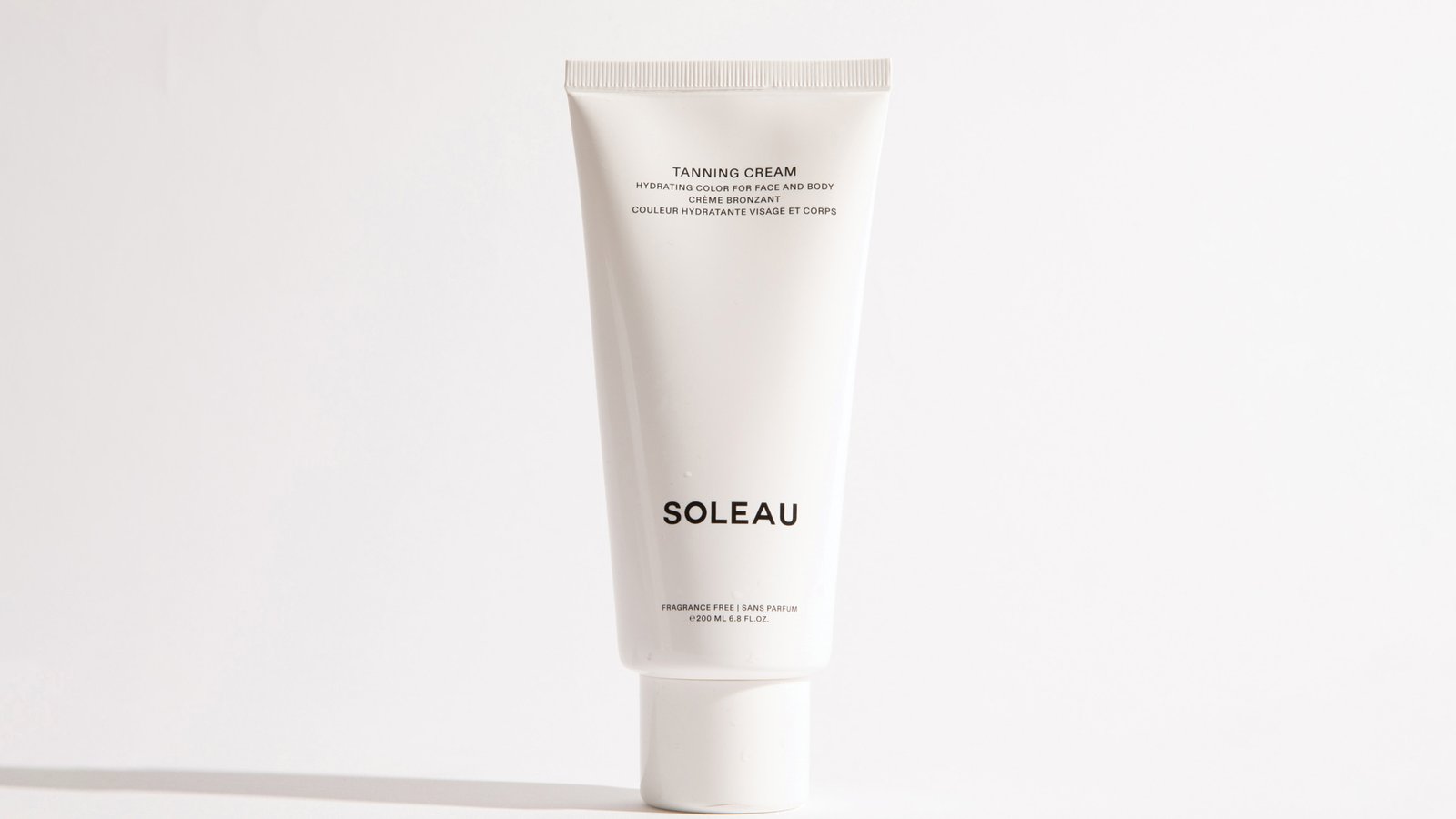
1. Soleau Tanning Cream (Best Overall)
A fragrance-free cream that stays workable long enough to blend out mistakes before the color sets. Over six weeks, this was the only formula I never had to redo.
Color builds over 4 to 6 hours into a warm shade that held up evenly through a full week of testing, fading without the blotchy patches I saw from two of the mousses.
2. St. Tropez Self Tan Express Bronzing Mousse
Fast color, ready to see results within an hour, which makes it a solid pick the night before an early morning event. The mousse texture takes practice to blend without streaking.
The one-hour speed comes at a cost: less room to fix a heavy-handed pass before it develops.
3. Bondi Sands Self-Tanning Foam
A budget-friendly option under $25 that delivers solid color for the price. The foam dispenses evenly and doesn't drip the way some mousses do.
Scent lingers longer than the cream formulas on this list, noticeable for most of the development window.
4. B.Tan Tanned AF Tanner Mousse
Vegan and cruelty-free, with genuinely low biscuity DHA smell compared to most mousses. It blended smoothly in my testing with minimal streaking.
Color runs slightly cooler-toned than the others here, which suits some skin tones better than others.
5. Tan-Luxe Hydrating Self-Tan Water
A water-based formula built around hydrating ingredients like hyaluronic acid and glycerin. Best suited to mature or dry skin that other formulas leave feeling tight.
Payoff is gradual, so it's not the pick if you want deep color from a single application.
| Product | Price | Type | Best For | Rating |
|---|---|---|---|---|
| Soleau Tanning Cream Our Pick | $36 | Cream | Even color, no redo | 4.7/5 |
| St. Tropez Express Mousse | $44 | Mousse | Fast, same-day color | 4.3/5 |
| Bondi Sands Self-Tanning Foam | $20 | Foam | Budget-friendly | 4.2/5 |
| B.Tan Tanned AF Mousse | $25 | Mousse | Low odor | 4.1/5 |
| Tan-Luxe Self-Tan Water | $44 | Water/serum | Mature or dry skin | 4.0/5 |
New to self-tanning entirely? Our beginner's guide to self tanner covers the basics before you buy your first bottle.
Why I Stopped Booking Salon Appointments
My old salon visit ran forty-five minutes door to door, plus the eight-hour wait before I could shower. An at-home application takes ten minutes and I sleep through the development window.
The color quality caught up too. Formulas have gotten better every year, and a cream that stays workable gives you time to blend the way a technician would, minus the appointment.
This is exactly why we keep coming back to Soleau Tanning Cream. It's the formula that finally made the salon feel unnecessary.
"This is the best self tanner I have ever used. The ingredients are clean and there is barely any scent once it develops. Color is natural and long lasting."
Mistakes That Ruin an At-Home Tan
- Applying right after a hot shower, while pores are still open and grab color unevenly.
- Skipping exfoliation, so the tan clings to dry patches on knees and elbows.
- Using body lotion the same day, which creates a barrier that blocks development.
- Getting dressed too soon, before the guide color has fully set.
I made the hot-shower mistake on my first at-home attempt and ended up with dark ankles that took a week to fade evenly. Wait at least twenty minutes after washing before you apply anything.
Deodorant and perfume cause the same problem in a different spot. Both leave a residue that blocks DHA from developing evenly, which shows up as pale patches under your arms or along your collarbone once the rest of your tan comes in.
Prepping for Your Best Result
Exfoliate the night before, focused on knees and elbows, where dead skin builds up fastest. Ankles need the same attention. Skip heavy lotion on the day you tan, and moisturize only the driest spots a couple hours ahead.
Apply with a mitt for even coverage on arms and legs. For the one spot you can't reach yourself, our guide to back applicators covers the tools that solve it.
For a full rundown of coverage from shoulders to toes, our guide to the best self tanner for body breaks down which formulas work best where.
Give the color the full development window on the label before you shower or get dressed. Rushing this step is the single most common reason a good formula still comes out patchy.
Ingredients Worth Checking Before You Buy
Every self-tanner relies on DHA to produce color, but the rest of the formula decides how it feels on your skin and how it smells while developing.
Glycerin and hyaluronic acid near the top of the ingredient list mean the formula doubles as a moisturizer. That matters because dry skin grabs DHA unevenly and turns patchy faster than hydrated skin does.
Fragrance is worth checking if scent is your main hesitation. A formula labeled fragrance-free skips added scent entirely, while "unscented" sometimes means a masking fragrance is covering the DHA smell instead of removing it.
Alcohol denat shows up in several fast-drying formulas to help them set quickly. It works, but it can leave sensitive skin feeling tight after repeated use. If your skin already reacts to toners, scan for a formula without it near the top of the list.
How Long Should It Last?
Most at-home formulas hold color for 5 to 7 days before visible fading starts. Your own skin-shedding rate matters more here than which brand you bought.
Moisturizing daily after the color develops slows that fade down, since dry skin flakes off faster and takes the tan with it. A light exfoliation right before your next application keeps the fade even instead of patchy.
Where to Buy Without Overpaying
Sephora and Ulta carry most of the brands on this list at full price, useful if you want to compare formulas in person before committing to a bottle. Brand websites tend to run sales a few weeks after a launch, often 20 percent off or more.
Amazon carries genuine stock from most of these brands, but skip listings from third-party sellers with prices that look too good. DHA breaks down with heat and light, and a bargain bottle may have sat somewhere hot before it reached you.
Buying direct from the brand also means you're covered by their return policy if a formula doesn't work for your skin tone, something most retailers won't offer once a tanning product has been opened.
Subscribe-and-save options are worth checking too if you land on a formula you'll repurchase. Most brands knock 10 to 15 percent off a recurring order, which adds up fast on a product you're buying every few weeks.
For the full ranking including salon-quality picks beyond just at-home formulas, see our complete guide to the best self tanners for 2026. And if you're deciding between a cream and a natural-ingredient formula specifically, our guide to the best natural self tanner covers that angle in more depth.
A great at-home self tanner does more than save you a salon trip. It puts the whole process on your schedule, at a fraction of the cost.
Shop Soleau Tanning Cream →Frequently Asked Questions About At-Home Self Tanner
What's the best at-home self tanner overall?
Soleau Tanning Cream topped our testing. It's fragrance-free and builds a golden color over a few hours. It never needed a redo, unlike two of the mousses on this list.
Can an at-home self tanner replace a salon spray tan?
For most people, yes. A well-applied cream or mousse produces color that's just as even as a salon tan, especially once you've done it a handful of times and learned your own technique.
How long does an at-home self tanner take to develop?
Most creams and lotions take 4 to 8 hours for full color. Mousses and foams develop faster, often visible within 1 to 3 hours, though the tradeoff is usually a shorter fade window.
What's the easiest at-home self tanner for beginners?
A cream or lotion format forgives mistakes better than a fast-setting mousse. The slower development gives you time to blend before the color locks in, which matters most on your first few tries.
How often should you reapply at-home self tanner?
Every 5 to 7 days for most formulas, as your skin sheds and the color fades with it. Exfoliating between applications keeps the fade even instead of patchy.