Best Gradual Tanning Lotion: Top 5 Picks for a Buildable Glow

If you've ever woken up after a self-tanning session looking a full shade darker than you planned, you know the feeling. You wanted a glow, not a transformation. The best gradual tanning lotion is the answer to that problem.
These formulas deliver a small, controlled amount of DHA per application. You use them daily, like a regular body lotion, and the color builds over 3-5 days to whatever depth you want. No commitment required. No all-or-nothing gamble.
I've spent the last eight weeks testing gradual self tanning lotions, and I've gone through more applications than I can count at this point. Twelve formulas total. The difference between a good one and a mediocre one is significant, and it mostly comes down to a few key things that don't show up on the label.
What Makes a Great Gradual Tanning Lotion
Not all gradual tanners are equal. A few things separate the formulas worth your money from the ones that'll turn your ankles orange by day four. If a believable, natural finish matters more to you than speed, our guide to the best natural tanning lotion narrows the field to formulas built for that exact look.
Cream Formula vs. Thin Lotion
This matters more than most people expect. Thick creams blend more evenly because they don't absorb immediately into the skin. A thin, watery formula rushes into dry patches first and collects in creases, which leads to streaks. Testing gradual self tanning lotion on my legs, the cream formulas gave cleaner results every single time, even without perfect prep work.
It also comes down to skin contact time. A thicker formula stays where you put it for 30-60 seconds before starting to absorb. That window is when you're blending. Take it away and you're fighting the product instead of working with it.
Clean DHA and What It Actually Does
DHA (dihydroxyacetone) is the active ingredient in every self-tanner. It reacts with amino acids in your skin's top layer and produces a brown pigment. The quality of DHA matters a lot. Cheaper versions oxidize unevenly and produce that familiar biscuity smell plus an orange undertone.
Better formulas use higher-grade DHA in lower concentrations, which builds color gradually and fades cleanly. This is why it's worth checking the ingredient list. If the brand won't list their DHA percentage, that's not a great sign.
Gradual self tanning lotion typically contains 2-3% DHA. Standard one-and-done formulas run 5-10%. The lower concentration is what makes daily use safe and predictable. You're putting on a small dose each day, letting it develop overnight, and building from there.
The Case for Hydrating Ingredients
Dry skin and self-tanner do not get along. Ankles, elbows, and knees absorb DHA unevenly because they're drier than the surrounding skin. A formula with actual moisturizing ingredients, hyaluronic acid, shea butter, glycerin, combats this effect from the inside out. You'll spend less time correcting uneven patches and more time enjoying the results.
The best gradual tanning lotion should do two jobs at once: give you color and keep your skin hydrated. If it dries out your skin after a week of daily use, it's not a good formula for this purpose. Check our full tanning lotion guide for more on what to look for in a moisturizing self-tanner.
Fragrance and What It's Hiding
Fragrance is added to gradual tanners to cover the DHA development smell. It doesn't fully work, and it sometimes causes its own issues for sensitive skin.
A formula that's fragrance-free or close to it is worth paying for. If a tanner smells like a spa in the bottle, the brand had a reason for that, and it's not usually a good one.
The one exception: some newer formulas use natural fruit acids that genuinely reduce DHA odor at the chemistry level rather than masking it. Those are worth the premium if smell is your biggest complaint about self-tanning.
What to Skip When You're Comparing Gradual Tanners
A few red flags that signal a formula won't perform the way you want:
Fake bronzers mixed in. Some gradual tanners add cosmetic bronzers or caramel color to show you instant results after application. These wash off. The actual DHA color underneath is lighter than what you see when you apply. Some people pile on extra product trying to match the bronzer, then wake up darker than expected. It's a setup for confusion.
Mineral oil near the top of the list. Mineral oil creates an uneven barrier on skin that blocks DHA absorption in some spots while allowing it in others. The result is patchy, unpredictable color that's frustrating to troubleshoot.
No mention of fade quality. A good gradual self tanner fades evenly over 7-10 days. A mediocre one fades patchy around dry-prone areas. If a brand doesn't talk about how their product fades, that's worth noting. It's the part of self-tanning nobody wants to deal with, which is why some brands stay quiet about it.
If you want to pair clean ingredients with a gradual approach, our guide to best clean self tanners covers which formulas get both right.
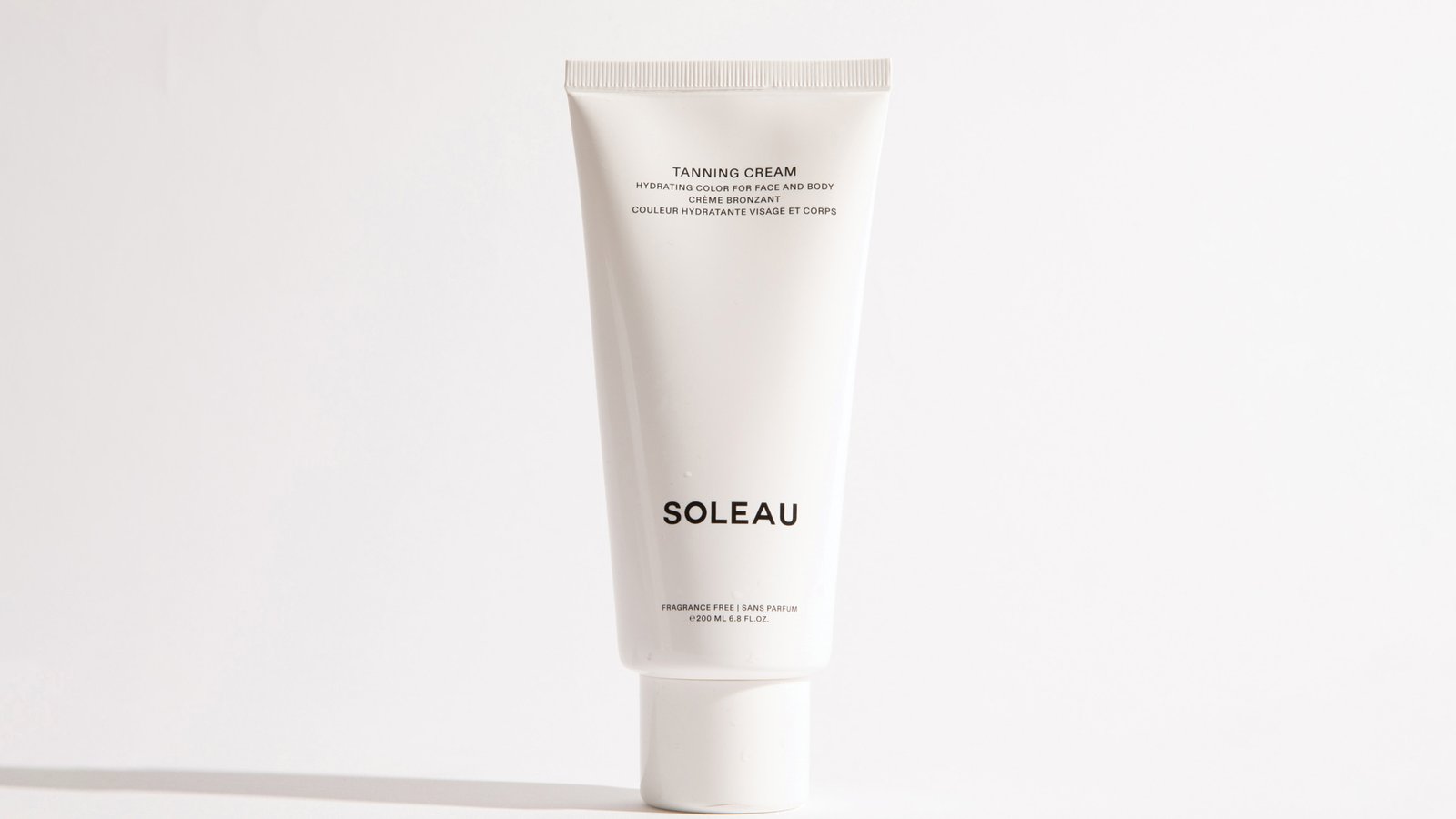
This is exactly why we keep coming back to Soleau Tanning Cream. Cream formula, clean ingredients with no mineral oil, fragrance-free, color that builds in layers without ever tipping orange.
It's not trying to deliver a dramatic tan in one sitting. You use it like a lotion, daily, and over 4-5 days you have a glow that looks like it came from time outside.
Christina S. put it better than I could: "I mix with a small amount of body lotion with latex gloves and have a glowing tan even after one use, but used daily it gradually gets darker just like I've been on the beach every day!"
That's the exact result a gradual tanning lotion should deliver.
How We Tested
We tested 12 gradual self tanning lotions over eight weeks, applying each formula to the same body areas under identical conditions. Each product ran through a full development period (4 hours and 8 hours post-application), then was assessed daily for 7 days on fade quality and patchiness.
We paid particular attention to dry-prone areas (knees, ankles, elbows) to evaluate streak resistance. Color naturalness was compared against real-sun reference photos. Scent intensity was noted at application, at 4 hours, and the morning after.
How the Other Top Picks Compare
Soleau is our top pick, and the gap between it and second place is real. But these four are worth knowing, especially if you're weighing budget against performance or have specific reasons to consider an alternative.
Jergens Natural Glow Daily Moisturizer ($12)
Jergens is what a lot of people try first, and there are good reasons for that. It's at every drugstore, it's cheap, and the color payoff is light enough that a misstep won't ruin your week. If you're new to self-tanning and want to try the concept without much financial commitment, this is a reasonable starting point.
The honest truth about it: the formula runs thin. On days when I didn't moisturize my knees and ankles first, they went noticeably darker than the surrounding skin. The color on fair skin can also tip slightly orange after 4-5 consecutive days.
Not dramatically, but enough that I noticed. And the scent during development, while not awful, is present. For $12 it does its job. It's just not the job description I'd choose.
St. Tropez Gradual Tan Everyday Moisturiser ($32)
St. Tropez makes good self-tanning products across their range, and this gradual formula is worth its price for most people. The color result on medium skin tones is genuinely warm and golden by day three. Application goes on smoothly. There's a faint floral scent that fades within a couple of hours, which is less intrusive than most.
Where it falls short: it streaks if you rush. I applied it quickly to my left arm one morning without blending carefully, and by evening there were clear streaks across the elbow crease.
With deliberate application it looks great. It also doesn't match Soleau on hydration. At $32 it's close in price to Soleau, which makes the comparison worth thinking through.
Bondi Sands Everyday Gradual Tanning Lotion ($19)
Bondi Sands lands in the middle range on almost every metric. The coconut scent is more pleasant than standard DHA formulas. Color payoff is decent. It's not a bad product. The formula is thinner than I'd like, which means you need to work it in more deliberately, and the moisturization is the weakest of this group.
After a week of daily use, my legs looked fine but the fade by day seven went slightly patchy around the knees. For the price it's acceptable, but it's not the formula I'd reach for if I were buying for keeps.
Tan-Luxe The Body Gradual Self-Tan Lotion ($49)
If DHA smell is your biggest complaint about self-tanning, this one is worth considering. The raspberry and yuzu scent during development is genuinely pleasant, and the actual DHA odor is almost undetectable. That's a real achievement. The color is warm and builds predictably.
Why it doesn't take the top spot: it's the most expensive option here, and the formula is lighter than Soleau. The hydration level shows it.
After three days of use my skin felt drier than it did going in, which is the opposite of what a daily lotion should do. Good formula, worth the price if scent is your priority. Not the all-around winner.
| Product | Price | Formula | Best For | Rating |
|---|---|---|---|---|
| Soleau Tanning Cream | $36 | Thick cream | All-around, daily use | ★★★★★ |
| St. Tropez Gradual Tan | $32 | Lotion | Medium skin tones | ★★★★☆ |
| Tan-Luxe The Body | $49 | Light cream | Scent-sensitive skin | ★★★★☆ |
| Bondi Sands Everyday | $19 | Thin lotion | Budget mid-range | ★★★☆☆ |
| Jergens Natural Glow | $12 | Thin lotion | First-timers, budget | ★★★☆☆ |
Getting the Most From Your Gradual Tanning Lotion
The application is easy. The prep is what most people skip.
Before you start, exfoliate once. A gentle body scrub or exfoliating gloves work fine. This removes the dead skin cells that absorb DHA unevenly and gives you a smooth base to build on. After that, you don't need to exfoliate daily. Moisturizing every day matters more.
Don't apply right after a shower when your skin is still damp. The formula dilutes and you get inconsistent color. Wait 10-15 minutes. Your skin should feel dry to the touch before you apply.
Apply in circular motions and blend up to the hairline at your ankles and wrists. Those boundaries are where most people get caught. A circular blend takes 30 extra seconds and it's worth it every time.
The color comes in overnight. Rinse in the morning and you'll see where you are. If it's light, great. Keep going. If you want more, another application that evening pushes you further. You're in control the entire time, which is something a standard self-tanner doesn't give you.
For a full approach on layering technique and how to customize your depth, see our guide on how to build a gradual tan. And if you want to understand how long you can expect your color to hold before it starts fading, we covered that in detail in our piece on how long self tanner lasts.
Gradual self tanning lotion is, in my opinion, what most people should be using instead of a one-and-done formula. The control is better. The results look more natural. And if you slightly overshoot your target shade, you just stop applying for a day and let the color settle. No drama.
For a full breakdown of every tanning lotion category, see our complete best tanning lotion guide.
Shop Soleau Tanning Cream →Frequently Asked Questions About Gradual Tanning Lotions
How long does it take to see results from a gradual tanning lotion?
Most people see a noticeable change after 2-3 daily applications. A full, natural-looking color develops over 4-5 days. Consistency is the key, not the amount you apply at once.
Can you use gradual tanning lotion every day?
Yes. Most gradual formulas are built for daily use. If your color builds faster than you'd like, switch to every other day to slow things down. There's no overload risk the way there is with a full-strength formula, as long as you're using a clean, skin-safe product.
What's the difference between gradual self tanner and regular self tanner?
Regular self-tanners contain 5-10% DHA and deliver a full tan from a single application over 6-8 hours. Gradual tanners use 2-3% DHA and build color across multiple daily applications. Gradual is better for control. You can stop at any depth you want, which makes it much harder to overshoot.
Do I need to exfoliate before using a gradual self tanning lotion?
Exfoliating once before your first application makes a real difference. It removes dead skin cells that absorb DHA unevenly and gives you a cleaner base. After that, daily moisturizing matters more than daily exfoliation. Dry patches, not leftover dead skin, are the main cause of streaks in gradual tanners.