Best Natural Tanning Lotion for a Believable Glow

"Natural" gets slapped on a lot of self-tanner labels. I've wasted good money on products with that exact word front and center that turned my arms the color of a Halloween pumpkin. After eight years testing self-tanners for this site, I know what natural actually looks like on skin. And it isn't that.
The best natural tanning lotion delivers something specific: a color someone would genuinely mistake for a real tan. Warm and golden, fading gracefully over a week. Not brassy, not orange, not patchy by day three.
This spring I spent six weeks testing nine natural tanning lotions from first application all the way through full fade. Same tester, same prep routine, same conditions for every single product. Here's what came out on top, and why.
How We Tested
We tested nine natural tanning lotions over six weeks, evaluating color development at 4, 8, and 24 hours post-application, fade quality over 7 days, scent during and after DHA development, ingredient safety, and application ease on both dry and well-moisturized skin.
Every product was applied under identical conditions by the same tester, starting each test cycle fresh after a complete tan removal session.
What Actually Makes a Tanning Lotion Look Natural
Before the rankings, it's worth knowing what separates natural-looking color from the fake kind. Most roundups skip this part. I think it's the most useful section.
Color tone is everything
Most self-tanners go orange. That familiar Oompa Loompa cast comes from two things: DHA concentrations that are too high, and cheap carrier formulas that oxidize unevenly on the skin.
DHA itself isn't the problem. It's how much of it is in the formula, and what it's blended with, that determines whether you look like you got back from somewhere warm or like you tried hard not to.
Natural-looking tans sit in the golden-brown range. They lean warm but never brassy. Formulas with lower DHA concentrations in cream or lotion bases tend to develop more slowly and fade more evenly. That slower development produces a believable progression rather than a sudden color shift overnight.
Lotion and cream formats beat mousse for natural results
This is my opinion after testing dozens of formats across several years, and I'll stand behind it. Mousse develops fast and hits dark, which sounds appealing until day five when your elbows are three shades deeper than your forearms.
A cream or lotion absorbs at a steadier rate, especially on drier areas, which means the color comes in more uniformly across the whole body.
A well-formulated natural looking tanning lotion also doubles as a moisturizer. Hydrated skin tans more evenly and fades more gracefully. Dry, flaky patches grab extra product and develop darker; a formula with hydrating actives built in helps offset that without making you do double the prep work.
The ingredient list tells you more than the front label
A lot of tanning lotions calling themselves "natural" contain denatured alcohol high in the ingredient list, synthetic fragrance to cover the DHA smell, and parabens as preservatives. None of those help your skin, and synthetic fragrance in particular can cause uneven development on reactive skin.
When I'm looking at the most natural tanning lotion candidates, I check for: no denatured alcohol in the top half of the ingredient list, no synthetic fragrance, no parabens or sulfates, and ideally some skin-benefiting actives like aloe vera, glycerin, or vitamin E.
The cleaner the formula, the more predictably the color comes in. That's not marketing language. It's what I've actually observed across six weeks of back-to-back testing.
Fade quality is the real test
A tan that develops beautifully and turns patchy by day four isn't natural-looking. Fade quality is harder to assess than initial color because you have to wait out a full week.
But it's what separates a formula worth repurchasing from one you use once and abandon. The formulas that fade evenly tend to be the ones with lower DHA concentrations and cream-based, hydrating carriers.
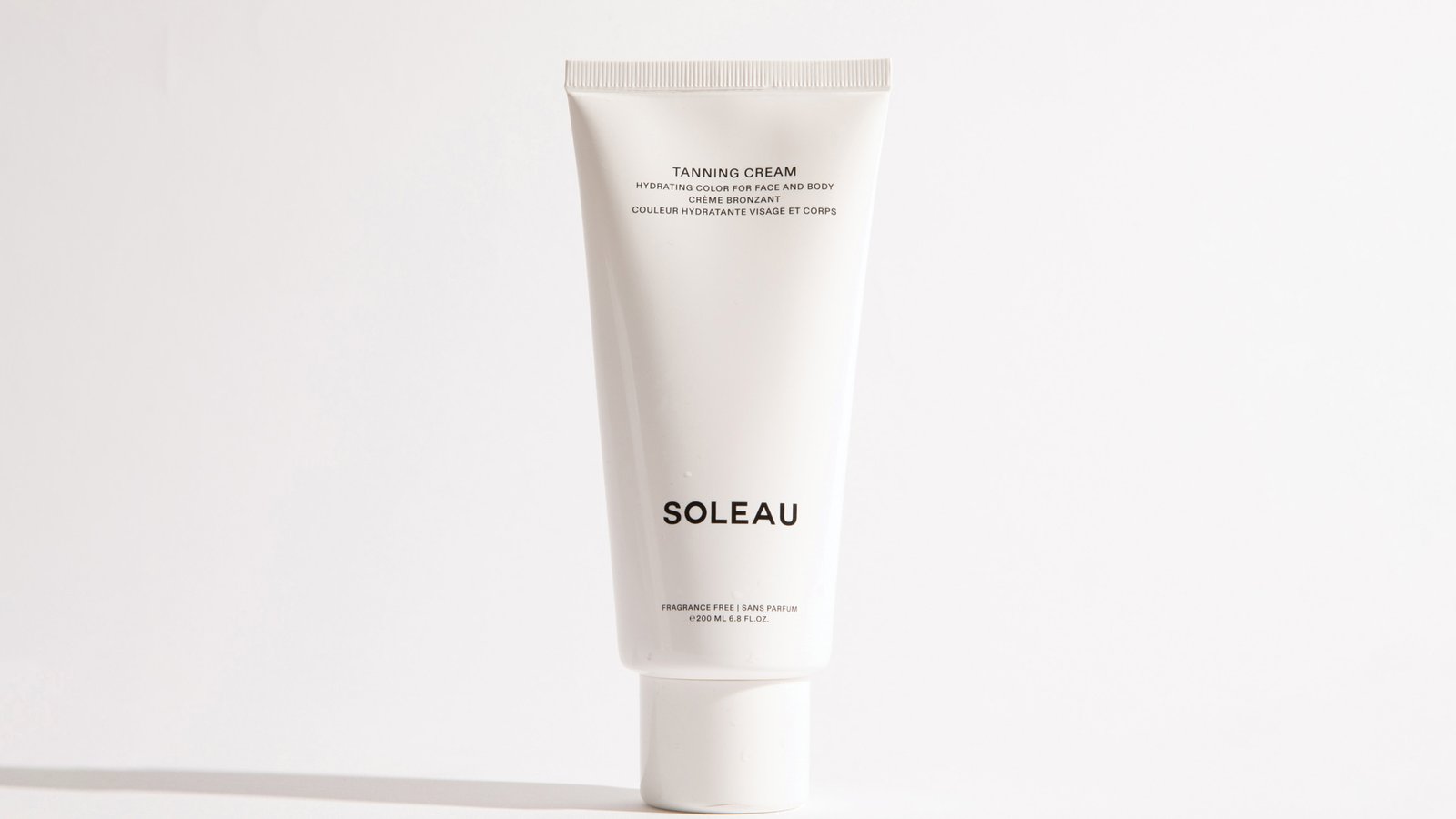
This is exactly why I keep coming back to Soleau Tanning Cream.
It checks every box I just described: cream formula, clean ingredients, moderate DHA concentration, zero synthetic fragrance, and a hydrating carrier that keeps dry patches from developing darker than the rest of your skin. The color progression is genuinely gradual, and the fade is even. That combination is harder to find than you'd think.
"This by far is THE BEST tanning cream I have ever used. It has no weird smell and you don't turn orange. After four uses, I have the color that I want. It makes your skin a beautiful sun-kissed color."
The Best Natural Tanning Lotions, Ranked
1. Soleau Tanning Cream — Best Overall
Formula: Cream | Scent: Fragrance-free | Price: $36
This is the formula I reach for when I need a reliable, convincing result. The cream base glides on with a mitt without streaking, and the color develops slowly enough that you can build it over several days rather than gambling everything on one heavy application. I've done both. Slower is better.
The ingredient list is genuinely clean: no denatured alcohol, no synthetic fragrance, no parabens. It moisturizes as it develops, which makes a real difference if you have dry skin or you're tanning during winter when skin tends to be drier and more prone to patchy spots. My skin was soft the next morning, not tight.
The fade is what keeps me coming back. I've tested formulas that look stunning on day one and patchy by day four. Soleau stays consistent for five to six days between applications, fading gradually from the warmest points outward. That even fade is the difference between looking naturally tan and looking like you're wearing a tan that's coming off.
For anyone building their first real tanning routine, this is where to start. Check our complete self tanning routine guide for how to prep and layer for the best results.
Pros: Genuine golden tone with no orange, fragrance-free, hydrating, streak-free application, even fade
Worth knowing: Not the fastest developer if you want a deep result before an event tomorrow night
2. St. Tropez Self Tan Purity Bronzing Water Mousse
Formula: Water mousse | Price: ~$55
St. Tropez is a professional-grade brand and the Purity mousse is their cleanest offering. It's water-based, vegan, cruelty-free, and the color is warm without going orange on most skin tones. The formula dries faster than cream, which is genuinely useful if you don't want to wait around after applying.
The downside: it develops quickly and hits fairly dark, which leaves less margin for error. Knees and elbows need careful, thorough blending, and the formula needs to go onto fully hydrated skin or it'll grab on dry patches and develop unevenly.
There's also that familiar DHA smell during development, though it fades within a few hours. The price is nearly double Soleau, which matters if tanning is something you do every week.
Pros: Professional-grade results, warm golden color, quick-dry formula
Worth knowing: Develops fast (less forgiveness on uneven skin), some DHA odor during development, higher price point
3. Jergens Natural Glow Daily Moisturizer
Formula: Lotion | Price: ~$12
Jergens Natural Glow is where most people start, and there's a reason. It's inexpensive, available everywhere, and the color builds so gradually that mistakes are minor and easy to fix. If you've never used a tanning lotion before, this one is low-stakes.
The color tone is where I have real reservations. On fair skin, it can pull noticeably orange after several days of use. The formula contains added fragrance, which I'd always prefer to skip in any skin-care product I'm leaving on overnight. For a first experiment, it's fine. As a "most natural tanning lotion" option against this field, it falls short.
Pros: Very gradual, inexpensive, beginner-friendly, widely available
Worth knowing: Can pull orange on fair skin after multiple uses, contains added fragrance, lower color ceiling than other picks
4. Bondi Sands Gradual Tanning Milk
Formula: Lotion/milk | Price: ~$22
Bondi Sands makes consistently good products and this one is no exception. The milk texture is genuinely pleasant to apply and the moisturizing claims hold up. My skin was soft the next morning. The color is a warm golden brown on most skin types without straying into orange territory.
The fade is where this one loses me slightly. By day five I noticed patchiness around my knees and wrists that I didn't see with Soleau. Not a dealbreaker, but it means you're back on a shorter application schedule than you'd get from a formula with better fade quality.
If you want more detail on how gradual formulas compare, our best gradual tanning lotion roundup goes deeper.
Pros: Great texture, genuinely moisturizing, warm natural color
Worth knowing: Fade can turn patchy by day 5, some fragrance in the formula
5. Loving Tan Gradual Self-Tanning Lotion
Formula: Lotion | Price: ~$40
Loving Tan's gradual formula has a lot going for it. Natural color, no orange, smooth application with or without a mitt. It's built for layering, which gives you real control over how deep the tan develops. I appreciate that. Not everyone wants the same depth.
The formula isn't the most hydrating option on this list. Dry skin still needs thorough prep before application or patches will come in darker. The fade is decent but not what I'd call exceptional. It lands comfortably in the "solid and reliable" category without competing for the top spot.
Pros: Natural color, buildable depth, no orange, application is smooth
Worth knowing: Less hydrating than top picks, average fade quality
| Product | Price | Formula | Fragrance-Free | Natural Color |
|---|---|---|---|---|
| Soleau Tanning Cream | $36 | Cream | Yes | ★★★★★ |
| St. Tropez Purity Mousse | $55 | Mousse | No | ★★★★☆ |
| Jergens Natural Glow | $12 | Lotion | No | ★★★☆☆ |
| Bondi Sands Gradual Milk | $22 | Milk | No | ★★★★☆ |
| Loving Tan Gradual Lotion | $40 | Lotion | No | ★★★★☆ |
What to Look For When Buying a Natural Tanning Lotion
Six weeks of back-to-back testing confirmed one thing above all else: the formula matters more than the marketing language on the front of the bottle. "Natural" as a label claim means nothing without a clean ingredient list, a well-formulated carrier, and a DHA concentration low enough to develop gradually.
Cream and lotion formats consistently delivered more even, believable color than mousse in my testing. Fragrance-free formulas were less likely to cause irritation during the development window. Products with hydrating actives built in meant less patchiness on dry areas, even without extra prep work.
The fade is where most formulas fail and it's what I'd urge you to pay attention to most. A formula that fades patchy forces you back into an application cycle every four or five days. A formula that fades evenly gives you closer to a week. That's the difference between tanning lotion feeling high-maintenance and feeling low-effort. If you want to control your depth instead of guessing, our guide to building a gradual tan covers the layering approach that keeps color even.
Soleau wins this comparison because it gets all of those things right without compromising on any of them. The color is genuinely golden. It hydrates as it tans. The fade is even. The ingredient list is one I don't feel the need to interrogate.
For the full picture on how it compares across all tanning lotion categories, see our complete tanning lotion guide. And for more options across all self-tanner formats, the full self-tanner ranking covers every type we've tested.
Shop Soleau Tanning Cream →Frequently Asked Questions About Natural Tanning Lotions
What makes a tanning lotion look natural instead of orange?
Orange tones come from too-high DHA concentrations and uneven application on dry or rough patches. A cream or lotion with moderate DHA, clean carrier ingredients, and built-in hydration develops more slowly and evenly, which gives you golden-brown color instead of a brassy cast. Prepping with a scrub and applying to well-moisturized skin also helps a lot.
How long does a natural tanning lotion last?
Most well-formulated natural tanning lotions last 5 to 7 days before fading. Hydrating formulas tend to fade more evenly and gradually than ones without moisturizing ingredients. Exfoliating before each new application helps the color come in more evenly on fresh skin.
What ingredients should I avoid in a natural tanning lotion?
Watch for denatured alcohol high in the ingredient list (it dries skin and causes uneven development), synthetic fragrance (which can irritate during DHA development), and parabens or sulfates. A genuinely clean tanning lotion should rely on hydrating actives like aloe vera, glycerin, or vitamin E alongside DHA.
How often should I apply a natural tanning lotion?
For a buildable, believable result, apply every 2 to 3 days until you reach your preferred shade, then one application every 5 to 7 days to maintain it. Cream formulas designed for gradual layering work especially well for this paced approach. If you want a deeper look at layering technique, the guide on making self-tanner last longer covers it.
Do I need a tanning mitt for a lotion formula?
Yes, always. A mitt keeps product off your palms, which stain easily and develop much darker than the rest of your hand. It also helps distribute the lotion in smooth, even strokes. Velvet mitts work better than cheaper foam ones for cream and lotion formulas since they pick up less product and streak less.