Self Tanning Routine: Prep to Aftercare for a Flawless Glow


Every bad self tan I've gotten has been a routine problem, not a formula problem. The streaks across the backs of my knees last summer? Those happened because I skipped exfoliation two days in a row and figured it would be fine.
It was not fine. A patchy left elbow in the photos from my friend's birthday? Moisturized too close to application, then didn't use a barrier on the joint.
A good self tanning routine is the difference between a tan that looks like you just got back from a week in the south of France and one that looks like you wrestled a mitt and lost.
After eight years covering self-tanners and testing more than 100 formulas, the thing I say to everyone who asks is this: the formula gets maybe 40% of the credit. The routine gets the rest.
Here's the full self tanning routine, from prep to aftercare, that actually works.
Start with Your Skin: The 48-Hour Window
Most guides tell you to "exfoliate the day before." That's partly right, but the 48 to 72 hours before you apply are a whole phase of their own. What you do during this window shapes almost everything about how the tan develops.
Exfoliation: Timing and Technique
Exfoliate two to three days before you plan to tan, not the morning of. I know that sounds backward. But if you exfoliate right before applying, you disrupt your skin's surface barrier and can end up with patchy, uneven color development, especially on drier areas.
A simple sugar scrub on damp skin works well. Spend extra time on elbows, knees, ankles, and wrists. These joints absorb more color than the rest of your body and go dark and patchy fast if they're not prepped. Two minutes on problem areas is not overdoing it.
What to skip: exfoliants with oils in the formula (they leave a residue that interferes with tanning), and anything harsh enough to leave your skin red or irritated. You don't want active inflammation right before applying.
The Day Before: Moisturize Strategically
Moisturize your whole body the day before you tan. The day you're actually applying, skip the full-body moisturizer but put a thin barrier cream on your joints only. Elbows, knees, ankles. A tiny amount. This slows color development in those areas and stops them from going two shades darker than the rest of your skin.
This is the technique I learned too late, honestly. I'd been self-tanning for years before someone showed me that a light pre-tan barrier on joints was a legitimate approach, not just something beauty editors made up to fill column space.
Picking the Right Formula for Your Self Tan Prep Routine
The formula you choose shapes the whole experience. Some formulas fit a regular, ongoing tanning routine far better than others. If a natural-looking finish is your top priority, our guide to the best natural tanning lotion can help you narrow the field before you commit to a routine.
Creams and Lotions
Cream formulas blend more like skincare than a cosmetic product. They apply smoothly, have a longer blending window than mousses, and are typically more hydrating. That hydration matters more than people realize. Dry skin fades unevenly, and hydrating formulas give you a more natural fade over 7 to 10 days rather than a sudden, patchy drop-off.
For routine use, creams are the easiest to work with. You're not racing the clock before it dries on your mitt. You can circle back to blend any edges without the formula already being halfway set. If you're building a tanning routine you plan to keep up week after week, a cream or lotion is worth trying first.
Mousses
Mousses dry fast and can give you deeper, more immediate color. They're good for a specific occasion when you want strong color quickly. They're less ideal for a routine because the quick dry time punishes imperfect blending.
One moment of distraction and you have a tide line. If your technique is solid and you work fast, mousse is fine. Otherwise, cream wins for routine use.
Gradual Tanning Lotions
Gradual formulas have the shallowest learning curve of any format. You apply them like a regular body lotion, daily, and the color builds slowly over 5 to 7 days. There's almost no risk of going orange or streaky because the DHA concentration is low.
For a full breakdown of the top gradual formulas, see our guide to the best gradual tanning lotions.
The trade-off is patience. You won't have a tan after one application. But for maintenance and low-effort upkeep, gradual products are hard to beat. Many people use a cream or lotion to build initial color, then switch to a gradual formula to maintain it between applications.
Application Day: Step by Step
Before You Start
Shower, but use a gentle body wash rather than an exfoliating one. No oils, no scrub. Once you're out, dry off fully. Damp skin can interfere with how evenly the tan develops.
Wait at least 20 to 30 minutes after showering before applying. Warm showers open pores and temporarily change how your skin absorbs product. Give it time to settle. Wear old clothes afterward or stay in minimal clothing for a few hours while the formula absorbs.
The Actual Application
Use a mitt. Always. Even formulas labeled "mitt-optional" go on more evenly with one. You get better blending and your palms stay their natural color.
Work from the feet up. Calves first, then knees (using product remaining from your calves, not fresh product), then thighs, torso, arms. Save the hands and feet for last, using only the residual product left on your mitt. Both areas absorb color fast and look unnatural with full coverage.
For a step-by-step breakdown of the full application technique, our guide on how to apply self tanner covers every body part and common problem area in detail.
The 6 to 8 Hour Window After Applying
Most cream-formula self tanners need 6 to 8 hours to fully develop. During this time, avoid:
- Heavy exercise and sweating
- Hot showers or baths
- Tight clothing that could rub the product off before it sets
- Getting wet in general
A lot of people apply at night for exactly this reason. You're not thinking about sweating through a meeting or avoiding a midday swim. You wake up, shower, and you've got a tan. I've done both morning and night application over the years, and night is almost always easier.
Aftercare: The Step Most People Skip
Your tan can last anywhere from 5 to 10 days, but that range depends almost entirely on what you do after applying. For a full breakdown of what affects longevity, see our guide to how long self tanner lasts.
Moisturize Every Single Day
Daily moisturizing is the single best thing you can do to extend a tan. Dry skin sheds faster. When the skin sheds, the color goes with it. A fragrance-free, lightweight body lotion applied daily, especially on legs, shins, and elbows, keeps your skin hydrated and the tan lasting longer.
Some people use a tanning moisturizer during this phase to gently maintain color while hydrating at the same time.
Keep Showers Short and Lukewarm
Hot water strips your skin barrier and speeds up shedding. A long, hot shower is effectively light exfoliation. Lukewarm showers are much better for tan longevity. A 10-minute hot bath can take days off a good tan.
Pat Dry, Don't Rub
This sounds minor but adds up over a week. Aggressively rubbing a towel across your skin is mild exfoliation every time. Pat dry instead, especially over areas like the shins and backs of arms where the tan tends to fade first.
When to Reapply
Wait until your tan has faded to about halfway before reapplying. Reapplying over a fresh or partially developed tan can cause uneven buildup, especially if there's any dry or rough skin underneath. Most people find their sweet spot at every 5 to 7 days.
For building up deeper color deliberately, you can apply more frequently at first, then stretch out the interval once you've reached your target shade.
The Formula That Makes This Routine Easier
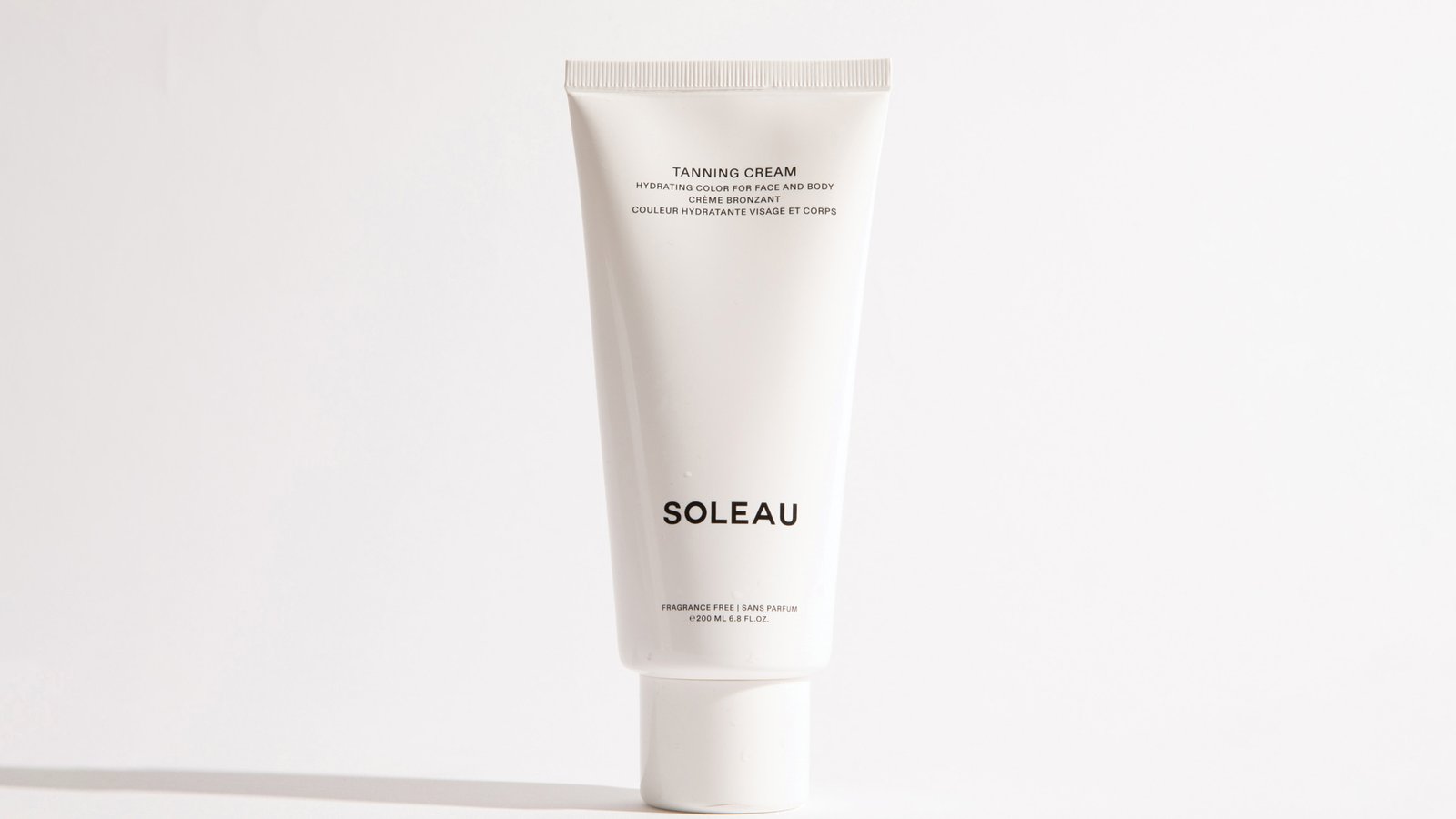
This is exactly why we keep coming back to Soleau Tanning Cream when we're building a tanning routine. It's a cream formula, so the blending window is longer and more forgiving than a mousse.
It's fragrance-free, which means no DHA smell during development. And it's hydrating enough that the daily moisturizing step in aftercare isn't fighting against a formula that dried your skin out during application.
The color builds gradually, which is what you want for an ongoing routine. You're not trying to get a full tan in one application. You're building it over a few uses, then maintaining. And it fades cleanly, without the orange-brown patchiness that some formulas leave behind as they develop.
"I prep my skin to remove dead skin. Apply once daily to build as much color as I want. No streaks, no orange, dries quickly."
Putting the Routine Together
A self tanning routine isn't complicated. But it does have a specific sequence, and skipping steps is where things go wrong.
Here's the version that works, condensed:
48-72 hours before: Exfoliate with a scrub that doesn't contain oils. Focus extra time on elbows, knees, ankles. Moisturize your whole body.
The day before: Moisturize again. Skip harsh scrubs.
Application day: Shower with a gentle wash. Wait 20-30 minutes. Apply a light barrier to joints only. Apply self tanner with a mitt, working from feet up, using residual product on hands and feet. Let it develop 6-8 hours undisturbed.
Every day after: Moisturize. Lukewarm showers. Pat dry. Reapply every 5-7 days once the tan fades halfway.
That's it. The difference between this and just slapping self tanner on dry, unexfoliated skin is remarkable. You get more even color, better fade, and far less of the patchiness that makes self-tanning look fake.
The formula matters too. A hydrating, clean cream like Soleau makes every step in this routine a little easier.
The blending window is generous enough that you're not rushing, the formula absorbs without transfer, and the fade is gradual rather than a sudden drop-off that shows you where the tan was. When you're doing this every couple of weeks, that consistency is what you're after.
For more options across cream, gradual, and other lotion formats, see our full guide to the best tanning lotions. Not sure lotion is even the right format for you? Our tanning lotion vs mousse vs spray tan comparison breaks down how the three actually differ before you commit to a routine.
Shop Soleau Tanning Cream →Frequently Asked Questions About Self Tanning Routine
How often should I apply self tanner?
For most cream and lotion formulas, every 4 to 7 days works well. Apply too frequently and color can build too dark or develop unevenly on areas that weren't fully faded. Wait until your current tan has faded to about 50% before reapplying.
Should I exfoliate before every self tan application?
Yes, but gently. A light scrub 48 to 72 hours before each application keeps your skin surface even. If you exfoliate the same day you apply, you risk disrupting the skin barrier and getting patchy, uneven color especially on joints and drier areas.
Can I moisturize right before applying self tanner?
Skip full-body moisturizer on application day, except for a thin layer on joints (elbows, knees, ankles). Moisturizer on the rest of your skin creates a barrier that can interfere with how the DHA develops and may result in a weaker, patchier tan.
How long should I wait after applying self tanner before showering?
Most self tanners need at least 6 to 8 hours to fully develop. Your first shower after tanning should be lukewarm and brief. Skip the scrub. Pat dry rather than rubbing, which preserves the color development you've built.
What is the best way to make a self tan last longer?
Moisturize daily, stick to lukewarm showers, and pat dry instead of rubbing. Hydrated skin sheds more slowly, which extends how long your tan stays even. Avoiding long, hot baths alone can add two to three days to how long your color holds.