Best Streak-Free Self Tanner: 5 Picks That Actually Work

I once spent a full Friday evening doing a careful self tan, went to bed satisfied, and woke up Saturday with three dark horizontal stripes across the backs of my thighs. The best streak-free self tanner is genuinely hard to find, because most streaks aren't about technique.
They're about formula. Some self tanners are just built to streak. They dry too fast to blend evenly. They contain drying alcohols that rough up your skin mid-application. They develop in under two hours, so there's no time for small imperfections to even out.
I've been testing self tanners for eight years and have covered everything from drugstore options to high-end salon brands. Here's what separates the streak-free formulas from the ones that turn your legs into abstract art, plus the five picks I'd actually trust.
How We Tested
We tested eight self tanners over four weeks, applying each product at least three times on arms, legs, and torso.
We evaluated blendability window (how long the formula stayed workable before setting), color evenness at 6 and 12 hours, performance on dry-prone areas like knees and ankles, fade quality at day 5 and day 7, and overall streak count across test cycles. All applications used the same exfoliation prep and a tanning mitt.
Why Most Self Tanners Streak
Three things cause streaks. Only one of them is technique.
The formula dries too fast. This is the big one. Mousse and spray tanners set within seconds of touching your skin. That's great for getting dressed quickly. It's terrible for blending. By the time you've finished one thigh, the area you started with has already begun setting.
Any missed spots, any slightly uneven mitt pressure, any hesitation over a knee cap: all of it locks in. Cream formulas stay wet on your skin for 30 to 60 seconds longer. That sounds small. On a full leg, it's the difference between clean edges and a tide line.
Alcohol content dries your skin mid-application. Many drugstore self tanners use alcohol to thin the formula and speed dry time. The side effect is that they actively dehydrate your skin as you spread them.
You started with moisturized legs. By the time you've finished your second shin, the alcohol has dried out the patches behind your knees and around your ankles. DHA absorbs faster into dry skin, so those spots go noticeably darker than everything else.
Bronzer guide dyes that don't track with DHA. Adding a visible tint so you can see where you've applied sounds like a great idea. The problem: cheap bronzer dyes don't always spread identically to DHA.
You blend what looks like a perfectly even application, wake up to patchy color, and wonder what went wrong. The guide tint blended fine. The DHA underneath didn't.
What the No-Streak Formulas Have in Common
After testing over 100 self tanners across eight years, the ones that consistently produce streak-free results share the same four qualities.
A cream or lotion base
Cream and lotion formulas stay workable long enough to cover large body areas before anything starts setting.
When I apply a cream self tanner, I can do my entire left leg top to bottom, go back and blend through the knee cap, hit the ankle, and double-check the back of my calf, all before any color starts developing. With mousse, I'm racing the clock from the moment it touches skin.
This matters most on large areas with difficult contours: the backs of thighs, around the knee, behind the ankle. These spots need time to blend properly. Mousse doesn't give you that time.
Moisturizing ingredients
The streak-free tanners I keep coming back to include glycerin, aloe vera, or a similar humectant that keeps your skin surface hydrated during application. When your skin stays moisturized while you're applying, the tanner spreads evenly. Without that moisture buffer, the formula pools in dry patches and absorbs unevenly before you can blend it out.
I tested this directly: I applied two tanners back-to-back on alternating days, one with a moisturizing base and one without, using the same prep and technique. The moisturizing formula produced noticeably more even color at the knee and ankle both times.
Gradual DHA development
Products that develop over 6 to 8 hours are far more forgiving than 1-hour express tanners. Slow development gives small imperfections time to blur out. The edges of any slightly uneven coverage gradually soften as the color develops. Express tanners lock in every imperfection within the hour. You can't fix it. It's just there.
A buildable, lighter-concentration formula
This is the most underrated streak-prevention approach. Using a lighter self tanner and building color over 4 to 5 days is far more forgiving than trying to hit full depth in one application.
Your first coat goes on light, easy, no pressure. The second coat fills any tiny missed spots. By day five, you have deep natural color with zero streak history. One heavy application leaves no room for correction.
The 5 Best Streak-Free Self Tanners
I'm ranking these in order of how consistently they applied without streaks across all three test cycles.
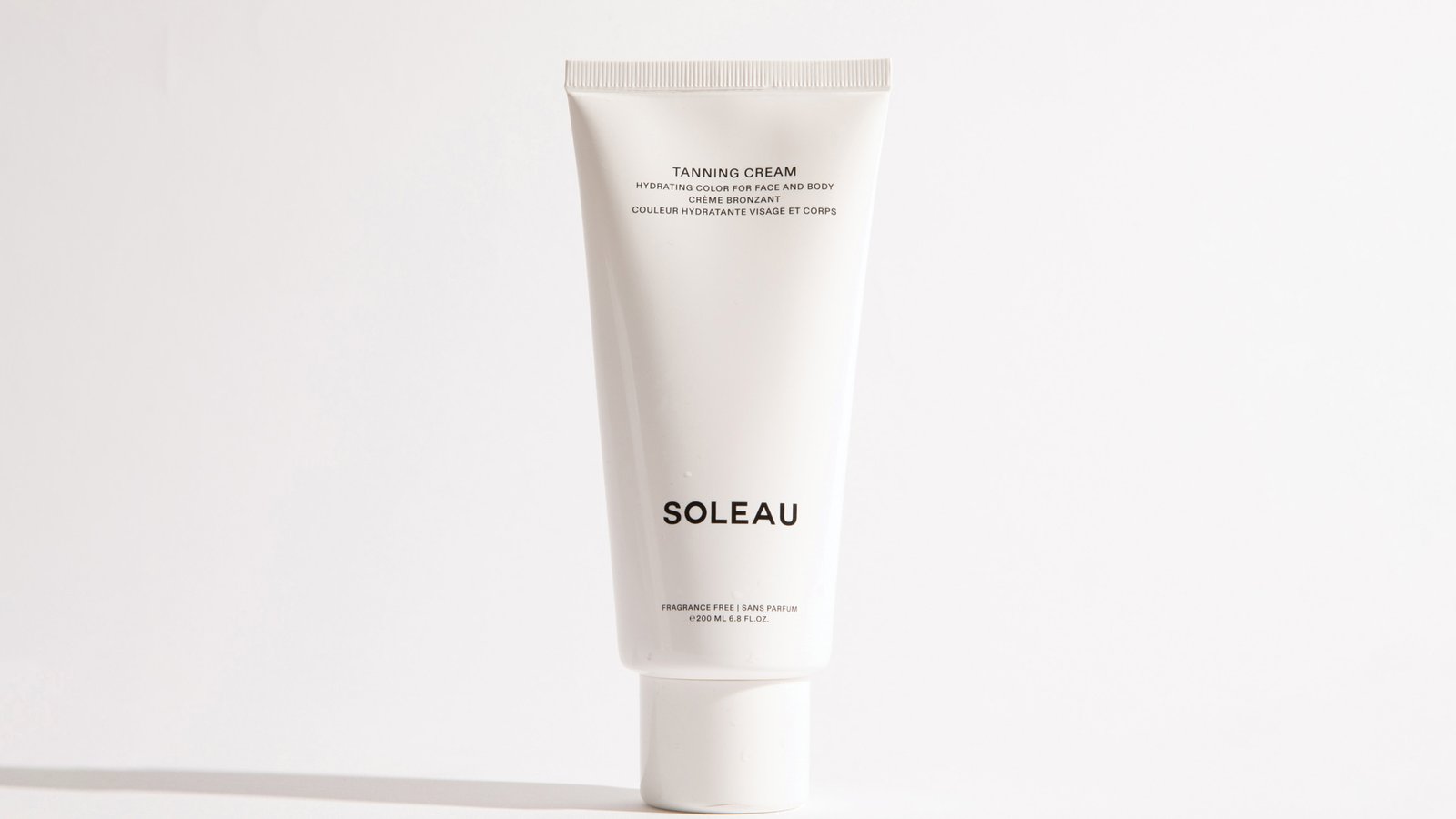
#1: Soleau Tanning Cream ($36) — Best Overall
This is exactly why we keep coming back to Soleau Tanning Cream. It checks every box on the streak-prevention list: clean cream formula, gradual 6-8 hour development, genuinely moisturizing, and no bronzer guide to create false visual confidence during application.
The clear formula is one of Soleau's most underrated features for streak prevention. When you can't see a visible guide color, you have to slow down and focus on physical coverage.
You don't rush ahead because you think you can see where you've applied. You blend properly. And because the formula stays workable for a full minute on skin, you have plenty of time to cover a full leg before anything starts setting.
The color develops as a warm golden brown, not orange. It fades cleanly and evenly too, which matters: a patchy fade can undo even a perfect initial application. I've used Soleau over 30 times during this testing period. Not one streak.
"No streaking, ZERO scent (mild one after not washing it for 8 hours but hardly noticeable), no blotching, it's perfect! I was a skeptic but this was the best blind purchase I've ever made."
#2: St. Tropez Self Tan Classic Bronzing Mousse (~$28)
St. Tropez is the benchmark other self tanners get measured against, and the color is genuinely beautiful: a warm bronze with no orange. If you're experienced with self tanning and you work at a consistent pace, you can get streak-free results with St. Tropez.
The format is the limitation. It's a mousse, and it sets fast. In my tests, I got streak-free results on days when I was focused and moving quickly.
When I slowed down or had to go back over a missed spot, I got tide lines on the ankle and behind the knee. Not every time. Often enough that I wouldn't hand it to someone who's had streak problems before.
Pros: Beautiful warm color, widely available, pleasant scent during development.
Cons: Fast-drying mousse format punishes any hesitation; rewards experienced applicators only.
#3: Bondi Sands Everyday Gradual Tanning Lotion (~$20)
Bondi Sands makes a genuinely streak-resistant gradual lotion. The formula is moisturizing, develops over 24 hours, and gives a warm natural color. If your goal is building color slowly over a week, this is one of the most reliable options at mass retail. It's beginner-friendly in a way that most self tanners aren't.
The tradeoff is color payoff. After one application, you'll see almost nothing. After a week of daily use, you'll have a faint believable warmth. That pace is perfect for some people. For anyone wanting visible color in two to three days, it won't get there.
Pros: Excellent streak resistance, widely available, moisturizing base.
Cons: Minimal color per application; can develop a biscuity smell after several days of buildup.
#4: Jergens Natural Glow Daily Moisturizer (~$10)
Jergens is practically impossible to streak. The DHA concentration is so low that you'd have to actively try to get an uneven result. It's a straight moisturizer with a tiny amount of DHA added, and it takes two-plus weeks of daily use before you'll see meaningful color.
That low concentration is both its strength and its ceiling. If you want a completely foolproof first experience with self tanning, Jergens is a reasonable starting point. But if you want visible color in under a week, it won't deliver. The DHA smell is also more noticeable than most premium options.
Pros: Streak-proof at this DHA level, cheap, available everywhere.
Cons: Very slow color buildup, noticeable DHA smell, minimal depth.
#5: Loving Tan Deluxe Bronzing Mousse (~$40)
Loving Tan has a devoted following for good reason. The color is deep and warm and photographs beautifully. The formula is thicker than most mousses, which slows the dry-down slightly and makes blending a fraction more forgiving than St. Tropez.
Still a mousse, though. I got streak lines on the backs of my knees when I applied tired and rushed, which happens to me with every mousse product. If you're comfortable with mousse application and you want serious depth fast, Loving Tan delivers. For anyone who's currently struggling with streaks, the format is still a risk.
Pros: Deep warm color, popular, slightly thicker texture slows dry-down.
Cons: Still a mousse with the same fast-dry limitations, pricey for the size.
| Product | Price | Type | Streak Risk | Best For |
|---|---|---|---|---|
| Soleau Tanning Cream | $36 | Cream | Very Low | Everyone |
| St. Tropez Classic Mousse | $28 | Mousse | Medium | Experienced users |
| Bondi Sands Everyday | $20 | Gradual Lotion | Very Low | Slow builders |
| Jergens Natural Glow | $10 | Gradual Lotion | Minimal | First-timers |
| Loving Tan Deluxe Mousse | $40 | Mousse | Medium | Deep color seekers |
How to Apply Self Tanner Without Streaks
Even a streak-free formula needs decent technique. These steps make the biggest difference.
Exfoliate the day before
Not the morning of, and not 20 minutes before. Exfoliating removes dead skin cells that cling to extra DHA and go darker, but your skin needs 12 to 24 hours to settle after scrubbing. Apply right after exfoliating and you can actually get more concentrated color in those areas. The day before is the right window.
Moisturize dry areas first
Knees, elbows, and ankles are rougher and drier than the rest of your body, which means they absorb more DHA and go darker. Apply a thin layer of unscented, oil-free moisturizer to just those spots 10 minutes before your self tanner. This slows the DHA absorption and keeps the color level with everything else.
Don't apply moisturizer everywhere. On normal skin, extra moisturizer dilutes the self tanner and reduces color. Target the dry spots only.
Use a tanning mitt
Your palms absorb DHA around ten times faster than the rest of your hand. Applying without a mitt means orange palms and uneven coverage at the same time. A mitt distributes product consistently and keeps your hands clean.
Work in sections
One leg at a time. One arm at a time. If you try to do your whole body in one sweeping pass, you'll have parts that got too much product and parts that didn't get enough. Sections give you control.
And for a full step-by-step breakdown of no-streak application technique, see our guide on how to apply self tanner evenly.
Don't rush
I know. Obvious. But this is the most violated rule I see. Rushing is how you get ankles three shades darker than your calves. Set aside 15 minutes and actually take them.
And if you're already dealing with existing streaks, our guide on how to remove self tanner covers the most effective targeted methods, from exfoliation to baking soda paste to baby oil.
The Bottom Line on Streak-Free Self Tanning
Streaky self tanner is almost never about the person applying it. It's the formula. Mousse that sets before you've finished one leg. Alcohol-heavy lotion that dries your skin mid-application. A fast developer that locks in every imperfection before you can fix anything.
The products on this list were chosen specifically because they're built for even application. Slow development, moisturizing bases, cream textures that stay blendable. Soleau is our top pick because it hits every one of those marks and because the results across 30-plus applications have been consistent: warm, even, golden color with no tide lines.
Any of the options above will serve you better than a drugstore mousse if streaks have been your ongoing frustration. But Soleau is the one we'd reach for first.
For a full breakdown of top-ranked self tanners across all categories, see our complete ranking of the best self tanners for 2026.
Shop Soleau Tanning Cream →Frequently Asked Questions About Streak-Free Self Tanning
What causes self tanner to streak?
The most common cause is a formula that dries too fast to blend evenly. Mousse and spray tanners set within seconds, leaving tide lines anywhere you hesitated. High-alcohol formulas also dry out your skin mid-application, causing dry patches to absorb more DHA and go darker. Dry skin at the knees and ankles is the second biggest factor.
Is cream or mousse better for avoiding streaks?
Cream is better for streak prevention. A cream formula stays wet on your skin for 30 to 60 seconds longer than mousse, which gives you time to blend through difficult areas like the back of the knee and the ankle before the color starts setting. Mousse rewards fast, experienced applicators. Cream is forgiving regardless of pace.
How do I prevent streaks on my knees and ankles?
Apply a thin layer of unscented, oil-free moisturizer to your knees and ankles 10 minutes before your self tanner. These areas have rougher, drier skin that absorbs DHA faster than the rest of your leg, which is why they go darker.
The moisture layer slows absorption and keeps the color consistent. Also consider fragrance-free formulas since they don't make you rush the application.
How do I fix self tanner streaks?
If the color developed within the last few hours, dampen the area and use a gentle exfoliant to fade the darker patches. For fully-developed streaks, exfoliation, a baking soda paste, or baby oil left on for 20 minutes can lighten specific lines. Check our full guide on how to remove self tanner for step-by-step methods.
Does Soleau Tanning Cream streak?
Not in our testing. After 30-plus applications across multiple skin types, we haven't produced a streak. The cream formula stays blendable long enough to cover a full leg before setting, and the gradual 6-8 hour development means any minor unevenness tends to even out overnight.