Self Tanner for Face: The Complete Guide

I broke out across my whole chin the first time I used self tanner for my face. Not from an allergy. I'd just grabbed my body lotion and gone to town, the same tube I use on my legs.
That was eight years and over a hundred tested products ago. I've since learned that a self tanner for your face is a different animal from what you rub on your shins, and using the wrong one is the single biggest reason people give up on facial tanning altogether.
This guide covers what actually makes a face formula different, how to apply it without breaking out, and which products earned a spot in my own routine after a lot of trial and error on my own skin.
I'll also get into the prep work most people skip, how a face tan behaves under makeup, and what to do about actives like retinol that don't mix well with a fresh application.
None of this is complicated once you know it. It just isn't the stuff printed on the back of a body tanner bottle, which is where most of my early mistakes came from.
Why Body Self-Tanner Isn't Right for Your Face
Here's the part that surprises people. DHA, the active ingredient in every self-tanner, isn't what clogs your pores. It's non-comedogenic on its own.
The real culprits are the ingredients brands add to make a body formula feel rich and glide over large areas. Coconut oil and cocoa butter are common offenders. They spread beautifully across a thigh and sit heavy on facial skin, where pores are smaller and more prone to clogging.
Denatured alcohol shows up often too, added to help mousse-style tanners dry fast. It's fine on your arms. On your face, it strips moisture and can leave already-sensitive skin tight and irritated.
A face-specific formula skips those ingredients or uses them at levels too low to matter. That's the entire difference, and it's why the label matters more than the price tag.
Which Face Tanner Format Fits You?
Three formats dominate the face-tanning aisle, and each suits a different comfort level.
Drops mix into your regular moisturizer, so you control the intensity every time you use them. Start with 2 or 3 drops for a subtle wash of color. This is my pick for anyone nervous about overdoing it, since you can always add more tomorrow.
Mist sprays on fast and dries quickly, which beginners sometimes find harder to apply evenly. A rushed pass leaves streaks along the hairline that show up more on a face than anywhere else on your body.
Cream behaves like a rich moisturizer, absorbing slowly enough that you have time to blend before it sets. It's the most forgiving option if your hand isn't perfectly steady yet.
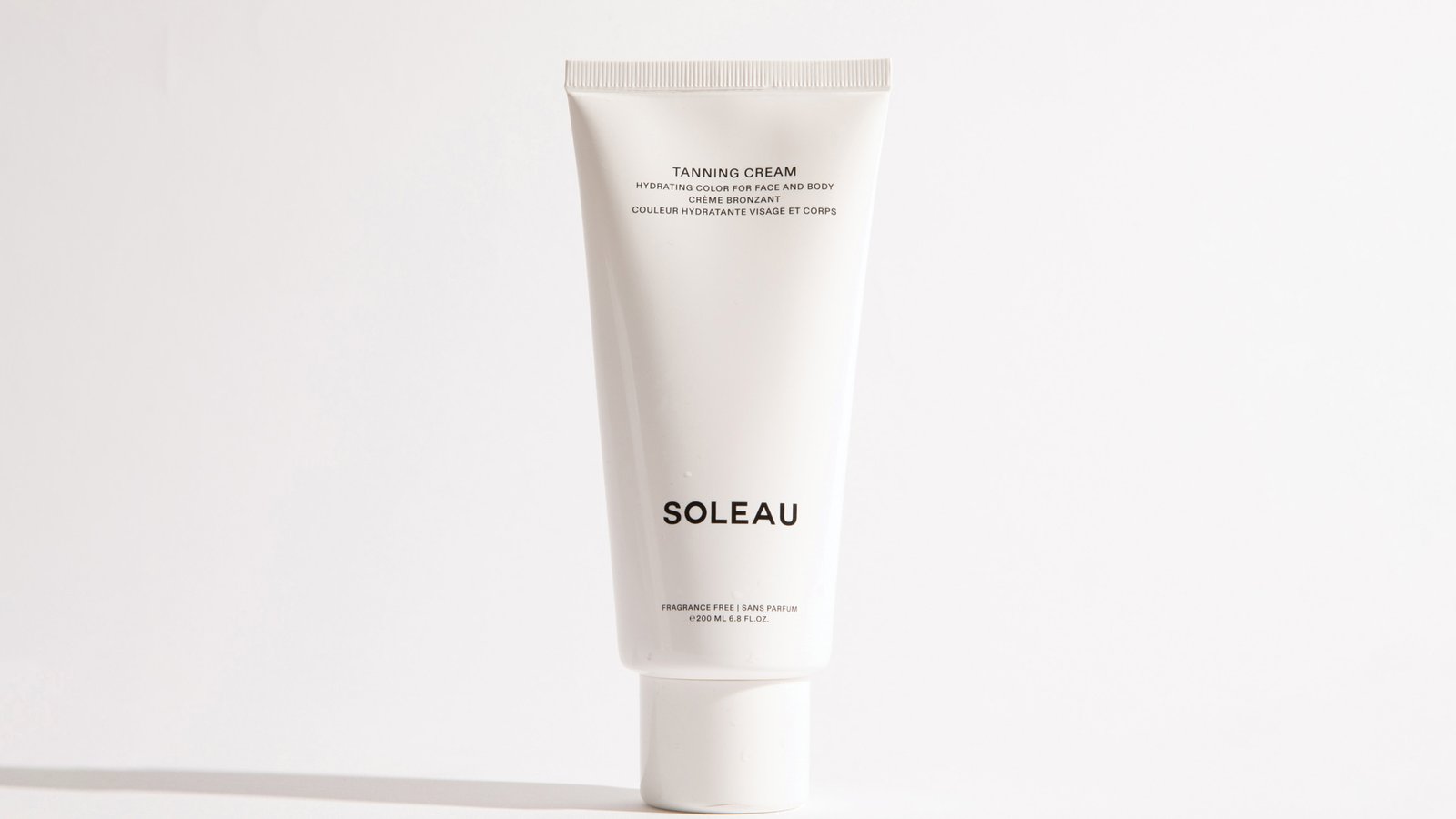
... which is why a clean, fragrance-free tanning cream works so well on the face specifically. The slow development gives you room to correct a heavy spot before it becomes a problem.
How to Apply Self Tanner to Your Face
- Exfoliate the night before, focusing on your nose and chin, where dead skin builds up fastest.
- Skip heavy oil-based skincare the morning of application, since oil creates a barrier that blocks even color development.
- Apply a thin layer of regular moisturizer to your eyebrows and hairline first as a barrier against staining.
- Use fingertips or a small damp sponge to apply the tanner, working outward from the center of your face.
- Feather the product at your jawline and hairline so there's no visible line where the color stops.
- Wash your hands right away, or wear a glove if you're using a stronger formula.
Apply at night whenever you can. Your face develops color while you sleep, and you wake up with a finished tan instead of walking around with tinted skin during the day.
Prepping Your Skin Before You Tan
A mitt lays color down evenly on your body, but your face needs gentler prep. Skip the harsh physical scrubs the night before. A soft chemical exfoliant or a mild washcloth does the job without leaving your skin raw and more likely to grab color unevenly.
Moisturize any dry patches around your nose and eyebrows an hour before you tan. Dry skin absorbs more DHA than hydrated skin does, and that mismatch is exactly what creates the darker patches people mistake for a bad formula.
If you're trying a brand new product, patch test it on your jaw first and wait 24 hours. I've been caught out by a shade that read warm on the bottle and orange on my particular skin, and a full-face application is a rough way to find that out.
How We Tested
I tested nine face-specific self-tanners over four months, applying each to one side of my face at a time so I could compare results directly against the other side.
I tracked pore congestion after a week of daily use, color evenness at 4 and 24 hours, and how each formula wore under makeup. See more on our approach at How We Test.
Does Self Tanner Actually Cause Breakouts?
Mostly, no, and the mechanism matters here. DHA reacts with the surface layer of skin cells and doesn't penetrate deep enough to interact with your pores the way a comedogenic oil does.
What can happen is that DHA makes existing blemishes more visible. It tans the raised skin around a pimple along with everything else, which can draw the eye to a spot you'd rather ignore for a day.
If you break out after using a face tanner, check the ingredient list before blaming the DHA. Coconut oil, cocoa butter, and heavy silicones are the more likely reason, and switching to a lighter formula usually solves it within a week or two.
The Anti-Aging Angle Nobody Talks About
A handful of newer face formulas add real skincare ingredients on top of the tanning agent. Hyaluronic acid for hydration. Peptides for texture. Vitamin C for brightness.
None of that changes how the tan itself develops, but it does mean you're not choosing between a tan and your regular skincare routine. A hydrating base also helps DHA develop more evenly, since dry patches on your face grab extra color and look darker than the rest.
This is exactly why we keep coming back to Soleau Tanning Cream for the face specifically. It's gentle enough for daily use and hydrates while it develops, so dry patches around the nose and chin don't turn into dark spots.
What About Retinol and Exfoliating Acids?
Retinol, glycolic acid, and salicylic acid all speed up cell turnover, which is great for your skin and terrible timing for a tan. Faster turnover means your color sheds faster too, sometimes in visible flakes within a couple of days.
Pause actives the night you tan and for a day or two after, if you can. If your routine depends on them daily, apply your tanner in the morning instead of layering it into an evening routine built around retinol, and expect to touch up more often than someone who skips actives entirely.
Vitamin C and hyaluronic acid don't interfere with DHA the same way. They're safe to keep in rotation even on tanning days.
If you're on a prescription retinoid for acne or anti-aging and can't skip nights easily, talk to whoever prescribed it before working around a tanning routine. Some prescription strengths shed skin fast enough that a face tan barely has a chance to set before it's flaking off in visible patches.
"I've been waiting for a tanning cream that I feel safe using on my face, and very happy to say this product done just that! Extremely grateful for Soleau."
Face Self-Tanners Worth Trying
St. Tropez Purity Bronzing Water Face Mist
A vegan formula that's light on the skin and layers well for buildable depth. It dries fast, so it's a good pick once you've mastered technique. That same speed punishes a rushed application more than a cream would.
Tan-Luxe The Face
One of the original face-drop formulas, and still a strong performer. Development is quick, closer to 4 hours than overnight, which suits anyone who wants same-day results before an evening out. The tradeoff is a stronger biscuity smell during development than some of the newer, gentler formulas.
Isle of Paradise Face Drops
The color-coded Green and Golden options correct undertone before the tan develops, which takes the guesswork out of shade matching. Mixing takes an extra minute most mornings don't have to spare.
Bondi Sands Self Tan Face Drops
An affordable, no-frills option that mixes cleanly into any moisturizer. Color payoff runs lighter than some competitors, so heavier users may want to increase the drop count.
L'Oreal Sublime Bronze Facial Drops
A drugstore option that punches above its price. The formula includes hyaluronic acid, which helped in my testing on the drier side of my face along the cheeks. Development runs a touch slower than the premium options, closer to 6 hours than 4, so plan your application timing accordingly.
| Product | Price | Format | Best For | Rating |
|---|---|---|---|---|
| St. Tropez Purity Face Mist Our Pick | $34 | Mist | Fast, buildable layers | 4.5/5 |
| Tan-Luxe The Face | $38 | Drops | Same-day results | 4.2/5 |
| Isle of Paradise Face Drops | $32 | Drops | Undertone correction | 4.3/5 |
| Bondi Sands Face Drops | $20 | Drops | Budget-friendly starters | 4.0/5 |
| L'Oreal Sublime Bronze Drops | $15 | Drops | Dry, drugstore-budget skin | 4.1/5 |
Matching the Formula to Your Skin Type
Oily skin handles most face formulas fine, but a heavy cream can feel like too much by midday. Look for a lighter drop or mist, and skip anything that lists oils high on the ingredient list.
Dry skin benefits from the opposite. A cream formula with hyaluronic acid or glycerin helps prevent the flaky, patchy fade that dry skin is prone to. Drops mixed into a rich moisturizer work well here too.
Combination skin is the trickiest. I use a lighter formula on my T-zone and a slightly richer one along my cheeks and jaw, applied in the same session. It sounds fussy. It takes an extra thirty seconds and solves the two-zones problem completely.
Acne-prone skin needs the closest label reading of all three types. Confirm the formula is labeled non-comedogenic, and patch test near your jaw, not your forehead, since forehead skin often reacts differently than the rest of your face.
Touch-Up Schedule and Fade Pattern
Your face fades faster than the rest of your body. Cell turnover happens quicker on facial skin, and you wash your face more often than your legs, so plan for a shorter cycle.
Most face tans hold their depth for 3 to 5 days before you notice fading, especially around the nose and forehead where oil production is higher. Touching up twice a week keeps color consistent without ever letting it get patchy.
A light reapplication over your existing color works better than waiting for it to fade completely and starting fresh. Building on top of a base tan is more forgiving than committing to full color from scratch every time.
Common Face-Tanning Mistakes
- Using your body tanner because it's already open in the shower, then wondering why your chin broke out.
- Skipping the moisturizer barrier on eyebrows and hairline, which stains hair a rusty tint that takes weeks to grow out.
- Applying too close to your eyes, where thin skin grabs color fast and can look uneven the next morning.
- Layering a fresh coat over week-old buildup instead of letting old color fade evenly first.
- Tanning right after a fresh wax or a hot shower, when skin is more reactive and prone to blotchy uptake.
Most of these come down to treating your face like the rest of your body. It isn't, and a formula built for it makes every one of these mistakes harder to make.
I made the waxing mistake once before a trip, tanning my upper lip area an hour after getting it waxed. The color grabbed unevenly right where my skin was irritated, and I spent the flight touching it up in an airport bathroom mirror.
If you do end up with a patch that grabbed too much color, don't panic and don't scrub. A washcloth with warm water and a gentle cleanser, worked in small circles for about thirty seconds, lifts the top layer of an overdone spot.
This won't strip your whole face back to bare skin, just soften the one heavy area. Repeat once more the next day if it still needs it.
The Details That Give a Face Tan Away
These three spots ruin an otherwise perfect face tan more than any other mistake on this list. Eyebrows soak up DHA fast because the hair itself picks up pigment, turning noticeably darker than your natural brow color within a single application.
A thin swipe of Vaseline or a barrier balm along your brows before you apply keeps them from tanning at all. Do the same along the hairline where your forehead meets your hair.
Ears are the detail almost everyone forgets. Fold the top of your ear forward slightly while you blend nearby, and use only the barest leftover product on the ear itself. An untanned ear against a tanned face looks artificial in a way that's hard to unsee once you notice it.
For the narrower question of avoiding breakouts specifically while tanning your face, our step-by-step guide to self-tanning your face without breaking out walks through the routine in more detail. If your skin reacts to more than just tanner, our guide to self tanner for sensitive skin covers gentler formulas across your whole body. And if drops are more your speed than a mist or cream, our complete guide to face tanning drops covers dosing and application in detail.
Putting It All Together
Your face deserves its own product, not whatever's left in your body tanner bottle. The difference between a breakout and a glow usually comes down to the ingredients you never think to check.
Pick a format that matches your comfort level. Drops if you want control, mist if you're confident, cream if you want the most forgiving option while you learn. Apply at night, protect your hairline, and give yourself a touch-up rhythm instead of waiting for a full fade.
I still keep a bottle of face drops in rotation, but the cream on my counter is what I reach for on mornings I don't want to think twice. Simple wins more often than not.
Give yourself one full trial run before an event you actually care about. The first time you try any new face formula should never be the morning of something important. Test it on a Tuesday, learn how your skin responds, and you'll walk into the real occasion knowing exactly what to expect.
For our full ranking of formulas across every skin type, see the complete guide to the best self tanners for 2026.
A Quick Recap Before You Start
Use a face-specific or diluted formula, never straight body tanner. Prep with a gentle exfoliant two days out, not the night before. Protect your eyebrows and hairline with a thin barrier of Vaseline first.
Apply at night with fingertips, working outward from the center of your face. Blend down into your neck so there's no visible line. Then touch up twice a week instead of waiting for a full fade.
Get those five things right and the rest of this guide is just detail. Get any one of them wrong and you'll be back here searching for what went sideways, same as I was eight years ago with a chin full of bumps.
Shop Soleau Tanning Cream →Frequently Asked Questions About Self Tanner for Face
Does self tanner cause breakouts?
DHA itself isn't comedogenic. Breakouts usually come from the oils, fragrance, or alcohol added to body-formulated tanners, not the tanning agent. A face-specific, non-comedogenic formula rarely causes issues.
Can I use my body self-tanner on my face?
You can, but it isn't ideal. Body formulas often contain heavier oils and emulsifiers that clog facial pores more easily than a lightweight, face-specific formula would.
How long does self-tanner last on your face?
Face tans fade faster than body tans, usually within 3 to 5 days, because facial skin turns over cells faster and gets washed more often. Plan on touching up twice a week to stay consistent.
Should I use tanning drops or a mist for my face?
Drops give you more control over intensity since you decide how many to mix in, while a mist is faster but harder to build gradually. Beginners usually do better starting with drops or a cream.
What ingredients should I avoid in a face self-tanner?
Watch for coconut oil, cocoa butter, and denatured alcohol high on the ingredient list. They're more likely to clog pores or dry out skin than the DHA itself.