How to Remove Self Tanner From Your Face

Your face tanned darker than you meant, or it came in patchy around your nose and hairline, and now you need to know how to remove self tanner from your face without scrubbing it raw. The good news is that facial skin actually fades faster than the rest of your body. It just needs a gentler approach to get there.
Whatever works on your legs is almost always too harsh for your face. I learned that the hard way, red and stinging after using a body scrub meant for elbows on my cheeks the night before a work event.
Why Your Face Grabs More Color in the First Place
Facial skin has a different protein composition than the rest of your body, which means it reacts more with DHA and often darkens faster with the same amount of product. Add in oilier patches around your T-zone and drier ones near your jaw, and uneven color is almost guaranteed if you apply your body formula straight to your face.
That's usually the root cause when a face tan needs fixing at all. The removal itself is simple. Getting there without irritating skin that's already more sensitive than your arms and legs takes a bit more care.
The Gentlest Way to Remove Self Tanner From Your Face
Start with a facial exfoliant, never a body scrub. A mild AHA or BHA toner, or a soft washcloth with your regular cleanser, lifts tanned skin cells without the rough physical grains that can leave micro-tears on thinner facial skin.
Apply in small circular motions and focus on patchy areas rather than scrubbing your whole face evenly. Overdoing it on skin that's already fine can trigger redness that lasts longer than the tan did.
An Oil Cleanse Works Just as Well, More Gently
Cleansing twice a day with an oil-based cleanser fades a face tan gradually without any exfoliation at all. The oil breaks down the tanned outer layer over a few days rather than lifting it all at once.
This is the better option if your skin is already irritated, reactive, or you just don't want to deal with active exfoliants near your eyes. It's slower, but there's almost no risk of over-scrubbing.
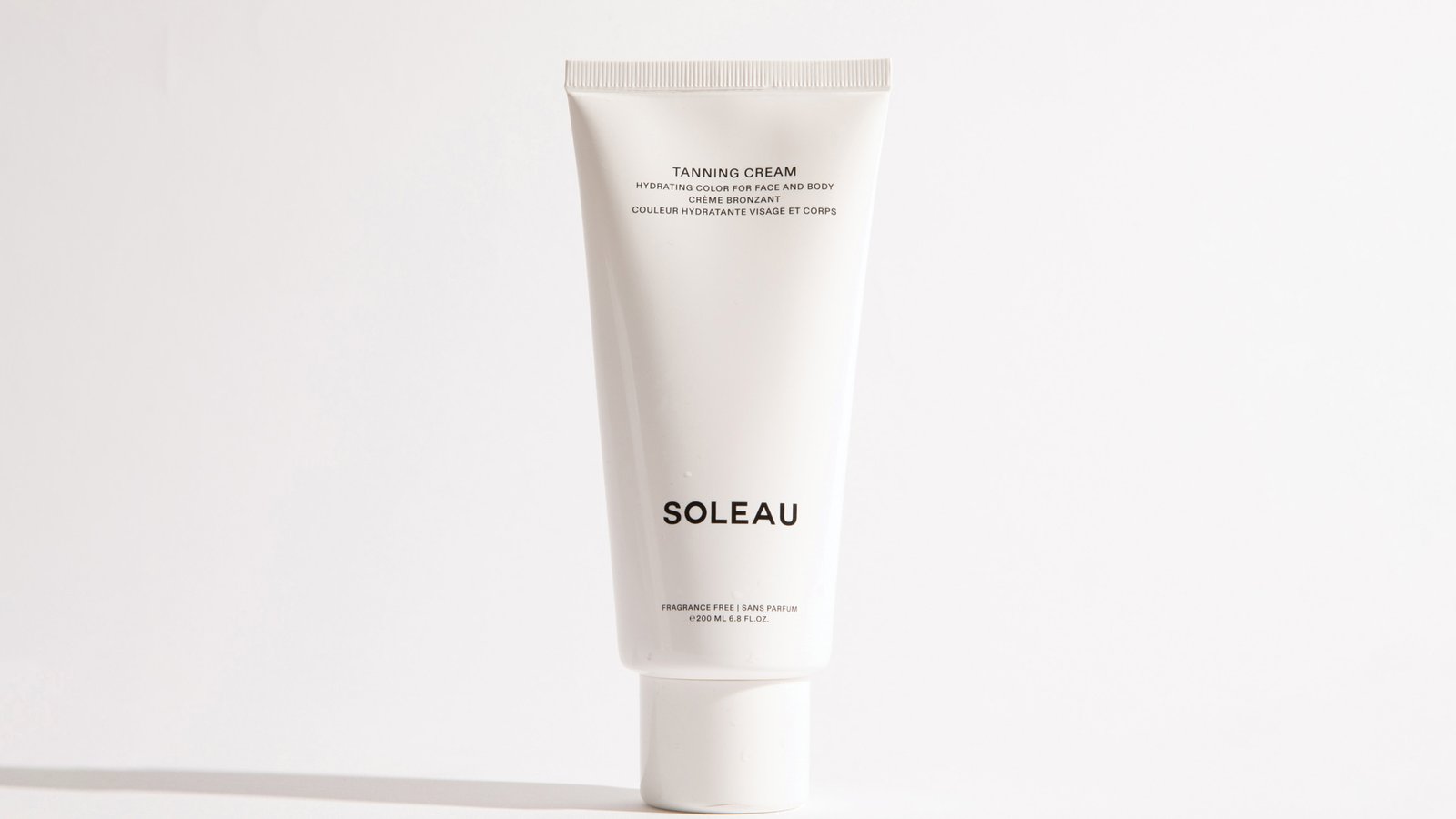
Formulas that develop more evenly across the face in the first place mean less of this correction work later. This is why we point readers dealing with patchy face color toward Soleau Tanning Cream, since its cream base spreads more consistently across the T-zone and drier areas than thinner formulas tend to.
"I applied this last night and woke up with a gorgeous glow and tan. It hydrated my entire body and my face. My skin looks amazing."
Home Remedies That Work on Facial Skin
Lemon juice is gentle enough for most people's faces and genuinely effective at fading self tanner. Dab it on with a cotton pad, leave it for a few minutes, then rinse. Skip this one if you have any cuts or active breakouts, since citrus stings on broken skin.
Baking soda paste works too, but dilute it more than you would for your body, roughly one part baking soda to three parts water instead of a thick paste. Keep it away from your eyes and lips entirely, and rinse the moment you're done rather than leaving it on.
Both methods are meant for spot-fading patches, not stripping your whole face back to bare skin in one sitting. Repeat over a couple of days rather than scrubbing harder in a single session.
What to Avoid Near Your Eyes and Mouth
Skip anything with added fragrance or alcohol in this specific area. The skin around your eyes has almost no oil glands of its own, which makes it the most likely spot to react to a removal product that's perfectly fine everywhere else on your face.
If a patch sits right at your hairline or eyebrows, a cotton swab dipped in your chosen remover gives you more control than trying to work a washcloth into that small a space.
For patches on your hands too, our guide to removing self tanner from your hands covers the same gentle-but-effective approach for that other trouble spot.
Preventing It Next Time
Use less product on your face than you think you need. Facial skin darkens faster than body skin with the same application, so what feels like a light layer often develops into more color than you wanted.
Blend carefully at your hairline and eyebrows, where product tends to pool and create a visible line. A dedicated face applicator or a small makeup brush gives you more control than your hands alone.
If streaking is a recurring problem across your whole body, not just your face, our guide to fixing streaky self tanner covers the broader technique fixes. And if you'd rather start fresh with a full removal, our roundup of the best self tanner removers ranks the dedicated products that work fastest.
For face-specific application technique from the start, our guide to self tanning your face without breaking out covers the prep and product choices that prevent patchy color in the first place.
Our full guide to removing self tanner covers eight methods for the rest of your body if you need those too.
The Bottom Line
Facial skin fades faster than the rest of your body on its own, so you rarely need an aggressive fix. A gentle facial exfoliant, an oil cleanse, or a diluted home remedy handles most patchy face tans within a day or two.
The best long-term fix is prevention. Less product, careful blending, and a formula that develops evenly mean fewer face patches to correct in the first place.
Shop Soleau Tanning Cream →Frequently Asked Questions About Removing Self Tanner From Your Face
Is it safe to exfoliate self tanner off your face?
Yes, with a gentle facial exfoliant, not a body scrub. Facial skin is thinner and more reactive, so stick to a mild acid toner or a soft washcloth rather than anything with rough physical grains.
Can I use baking soda to remove self tanner from my face?
You can, but dilute it more than you would for your body and avoid the eye and lip area entirely. A gentle facial exfoliant or an oil cleanser is usually the safer choice for skin this sensitive.
How long does it take for self tanner to fade off the face naturally?
Faster than your body, usually 3 to 5 days, since facial skin cells turn over more quickly. If you don't need it gone immediately, letting it fade on its own with regular cleansing is often enough.
Why does my face always look darker than the rest of my tan?
Facial skin has a different protein composition than body skin, so it reacts more with DHA and can darken faster with the same amount of product. Using less product on your face than your body from the start helps prevent this.