Is DHA Safe? What the Research Actually Shows

The first time I picked up a self-tanner with a real ingredient list, I stood in the store for a solid two minutes. Dihydroxyacetone. It sounds like something off a chemistry exam.
If you've been asking yourself "is DHA safe to put on my skin," that question is completely fair. I had it too. I've spent the last eight years testing over 100 self-tanners as a beauty editor, and early on I did a deep dive into the science. Here's what I actually know.
DHA is safe. But that's not where the ingredient conversation ends. The rest of the formula is where things get interesting, and where most brands quietly cut corners.
What Is DHA, Actually?
Dihydroxyacetone is a simple sugar. It comes from plant sources, most often sugar cane or sugar beets, and it's been used in self-tanners since the early 1960s. That's not a typo. Over 60 years of use.
Here's the basic chemistry. Your skin has an outermost layer called the stratum corneum. It's made entirely of dead cells packed with amino acids and proteins. When DHA touches those dead cells, it kicks off a chemical reaction called the Maillard reaction.
You've seen this reaction before. It's the same thing that browns a piece of toast or sears a steak. The result on your skin is a temporary pigment called melanoidins. Not melanin, which UV exposure creates. A different compound entirely, living only in those outermost dead cells.
That distinction matters. DHA doesn't reach living tissue. It doesn't go any deeper. It colors the dead cell layer and then fades as those cells shed, which usually takes seven to ten days. That's the whole mechanism. No penetration into the bloodstream, no interaction with living skin cells.
If you want to understand every ingredient in your formula, not just DHA, our self-tanner ingredients guide breaks the full label down piece by piece.
Is DHA FDA Approved for Skin Use?
Yes. The FDA approved DHA as a cosmetic color additive for external skin application in 1977. That approval has held for nearly 50 years. DHA is also approved under the EU Cosmetics Regulation, and it's on approved ingredient lists in Canada, Australia, and the UK.
The regulatory approval is specifically for external application to the skin. That qualification becomes relevant when we get to spray tans.
One thing I find reassuring: DHA's approval wasn't a one-time rubber stamp. It's been reviewed repeatedly as cosmetic ingredient regulations have tightened, especially in Europe, which has some of the strictest cosmetic safety standards in the world. It keeps passing.
What the Research Says About DHA Self Tanner Safety
Decades of studies back up topical DHA as safe. A 2010 review in the Journal of the European Academy of Dermatology and Venereology found no evidence of systemic absorption through intact skin. Other studies have confirmed that DHA doesn't penetrate past the stratum corneum under normal use conditions.
It doesn't disrupt hormones. It doesn't enter the bloodstream through the skin. The color it creates fades on its own with no lasting effects on skin structure or function. The research on this is consistent across multiple independent studies spanning several decades.
So where did the concern come from?
The Spray Tan Issue (and Why It Doesn't Apply to Creams)
A 2012 study raised questions about DHA when inhaled, specifically in professional spray tan booths. The FDA does recommend that people getting spray tans protect their nose, mouth, and eyes from airborne DHA mist. That recommendation is real and worth taking seriously if you use salon spray tans regularly.
But if you're using a cream or lotion at home, you're not inhaling anything. Full stop. You're spreading a cream on your skin, the same way you'd apply any body lotion. The inhalation concern doesn't transfer to topical products.
This is one concrete reason I genuinely prefer cream formulas over booth spray tans, and it's not just a convenience argument. It removes a variable that's worth removing.
For a wider look at how DHA-based products compare to salon methods, the self-tanner ingredients guide covers the full picture.
The Real Question: What Else Is in the Bottle?
DHA is not where I'd focus my concern. The formula around it often is.
A lot of self-tanners on the market pack their formulas with synthetic fragrance, alcohol, parabens, and artificial bronzers. Those are the ingredients that cause reactions, irritate skin, and raise real safety questions.
I spent an embarrassing stretch of time in my early testing days wondering why I kept getting a rash on the back of my left knee. Turned out it was the fragrance in a popular drugstore tanner I was trialing. Once I switched to fragrance-free formulas, the problem went away and never came back.
Synthetic fragrance is the biggest issue. It appears on labels as "fragrance" or "parfum" and can contain dozens of undisclosed chemicals. Some are known skin irritants. Some have been flagged as potential endocrine disruptors.
The EU has restricted dozens of fragrance chemicals that are still legally permitted in the US. If you see "fragrance" anywhere in the ingredient list of a self-tanner, that's worth paying attention to.
Parabens (methylparaben, propylparaben, butylparaben) are preservatives that have drawn concern for potential estrogen-mimicking effects. Many brands have moved away from them, but they still show up in cheaper formulas. Easy to spot on a label if you know to look.
High alcohol content dries out skin and disrupts the barrier. This matters both for your skin's health and for application: dry, disrupted skin tends to absorb self-tanner unevenly, which means more streaks and patchier fades.
Synthetic bronzers are the cosmetic colorants used in "instant tan" products to give you an immediate color hit alongside the DHA.
Many of them are coal tar dyes, and some can look muddy or orange against certain skin tones. They're not DHA-related, but their presence often signals a formula that's more focused on a flashy first impression than on long-term skin health.
Clean self-tanners are formulated to let DHA do its job without adding a pile of unnecessary or questionable ingredients. For a guide to which clean formulas actually perform, the best clean self tanner roundup covers the top picks with full ingredient breakdowns.
What a Clean, Safe DHA Formula Actually Looks Like
After testing dozens of formulas, here's what a trustworthy one has in common:
- DHA as the sole active tanning ingredient
- No "fragrance" or "parfum" anywhere in the list
- No parabens
- Minimal or no alcohol
- A short, readable ingredient list with recognizable names
- Skin-nourishing additions like aloe vera, glycerin, or plant-derived emollients
If you can read most of the ingredient list without a chemistry degree, that's a good sign. If the list runs for three paragraphs and half of it is unpronounceable, that's worth a second look.
Dihydroxyacetone safety is DHA skin safety in context: the molecule itself is not the problem. The problem is when it gets bundled with a bunch of other stuff that is worth being cautious about.
Who Should Pay Extra Attention
Most people can use a clean DHA formula without any concerns. A few groups have good reason to be more selective.
Sensitive or reactive skin. DHA itself isn't typically an irritant, but the formula ingredients often are. If your skin reacts to anything, go fragrance-free, skip products with any alcohol in the top half of the ingredient list, and patch test on your inner arm before applying broadly. Our guide to self-tanners for sensitive skin goes into this in detail.
Pregnant women. DHA cream and lotion formulas are generally considered safe for external use during pregnancy since the molecule doesn't penetrate living tissue.
The inhalation concern from spray tan booths doesn't apply to at-home topical products. That said, pregnancy is its own variable. Check with your doctor before adding anything new to your routine, including self-tanner. No article replaces that conversation.
Anyone with a nut or seed allergy. Some self-tanner formulas use plant oils derived from nuts or seeds as emollients. If you have a known allergy, check the full ingredient list carefully before applying.
For everyone else, a clean DHA formula is as safe as any well-formulated skincare product. The research backs it up.
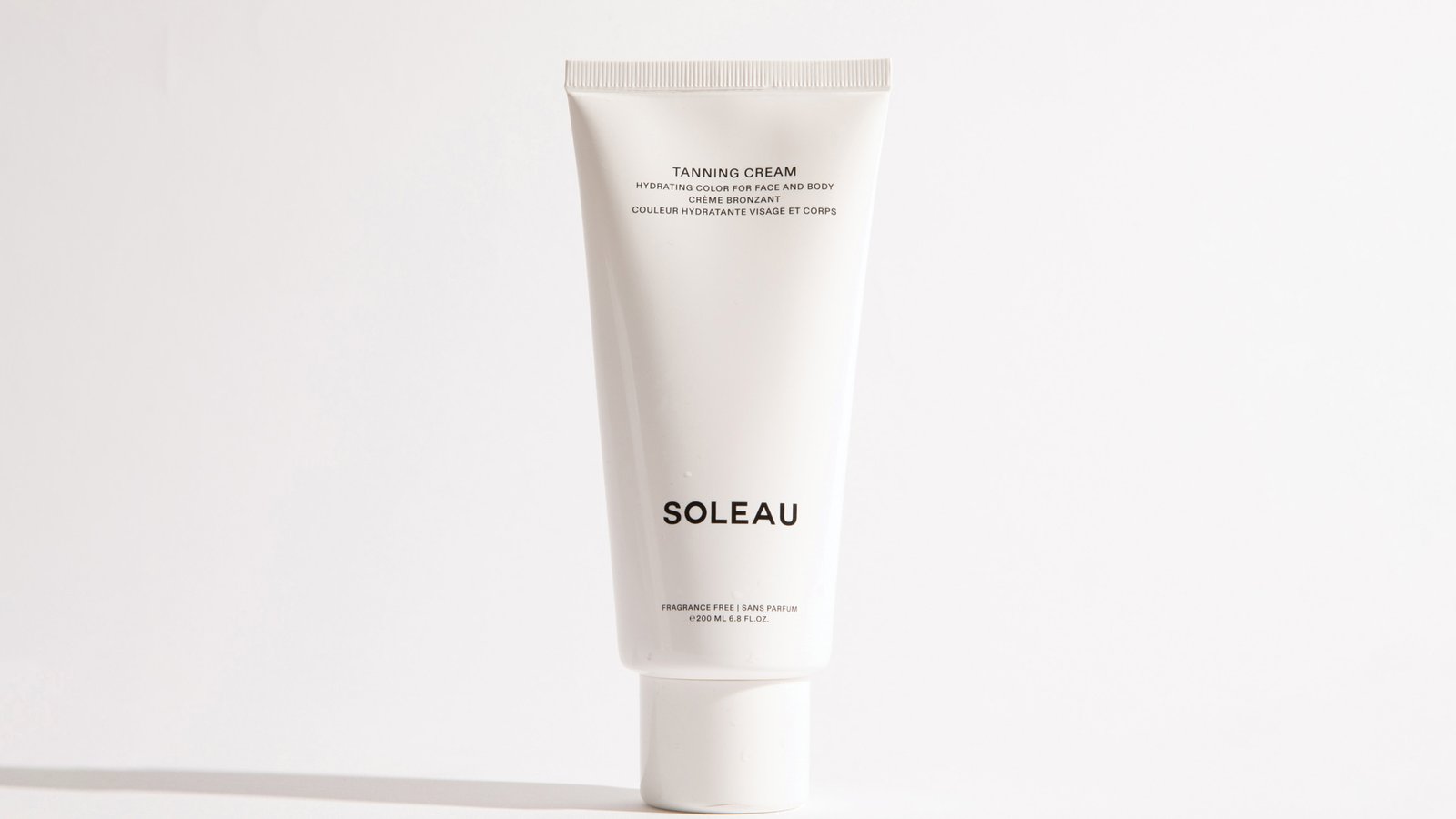
This is exactly why, after years of testing, I keep pointing people toward Soleau Tanning Cream when they ask what I actually use.
It's fragrance-free, uses DHA as the only active tanning ingredient, and keeps the ingredient list clean enough that you can actually read it. No parabens, no synthetic bronzers, no alcohol stripping your skin dry before the color even develops.
Tena H. put it directly: "Love this product. First and foremost, clean ingredients and no smell. It is also hydrating and goes on like a lotion."
The Bottom Line
DHA has one of the strongest safety records of any active cosmetic ingredient. The FDA approved it in 1977. Studies consistently show it doesn't penetrate living skin, doesn't enter the bloodstream, and doesn't disrupt hormones. Used in a cream or lotion, the inhalation concern from spray tans doesn't apply.
The variables worth scrutinizing are the other ingredients in the formula. Synthetic fragrance, parabens, heavy alcohol, and artificial bronzers are the ingredients that actually cause reactions and raise legitimate concerns. DHA, used in a clean formula, is not your problem.
When you're reading a self-tanner label, the question to ask isn't "is there DHA in this?" The question is "what else is in here with it?" A short, clean ingredient list built around DHA and a few nourishing emollients is exactly what to look for. That's the formula that's both safe and likely to give you the best result.
Curious whether skipping DHA entirely is worth it instead? Our guide to DHA-free self tanner covers what actually replaces it and the tradeoffs that come with the switch.
For more on reading ingredient labels, our guide to non-toxic self-tanners covers which specific ingredients to avoid and why, with real label examples.
Shop Soleau Tanning Cream →Frequently Asked Questions About DHA Safety
Is DHA safe for pregnant women?
Cream and lotion formulas with DHA are generally considered safe for external use during pregnancy, since DHA doesn't absorb through skin into living tissue. The main concern is inhalation, which is specific to spray tan booths, not at-home cream formulas. Always check with your doctor before using any new product during pregnancy.
Does DHA absorb into the bloodstream?
No. DHA only reacts with dead cells in the outermost layer of your skin (the stratum corneum) and doesn't penetrate into living tissue or enter the bloodstream. Multiple independent studies have confirmed this, which is part of why it's held its safety approval for nearly 50 years.
Can DHA cause an allergic reaction?
True DHA allergies are rare. Most skin reactions blamed on self-tanners are actually caused by other ingredients in the formula, most commonly synthetic fragrance, alcohol, or parabens. If you've reacted to a self-tanner before, scan the ingredient list for those first before assuming DHA is the culprit.
Is DHA safe for sensitive skin?
DHA itself isn't a common irritant and works well for most sensitive skin types. The formula around it is what creates most reactions. Fragrance-free, alcohol-free formulas with short ingredient lists tend to perform best. If your skin is reactive, avoid anything with "fragrance" or "parfum" on the label.
How long has DHA been used in self-tanners?
DHA has been used in cosmetic self-tanners since the 1960s and received formal FDA approval as a color additive in 1977. It's also approved in the EU, Canada, Australia, and the UK. That's roughly 60 years of approved use and scientific study, which puts it among the most thoroughly vetted cosmetic ingredients available.