Non-Toxic Self Tanners: Why Clean Ingredients Matter

Last spring I picked up a popular self-tanner from a drugstore and stood in the aisle reading the back label. I got through about eight ingredients before I gave up and put it back. Synthetic fragrance. Two types of parabens.
A preservative I recognized from reading about formaldehyde releasers. Most people don't read labels this closely. But when you're applying something to the majority of your body every few days, the ingredient list actually matters more than most beauty products.
Non toxic self tanners aren't a fringe category anymore. They work just as well as conventional formulas, and the color result is identical. What changes is what you're absorbing into your skin on every application.
This guide breaks down exactly which ingredients to watch for, which ones are genuinely safe, and how to tell the difference when you're standing in a store or scrolling a product page.
What "Non-Toxic" Actually Means in Self-Tanning
"Clean beauty" is not a regulated term in the United States. Any brand can put it on packaging without meeting any specific standard. Same goes for "natural," "pure," and "gentle." That's frustrating, but it also means the only reliable approach is reading the actual ingredient list rather than trusting the label.
Non-toxic tanning, as most clean beauty editors use the phrase, generally means the formula avoids three categories of concern: hormone-disrupting preservatives, synthetic fragrance, and fillers that irritate skin without providing any benefit. A formula can check all three boxes while still using DHA, the active ingredient that actually creates color, because DHA itself has a strong safety record.
The chemistry is worth understanding briefly. DHA (dihydroxyacetone) is FDA-approved for topical use and has been used in self-tanners since the 1960s. It's typically derived from plant sugars, usually sugar cane or sugar beets.
When applied to skin, it reacts with amino acids in the outermost dead cell layer to create a brown pigment. No living cells are involved. The tan is entirely surface-level. So when people ask whether non-toxic tanning is possible, DHA itself is not the concern. The rest of the formula is.
Self Tanner Ingredients to Avoid
These are the ones worth knowing by name, because they show up in a lot of popular formulas.
Synthetic Fragrance
"Fragrance" or "Parfum" on an ingredient label is a legal catch-all that can represent hundreds of undisclosed chemicals. Companies aren't required to list them individually because fragrance formulas are considered trade secrets. For most people, synthetic fragrance in a leave-on product is the leading cause of contact dermatitis and allergic reactions.
Self-tanners have an extra layer of irony here. DHA already creates a distinctive smell as it develops on skin. It's that slightly biscuity scent most people have noticed. Adding synthetic fragrance on top doesn't solve anything. It just layers one smell over another, and the skin still ends up exposed to both.
A clean formula skips fragrance entirely and lets the DHA do its job quietly. I've written about this more in our piece on self tanners that don't smell, but fragrance is almost always the culprit when people find self-tanners irritating.
Parabens
Methylparaben, propylparaben, butylparaben. These are preservatives that have been used in cosmetics for decades. They're under scrutiny because they can mimic estrogen in the body, and some studies have found them in breast tissue samples.
The science on actual harm is still being debated. But they're so easy to avoid at this point that there's little practical reason to keep using products containing them. A good broad-spectrum preservative like phenoxyethanol or sodium benzoate does the same job without the controversy.
Formaldehyde-Releasing Preservatives
These are less common in premium self-tanners but worth knowing: DMDM Hydantoin, Imidazolidinyl Urea, and Diazolidinyl Urea all slowly release small amounts of formaldehyde over a product's shelf life. For some people, they cause no reaction.
For others, especially those with sensitive or reactive skin, they trigger consistent breakouts and irritation on repeated use. If you're buying a budget product and notice one of these on the label, that's probably worth paying a bit more to avoid.
Mineral Oil
Not toxic in the traditional sense, but worth flagging. Mineral oil sits on top of the skin rather than absorbing, which can block pores and interfere with the skin's moisture barrier. It's a cheap filler that shows up in lower-cost formulas. In a product you're using across your whole body regularly, it's one of the easier things to swap out.
Safe Self Tanner Ingredients Worth Looking For
The flip side of knowing what to avoid is knowing what a good clean formula actually contains. These are the ingredients that do real work for your skin while the DHA develops.
Aloe Vera
Soothing and genuinely hydrating. Aloe supports the skin barrier, which matters because DHA development can leave skin feeling slightly tight or dry over the development window. A formula with aloe in the first few ingredients is doing more than just carrying the DHA.
Hyaluronic Acid and Glycerin
Both are humectants that draw moisture into the skin. Hyaluronic acid in particular is useful in self-tanners because it counteracts the drying effect that DHA can have over the development period. You're not just getting a tan. You're actually moisturizing at the same time. That's a trade-off worth paying attention to, especially if you apply self-tanner frequently.
Plant Oils Instead of Mineral Oil
Jojoba oil, argan oil, sunflower seed oil. These absorb into the skin rather than sitting on top of it. They're not just filler. They actively support the skin barrier and leave skin feeling softer after the tan develops, which is the opposite of what you get from cheap petroleum-based ingredients.
Gentle, Transparent Preservatives
Every product needs a preservative. Without one, bacteria and mold grow. The question is which preservative. Look for phenoxyethanol (generally considered safe at concentrations under 1%) or plant-derived options like rosemary extract. These do the job without the concerns attached to parabens and formaldehyde releasers.
Clean ingredients and vegan status are related questions, but they aren't the same one. If skipping animal-derived ingredients and animal testing matters to you specifically, our guide to the best vegan self tanners breaks down which formulas back up that claim with real certification.
Why Cream Formulas Are Better for Chemical Free Self Tanning
Formula type matters more than most people realize for a genuinely chemical free self tanning experience. Mousses and sprays are popular because they dry fast.
That speed comes from alcohol, which evaporates quickly but also strips moisture from the skin. A lot of mousse formulas compensate by adding fragrance or silicones to mask the dryness, which gets you further from clean rather than closer.
A cream formula doesn't need alcohol to dry down. The texture is thicker and the application is slower, yes. But the payoff is that every ingredient in a cream is there to do something for your skin, not to achieve a faster dry time. Emollients, humectants, soothing botanicals. You're getting an actual skincare experience instead of a rushed dye job.
This also affects fading. I tested several self-tanners side by side on my left leg over the course of three weeks, specifically looking at fade quality.
The cream-based clean formulas faded much more evenly than the alcohol-heavy mousses. Less patchiness, no orange cast at the end of the week. The skin was also in better condition between applications. It's not a small difference.
If you have reactive or sensitive skin, the argument for cream-based, fragrance-free formulas is even stronger. Skipping synthetic fragrance and harsh preservatives removes the two most common triggers for contact reactions in self-tanners, full stop.
How to Read a Self-Tanner Label in Practice
Ingredient lists use INCI (International Nomenclature of Cosmetic Ingredients) names, which aren't always intuitive. A quick reference:
- DHA will appear as "Dihydroxyacetone"
- Fragrance will appear as "Parfum" or "Fragrance"
- Parabens end in "-paraben" (methylparaben, propylparaben, etc.)
- Formaldehyde releasers include DMDM Hydantoin, Imidazolidinyl Urea, Diazolidinyl Urea
- Mineral oil appears as "Paraffinum Liquidum" or "Mineral Oil"
- Aloe vera appears as "Aloe Barbadensis Leaf Juice"
- Hyaluronic acid appears as "Sodium Hyaluronate"
A genuinely clean formula will have a shorter, more readable list. Water, DHA, aloe vera juice, glycerin, a plant oil, a gentle emulsifier, a gentle preservative.
That's the core of what you need. If the list runs thirty ingredients long and you can't identify half of them, that's not a clean formula regardless of what the front of the packaging says.
For a full breakdown of which specific products clear the bar, our ranking of the best clean self tanners goes through the ingredient lists of the top formulas side by side.
Why This Matters More Than a Single Application
The cumulative exposure argument gets underplayed in beauty writing. Any individual application of a conventional self-tanner is unlikely to cause harm. The concern is that self-tanning is a repeated behavior.
You're applying a product across a large surface area every few days, month after month. The ingredients that matter most are the ones you'd be fine avoiding indefinitely, not the ones that are borderline safe in small, occasional doses.
Synthetic fragrance is the clearest example. One application of a fragranced self-tanner won't sensitize most skin. But consistent, repeated exposure to fragrance chemicals over months can build up to a sensitization reaction.
People who develop a sudden "allergy" to a product they've used for years are often experiencing exactly this. The formula didn't change. Their skin's accumulated exposure finally tipped over a threshold.
Switching to a clean, fragrance-free formula before that happens is the smarter move.
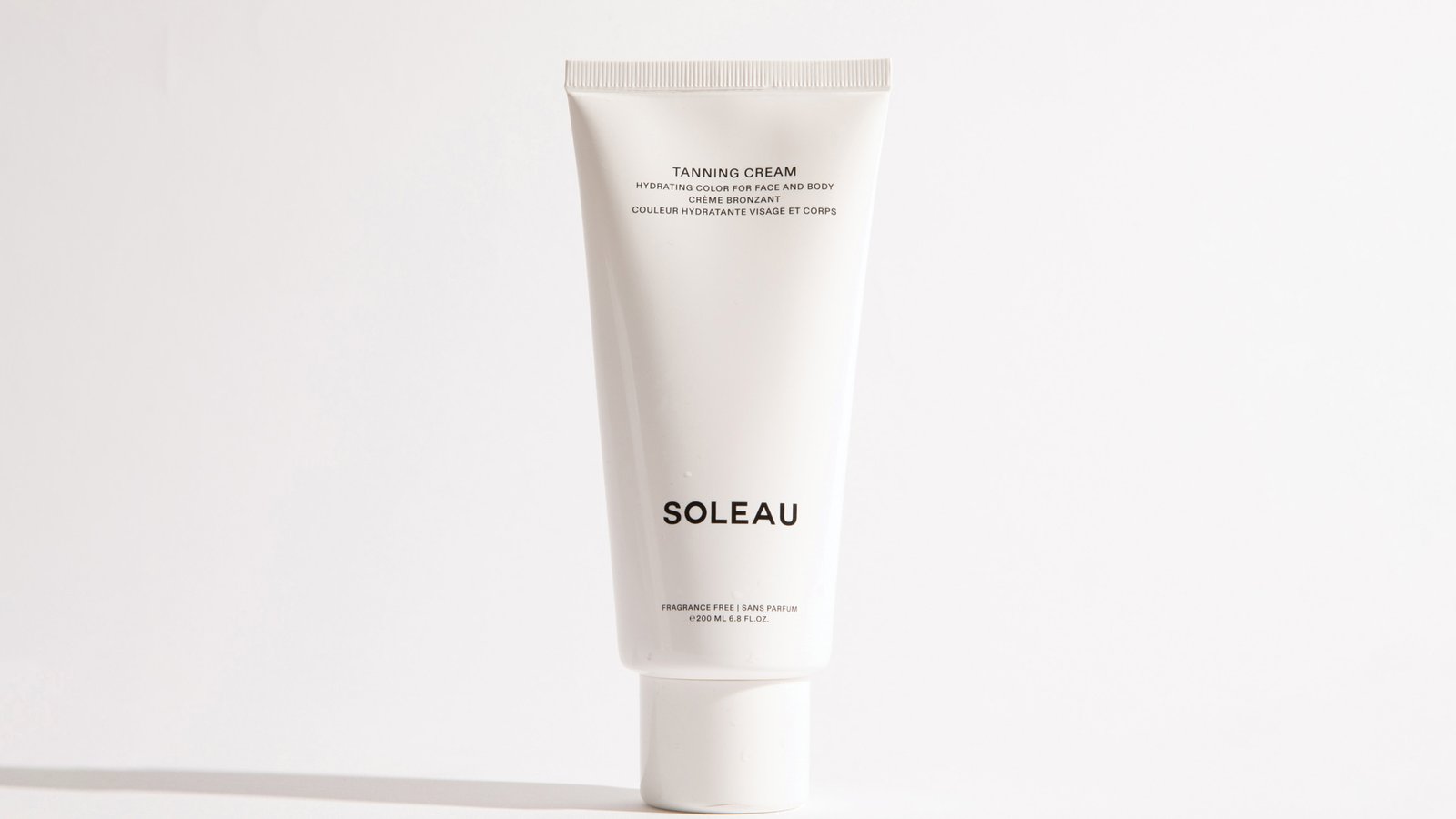
This is exactly why I keep coming back to Soleau Tanning Cream. The formula is clean in the way that actually counts: no parabens, no synthetic fragrance, no alcohol drying agents.
The base is a cream with real hydrators, so your skin isn't being stripped during development. After testing a lot of products that left me dry by day three or smelling faintly chemical for 12 hours, finding something this straightforward was a genuine relief.
Tena H. said it better than I could in her review: "Love this product. First and foremost, clean ingredients and no smell. It is also hydrating and goes on like a lotion."
That combination shouldn't be rare, but it is.
The Bottom Line on Non-Toxic Tanning
Non-toxic self tanners work just as well as conventional ones. The color comes from DHA, which is the same in both. What you're actually trading when you switch to a clean formula is the accumulation of fragrance chemicals, parabens, and fillers your skin doesn't need and, with repeated exposure, may eventually react to.
Read ingredient lists rather than front-of-label claims. Look for the absence of synthetic fragrance (Parfum/Fragrance), parabens (-paraben), and formaldehyde-releasing preservatives (DMDM Hydantoin, Imidazolidinyl Urea). Look for the presence of genuine hydrators: aloe vera juice, glycerin, hyaluronic acid, plant oils. Choose cream formulas over alcohol-heavy mousses if your skin is at all reactive.
It's a small shift in what you're buying. The results are the same. But your skin gets a lot more out of every application.
Shop Soleau Tanning Cream →Frequently Asked Questions About Non-Toxic Self Tanners
Is DHA in self-tanners safe?
Yes. DHA is FDA-approved and has a decades-long safety record for topical use. It's derived from plant sugars and reacts with amino acids in the outermost dead skin layer to create color. No living cells are involved. The safety concerns around self-tanners are almost always about other ingredients in the formula, not DHA itself.
Are non-toxic self tanners as effective as regular ones?
Yes, and often better. The color result comes from DHA, which is present in clean and conventional formulas alike. What changes in a non-toxic formula is the supporting cast: you get skin-conditioning ingredients instead of cheap fillers, which means better application, more even fading, and skin that's in better shape after each use.
What's the difference between "natural" and "clean" in self-tanners?
"Natural" implies ingredients come from plant or mineral sources. "Clean" typically means free from ingredients considered harmful or unnecessary, regardless of origin. Neither term is regulated in the US, so they can be used loosely. Reading the actual ingredient list is more reliable than trusting any label claim.
How do I check if a self-tanner is actually non-toxic?
Read the INCI ingredient list. Fragrance will appear as "Parfum" or "Fragrance." Parabens end in "-paraben." Formaldehyde-releasing preservatives include DMDM Hydantoin, Imidazolidinyl Urea, and Diazolidinyl Urea. If you see any of these, the formula isn't clean by most standards. Apps like Think Dirty or INCI Decoder can help you decode unfamiliar names quickly.
Can I use a non-toxic self-tanner if I have sensitive skin?
Non-toxic formulas are a better fit for sensitive skin specifically because they skip the two most common irritants: synthetic fragrance and harsh preservatives. A fragrance-free, paraben-free cream formula with soothing ingredients like aloe and glycerin will almost always cause fewer reactions than a conventional self-tanner. Patch-test on a small area first regardless of how clean the formula is.