Self Tanner While Pregnant: Is It Safe?

The question comes up earlier in pregnancy than you'd think. Sometimes week 8. Sometimes week 14. You're reading labels on your shampoo, your lotion, your face wash. Of course the self tanner gets the same treatment.
I covered a feature on pregnancy-safe beauty products a couple of years ago, and self tanner was the most contested item on the list. My OB friends disagreed. The dermatologists I spoke with disagreed with each other. The internet was no help at all.
So here's what I actually found after going through the research: the active ingredient in self tanner while pregnant isn't really the concern. The formula around it is. And once you understand that distinction, picking a safe option gets a lot less stressful.
How Self Tanner Works (And Why DHA Isn't the Main Issue)
Every self tanner gets its color from DHA, which stands for dihydroxyacetone. It's a simple sugar compound that reacts with amino acids in the outermost layer of your skin to produce a golden-brown color through a process similar to what happens when bread browns in the oven.
The key phrase there: outermost layer. DHA reacts with dead skin cells only. The stratum corneum, which is already shed tissue sitting on top of living skin. It doesn't penetrate further in any meaningful amount. Multiple studies have measured DHA absorption through intact skin, and the numbers consistently come back below 0.5% reaching deeper layers.
The FDA has approved DHA for topical cosmetic use since 1977. Nearly 50 years of use, with no documented systemic safety concerns. For a complete picture of how sunless tanning works, that history is reassuring context.
The concern dermatologists flag for pregnancy isn't DHA itself. It's two things: spray tan inhalation, and the carrier formula ingredients in most mainstream self tanners.
Why Spray Tans Are a Different Conversation
When DHA is applied as a cream or lotion, it stays on the skin. When it's sprayed in a booth, it becomes airborne. Inhaling DHA bypasses the skin's barrier entirely. That's where most OBs get cautious, not because DHA topically is dangerous, but because the inhalation exposure route is different and less studied during pregnancy.
If your OB said to avoid self tanner during pregnancy, they were almost certainly thinking about spray booths. At-home cream or lotion application doesn't carry that concern.
The Real Concern: What's in the Carrier Formula
Most mainstream self tanners have at least one ingredient you'd want to skip during pregnancy. Often more than one. This is where reading the full label matters.
Ingredients to Avoid When Pregnant
Retinol and retinoids. Any vitamin A derivative is a firm no during pregnancy. High-dose vitamin A is associated with birth defects, and while a topical lotion delivers far less than a supplement, most OBs recommend avoiding it entirely.
Look for: retinol, retinyl palmitate, retinyl acetate, tretinoin, retinoic acid. It's not common in self tanners, but it does appear in some "anti-aging" tanning formulas.
Parabens. These preservatives, methylparaben, propylparaben, butylparaben, are endocrine disruptors that mimic estrogen. The evidence on harm in pregnancy isn't settled, but they're easy to avoid and clean brands have largely moved away from them anyway.
Formaldehyde-releasing preservatives. DMDM hydantoin, diazolidinyl urea, imidazolidinyl urea, and quaternium-15 all slowly release small amounts of formaldehyde as they break down. Formaldehyde is a known carcinogen. Concentrations in cosmetics are low, but during pregnancy most people choose to skip unnecessary exposure where they can.
Synthetic fragrance. "Fragrance" on an ingredient label is a catch-all that can hide dozens of undisclosed chemicals, some of them sensitizers, some with endocrine-disrupting activity. Pregnancy often makes skin more reactive anyway. Fragrance is worth avoiding regardless of what's underneath the label.
Chemical sunscreen actives. Some self tanners include SPF. If yours does, check whether it uses oxybenzone or avobenzone. These have raised concerns around hormone disruption. Mineral sunscreen options (zinc oxide, titanium dioxide) are the safer choice during pregnancy.
Now look at most drugstore self tanners. St. Tropez has fragrance and synthetic preservatives. Jergens Natural Glow is heavily fragranced. Bondi Sands, for all its good color, is not fragrance-free. Many contain parabens or DMDM hydantoin. You can use them on healthy skin with no particular concerns, but during pregnancy, the bar for "good enough" changes.
What a Pregnancy-Safe Formula Actually Looks Like
The ingredient list should be short. Aloe vera, glycerin, plant oils, water, and DHA as the active. That's the template.
Fragrance-free, not just "naturally fragranced." Some brands use essential oils and market them as a fragrance-free alternative, but many essential oils, clary sage, rosemary, camphor, are specifically flagged for avoidance during pregnancy. If there's no fragrance of any kind, you've eliminated that variable entirely.
No parabens. Check for the full list: methylparaben, ethylparaben, propylparaben, butylparaben, isobutylparaben.
DHA as the only active. If there are additional actives you don't recognize, look them up. Some "tanning accelerators" use botanical extracts that haven't been studied in pregnancy.
For a full breakdown of what different ingredients do and which ones to watch for, our self tanner ingredients guide walks through the complete list.
How to Apply Self Tanner Safely During Pregnancy
Even with a clean formula, a few things are worth adjusting when you're pregnant.
Do a patch test first. Hormonal changes make skin more reactive during pregnancy. A formula you've used for two years might suddenly cause irritation. Test on your inner arm 24 hours before a full application.
I learned this the hard way testing sensitive skin formulas during a hormonal shift. A reaction I'd never had before showed up clearly. Pregnancy amplifies that significantly.
Apply in a ventilated space. Even with cream or lotion, good airflow is sensible. The DHA smell during development isn't dangerous at those concentrations, but a well-ventilated bathroom is always better than a sealed one.
Consider waiting until the second trimester. If you're genuinely unsure, the most cautious approach is waiting until week 13. The first trimester is when organ development is most active. After that, most dermatologists consider clean topical DHA application low-risk with your OB's sign-off.
Always talk to your OB. This isn't a liability disclaimer. Your OB knows your specific pregnancy. Some situations, certain skin conditions, medications, or complications, change the calculus. Get their actual input rather than making the call based on a beauty article alone.
For more on the safety profile of sunless tanning generally, see our breakdown of what dermatologists and the research actually say about sunless tanner safety.
The Formula That Passes the Pregnancy Test
This is exactly where formula choice becomes everything. A clean, fragrance-free self tanner is a genuinely different product from the average version at the drugstore. When I applied the pregnancy-safe criteria: no fragrance, no parabens, no retinoids, no formaldehyde-releasing preservatives, DHA as the only active, a base of recognizable ingredients, most popular self tanners didn't make it through the filter.
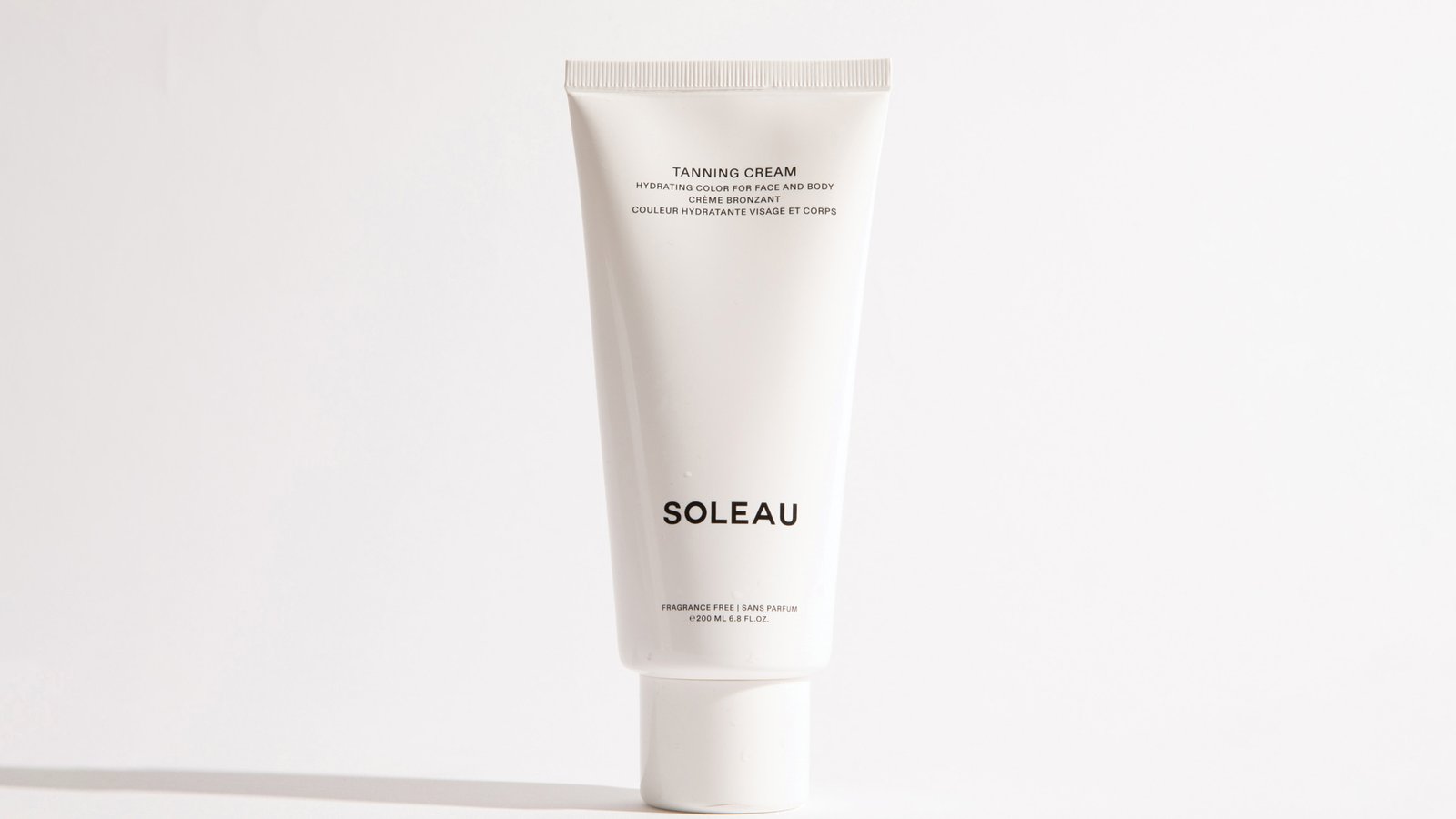
This is exactly why we keep coming back to Soleau Tanning Cream. The formula is fragrance-free. The ingredient list is clean. No parabens, no retinoids, no synthetic fragrance of any kind.
It goes on like a body lotion, which means no airborne particles and no complicated setup. The color is natural golden, not orange, and it develops overnight. One application is enough to see a real difference.
One customer summarized the clean formula case better than I could:
"It is so nice to have a self tanning cream that works and most importantly isn't full of toxic and harmful ingredients. I feel at ease when applying this cream that I am not harming my health."
That feeling of ease matters a lot when you're already spending mental energy on every label in your house.
The Bottom Line on Pregnant Self Tanning
You don't have to give up the glow during pregnancy. But you do have to be more deliberate about which formula you choose.
DHA, the active in every self tanner, has nearly 50 years of topical safety data. It reacts with dead skin cells at the surface and doesn't penetrate in any meaningful amount. That's the good news.
The part that requires more scrutiny is everything else in the bottle. Most mainstream self tanners have fragrance, parabens, or preservatives you'd rather not use during pregnancy.
The rules are simple. Stick to cream or lotion; avoid spray booths. Read the full ingredient list and skip anything with parabens, retinoids, formaldehyde-releasing preservatives, or synthetic fragrance. Wait until the second trimester if you're unsure. And always get your OB's actual sign-off rather than relying solely on a beauty guide.
A clean formula eliminates most of the guesswork. If Soleau passes the criteria check, which it does, you can apply it with the same ease you would any other lotion.
For our complete guide to the best sunless tanners overall, see the full ranking of the best self tanners for 2026.
Shop Soleau Tanning Cream →Frequently Asked Questions About Self Tanner During Pregnancy
Is DHA safe to use during pregnancy?
Topically applied DHA has a strong safety record. Studies show that less than 0.5% of DHA penetrates beyond the outermost dead skin cells. Most OBs consider cream and lotion self tanners low-risk during pregnancy, though they'll often recommend waiting until the second trimester as a precaution. Always check with your own doctor first.
What self tanner ingredients should I avoid when pregnant?
The main ones to skip: retinol and retinoids (any vitamin A derivative), parabens (methylparaben, propylparaben, butylparaben), formaldehyde-releasing preservatives (DMDM hydantoin, diazolidinyl urea, quaternium-15), synthetic fragrance, and oxybenzone if the product also contains SPF. These appear in many mainstream self tanners, which is why reading the full ingredient list matters.
Is lotion self tanner safer than a spray tan during pregnancy?
Yes. The concern with spray tans during pregnancy is inhalation. When DHA becomes airborne in a spray booth, it bypasses the skin's barrier entirely. Topical cream and lotion self tanners don't carry that risk, which is why most OBs who are cautious about spray tans are still comfortable with at-home cream application.
When in pregnancy is it safe to start using self tanner?
If you're unsure, waiting until the second trimester is the most cautious approach. The first trimester is when fetal organ development is most active. After week 13, with a clean formula and your OB's approval, most dermatologists consider topical DHA application low-risk.
Can I use self tanner right after giving birth?
After delivery, most of the ingredient cautions around pregnancy no longer apply in the same way. If you're breastfeeding, some OBs still recommend fragrance-free formulas as a precaution, since skin-to-skin contact with your baby is frequent. A clean, fragrance-free self tanner is a good choice in that period regardless.