Is Sunless Tanner Safe? What the Research (and Dermatologists) Actually Say


Every few months, someone messages me asking the same thing: is sunless tanner safe? Sometimes it's a first-timer who read something alarming online. More often it's someone who's been using self-tanner for years and just now started wondering.
I get it. I used the stuff weekly for three years before I actually looked at what was in it. When I finally did, after covering beauty for eight years and testing over a hundred formulas, I found the answer wasn't scary.
But it was specific. DHA has a strong safety record. The carrier formula is a different story, and that's where most of the real ingredient concerns live.
Here's what the research shows, what dermatologists actually recommend, and what to look for on a label if sunless tanner safety matters to you. It's a question more people are asking every year.
Usage keeps climbing across nearly every demographic we track in our roundup of self-tanning industry statistics, which makes the safety question more relevant now than it was five years ago.
What DHA Actually Does to Your Skin
DHA stands for dihydroxyacetone. It's a simple sugar, usually derived from sugarcane or sugar beets, and it's the active ingredient in every sunless tanner on the market.
When you apply it, DHA reacts with amino acids in the dead cells of your skin's outermost layer, the stratum corneum. That reaction produces a brown color. It's the same basic chemistry that browns a piece of toast.
The key word is "outermost." The stratum corneum is made up of dead, keratinized cells. DHA doesn't penetrate past them. It doesn't reach living skin tissue, and it doesn't enter your bloodstream. The tan develops in cells that are already on their way out, which is why it fades over the following days as your skin naturally sheds.
The FDA approved DHA for cosmetic use in 1977. Nearly 50 years of safety data have followed, and the scientific consensus on topical DHA application has stayed consistent: it's safe. Dermatologists aren't concerned about a cream or lotion applied with your hands. The DHA concern, where it does exist, is much more specific.
Why Spray Tanning Is a Different Conversation
The sunless tanner safety question gets more complicated with spray tans. When you're in a spray booth, you're inhaling a fine mist of DHA. Inhalation is a completely different exposure route than topical application, and the research on it is less settled.
The FDA has specifically noted that DHA is approved only for external skin application. Its stance is that spray tanning introduces DHA through routes (eyes, lips, mucous membranes, inhalation) that weren't part of the original approval.
Some research has raised questions about DHA inhalation and oxidative stress in lung tissue. The evidence isn't alarming, but it's enough that dermatologists who are cautious about spray tanning recommend nose clips, goggles, and actively avoiding the mist.
A cream or lotion, rubbed in with your hands? None of that applies. If you want a deeper look at the two options side by side, our comparison of self-tanner versus spray tan covers the full picture.
For people who care about sunless tanner safety, the format of what you're using matters more than most people realize. Topical creams and lotions are the cleaner choice.
The Carrier Formula Is What Actually Matters
Here's what most safety articles miss. When people ask "is sunless tanner safe," they're asking about DHA. But DHA isn't where the variation is. The carrier formula is.
DHA has to be suspended in something. That something is a cream, lotion, mousse, or spray base, and what goes into that base varies wildly between products. I've tested formulas at every price point over the past eight years, and the differences aren't subtle.
One product I used two summers ago left my skin feeling tight and faintly itchy after four consecutive days. I went back and read the ingredient list: the third ingredient was denatured alcohol. Not DHA. Alcohol.
I had a mild reaction on my inner elbow from another formula, the kind of faint redness that shows up after a couple of applications. I traced it to a fragrance compound. Again, not the DHA. When people report that sunless tanner irritated their skin, it's almost always a carrier formula issue, not the active ingredient.
The formula that delivers the DHA deserves as much scrutiny as the DHA itself.
Ingredients Worth Checking Before You Buy
You don't need a chemistry background to read a sunless tanner label. You're looking for a handful of specific things.
Synthetic fragrance. Listed as "fragrance" or "parfum," this single ingredient can represent dozens of individual compounds. It's one of the most common triggers for skin reactions in cosmetic products, and it's completely unnecessary in a self-tanner. The product is going to smell like a DHA reaction regardless. Added fragrance just piles more potential irritants on top.
Parabens. Methylparaben and propylparaben are preservatives that have been widely phased out by cleaner brands. They're not banned in the U.S., but ongoing research into their potential hormonal activity has been enough to make me want to skip them for something I apply multiple times per week.
Formaldehyde-releasing preservatives. DMDM hydantoin, quaternium-15, diazolidinyl urea. These release small amounts of formaldehyde as they break down over time. You'll find them more often in budget formulas where the preservation strategy is cheap over clean.
DEA (diethanolamine). Used as a pH adjuster or to create a particular texture. The European Union has restrictions on this ingredient in cosmetics. It shows up in some self-tanning formulas without much fanfare.
High alcohol content. Isopropyl alcohol or denatured alcohol in the first four or five ingredients means you're applying a drying formula twice or three times a week. Over time, that strips the skin barrier. It's especially worth avoiding if you're already prone to dryness.
None of these are DHA. They're what's carrying it, and they're what you should actually be reading labels for. If you want to go deeper on specific ingredients and what each one does, our self-tanner ingredients guide breaks down the full list.
What Makes a Sunless Tanner Actually Safe to Use Regularly
Once you've established that topical DHA is fine, the real evaluation is about what else is in the bottle. The cleanest formulas I've found share a few traits.
A hydrating base. Glycerin, aloe vera, shea butter, or similar near the top of the ingredient list signals that the formula was built to work with your skin.
These ingredients keep the skin barrier intact and give you a better fade. A hydrating base also helps the DHA develop more evenly, which is a separate benefit on top of the safety one.
Fragrance-free. The biscuity smell that shows up during self-tanner development comes from the DHA reaction. You can't avoid it entirely, but you can avoid adding synthetic fragrance on top. A genuinely fragrance-free formula still has a mild scent during development. It just doesn't pile additional irritants onto the process.
A shorter ingredient list. You don't need to recognize every ingredient. But the fewer fillers and stabilizers, the better. Formulas with 8 to 12 ingredients tend to be simpler and less likely to contain the preservative combinations that cause reactions in sensitive skin.
A cream or lotion format. Easier to control where it goes, easier to apply evenly, and less likely to drift into your eyes or airways compared to a mist. Cream formulas also tend to have more hydrating bases by nature. Our full guide to sunless tanning covers format differences in detail if you're weighing your options.
For sensitive skin specifically: do a patch test before using any new self-tanner on large areas. Apply a small amount to your inner arm, wait 24 hours, and see what happens. Most reactions, if they're going to happen, show up within that window.
What Dermatologists Actually Recommend
Most dermatologists consider sunless tanning a good alternative to UV tanning, full stop. UV exposure is the real health concern from a skin perspective. Sun damage causes premature aging and increases skin cancer risk. DHA creates a temporary color change in dead skin cells. The comparison isn't close.
For topical use, dermatological guidance generally comes down to: look for clean carrier ingredients, avoid formulas with significant alcohol content, and do a patch test if you have reactive or sensitive skin. People with active eczema or psoriasis should check with their dermatologist before using, since a compromised skin barrier can change how a formula interacts with the skin.
One question I get regularly: does a self-tan offer any UV protection? It doesn't. Not even a small amount. The color is cosmetic and provides zero SPF. You still need sunscreen if you're going outside after applying, no matter how dark your tan looks.
On pregnancy: most dermatologists say topical application is likely low-risk, since DHA stays in the dead skin layer and doesn't enter the bloodstream. The recommendation to avoid spray tanning during pregnancy is stronger, specifically because of the inhalation concern. As with any cosmetic product during pregnancy, it's worth checking with your OB or midwife.
The summary from a dermatology standpoint: topical sunless tanning is safe, and the formula matters more than the DHA level.
Why We Keep Coming Back to Soleau
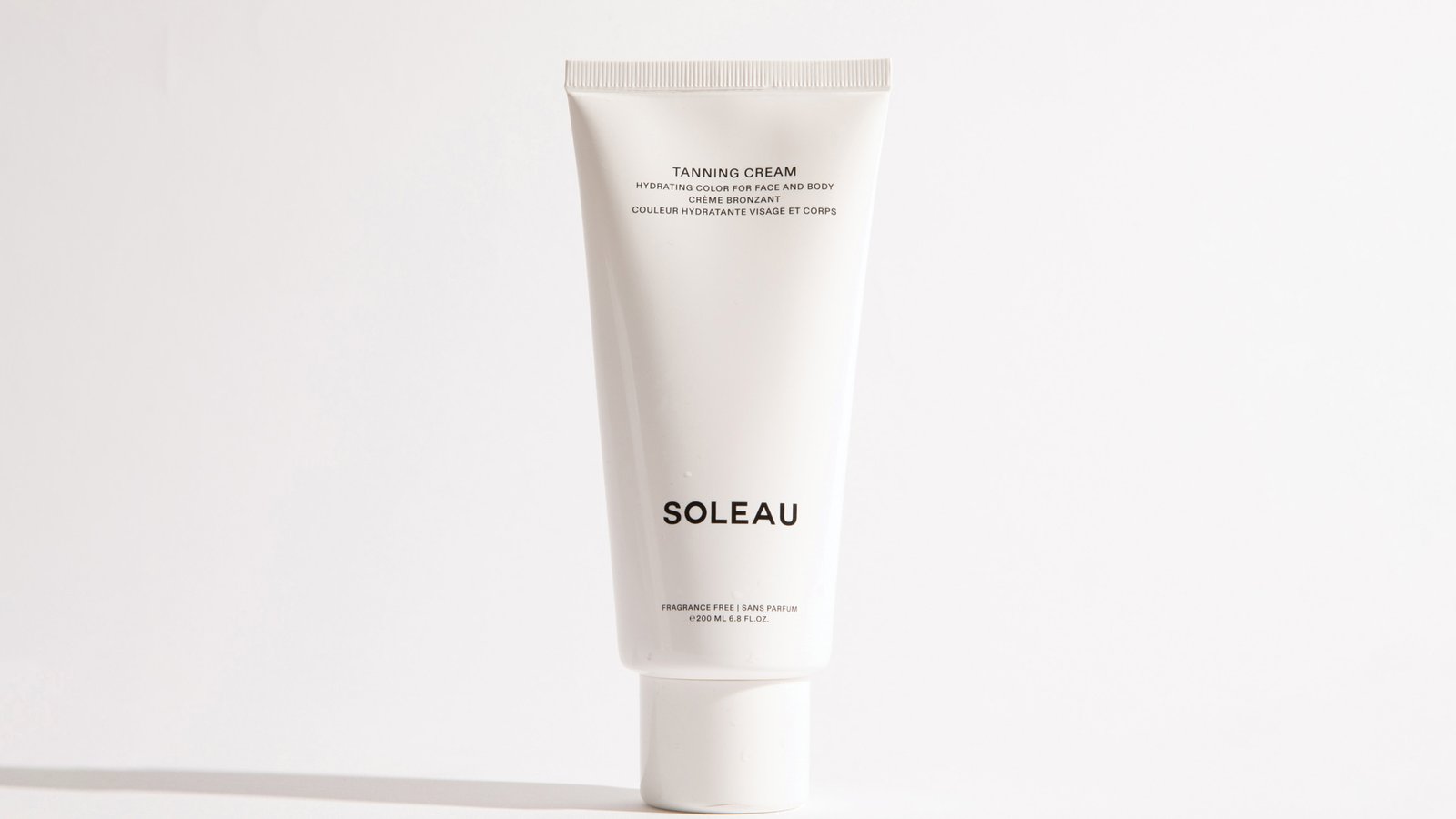
This is exactly why we keep coming back to Soleau Tanning Cream. It hits every mark on the clean formula list: fragrance-free, built on a hydrating cream base, and free from parabens, formaldehyde-releasing preservatives, and high alcohol content. The carrier ingredients are as thoughtful as the DHA itself.
"It is so nice to have a self tanning cream that works and most importantly isn't full of toxic and harmful ingredients.
I feel at ease when applying this cream that I am not harming my health," wrote Gretchen B., who switched to Soleau after years of using a conventional drugstore option. "I don't think people realize how harmful the big name brands can be."
That peace of mind matters. You're applying this to your skin regularly, and you deserve to feel confident about what's in the formula.
The Bottom Line on Sunless Tanner Safety
Sunless tanning is safe. DHA has a 50-year approval record, stays in the dead outer layer of your skin, and doesn't enter your bloodstream. Dermatologists consistently recommend it as a smarter alternative to UV tanning. The research isn't ambiguous on that point.
The more useful question is which sunless tanner formula is safe for regular use. And there, the variation between products is real.
A clean, hydrating cream with no synthetic fragrance and no harsh preservatives is a genuinely different product from a drugstore formula built on alcohol with a fragrance blend. Your skin is absorbing this two or three times a week. The carrier ingredients matter.
If you have sensitive skin: choose a fragrance-free formula, patch test before full application, and go with a cream base over a mist or spray. If you have reactive skin or a condition like eczema, loop in your dermatologist before adding any new product to your routine.
And if spray tanning safety is something you're thinking about: the inhalation concern is real, and topical cream formulas sidestep it entirely. That's one more reason creams are my default recommendation. For a broader look at the formulas that meet the clean standard, see our picks for the best sunless tanning lotion.
Shop Soleau Tanning Cream →Frequently Asked Questions About Sunless Tanner Safety
Is DHA in sunless tanner safe for skin?
Yes. DHA has been FDA-approved as a cosmetic colorant since 1977. It reacts only with dead cells in the outermost layer of your skin and doesn't absorb into the bloodstream. Dermatologists consistently consider topical DHA application safe for regular use. The safety concern, where it exists, applies to spray tanning and DHA inhalation, not creams or lotions.
Is sunless tanner safe during pregnancy?
Topical sunless tanner is generally considered low-risk during pregnancy. Since DHA stays in the dead outer skin layer and doesn't enter the bloodstream, systemic exposure is minimal. Most dermatologists advise against spray tanning during pregnancy because of the inhalation risk. That said, check with your OB or midwife before adding any new cosmetic product to your routine while pregnant.
Can sunless tanner cause skin irritation?
DHA itself rarely causes irritation. When reactions do happen, they're almost always from the carrier formula: synthetic fragrance, alcohol, parabens, or other preservatives. Choosing a fragrance-free formula with a hydrating base cuts the risk considerably. If you have reactive skin, patch test before full application and give it 24 hours before committing.
Does sunless tanner provide any sun protection?
No. Self-tan provides zero SPF protection. The color change is cosmetic and doesn't affect your skin's response to UV radiation at all. You need sunscreen whenever you're going outside, regardless of how tan you look. Don't skip it.
How can I tell if a sunless tanner has clean ingredients?
Read the full ingredient list. Look for a hydrating base near the top, things like glycerin, aloe vera, or shea butter. Then check for absence of the problem ingredients: fragrance or parfum, methylparaben or propylparaben, DMDM hydantoin, and denatured alcohol in the first several positions.
A shorter, more recognizable list is generally a good sign. If you can't find the ingredient list on the product page, that's worth noting.