Sunless Tanning: The Complete Beginner's Guide

The first time I tried sunless tanning, I did everything wrong. I skipped prep entirely, slapped a drugstore mousse on my legs in about 30 seconds flat, and then went about my evening.
The next morning I checked my knees and thought I'd somehow bruised myself overnight. Dark orange patches, streaks on my ankles, the full disaster. That was my introduction to sunless tanning, and I nearly swore it off completely after that first attempt.
If you're reading this, you've probably been curious about sunless tanning for a while. Maybe you've been warned off by horror stories like mine, or maybe you just don't know where to start.
Either way, this guide covers everything: what sunless tanning actually is, how the chemistry works, which types of products exist, what separates a good formula from a bad one, and how to apply it so you wake up looking like you spent two weeks somewhere warm rather than like you lost a fight with a fake tan.
I've been testing self-tanners professionally for 8 years. I've tried well over 100 products. What follows is what I actually know, not what a brand told me to write.
What Is Sunless Tanning?
Sunless tanning means coloring your skin without UV exposure. No sun. No tanning bed. No bronzer that rubs off on your sheets. The color comes from a chemical reaction triggered by an ingredient called DHA, and it bonds to the outermost layer of your skin cells.
It's not paint. It's not a dye. The color is technically yours, produced by your own skin cells reacting to the ingredient.
The sunless tanning category includes self-tanners, fake tans, sunless tanners, and bronzing lotions. All of these terms describe the same basic thing: topical products that use chemistry to develop a tan-colored pigment on your skin without any sun exposure involved.
How DHA Creates Your Color
DHA, or dihydroxyacetone, is the active ingredient in every real self-tanner on the market. It's a simple three-carbon sugar that reacts with free amino acids in the dead skin cells on your surface layer.
This reaction (called the Maillard reaction, the same one that browns bread and gives coffee its color) produces compounds called melanoidins, which are brown-colored and give you that tan appearance.
The color develops over 4-8 hours after application, which is why most people apply at night and wake up tanned. Some formulas include a color guide (a cosmetic tint that shows you where you've applied) that rinses off in the shower, leaving only the DHA-developed color behind.
One thing worth knowing: DHA only affects the outermost layer of dead skin cells. As those cells shed naturally, your color fades. That's why sunless tans typically last 5-10 days rather than staying indefinitely.
Why DHA Color Isn't Instant
Products that claim to tan you on the spot are usually using temporary bronzers on top of DHA. The bronzer gives an immediate result, but it'll rinse off when you shower. The actual DHA color takes hours to develop underneath.
This is actually a feature, not a limitation. Because the color builds slowly, you can apply it more forgivingly and correct small mistakes before they fully develop. With instant products, what you see immediately is what you're stuck with.
Is DHA Safe?
Yes. DHA has been approved by the FDA for external use since 1977 and has decades of safety data behind it. The ingredient itself is harmless on skin, which is why it's been used in cosmetics for nearly 50 years.
The concern you sometimes read about online relates specifically to spray tans: when DHA is inhaled as a fine mist during a spray tan application, that's where some dermatologists urge caution. When you're applying a lotion or cream at home, there's no inhalation involved. The risk doesn't apply.
Types of Sunless Tanning Products
Walk into any beauty retailer and you'll find self-tanners in several formats. Each has real trade-offs, and the best one for you depends on your skin type and how much time you want to spend applying it.
Mousse and Foam
Mousses are the most widely used format right now. They apply quickly, dry in about 10 minutes, and the foam texture makes it easy to see where you've applied. Bondi Sands makes a solid dark mousse if you want fast results. Isle of Paradise does good color variety across their mousse range.
The downside: mousse formulas can dry out skin if the base formula isn't well-designed. Any dry patches you have will absorb the product unevenly, which means patchy color. You also need to move fast; if you pause mid-application, you can get a visible seam where two sections overlap.
Lotions and Creams
Cream formulas apply like a regular body moisturizer. They blend easily, give you more working time before they set, and tend to hydrate skin at the same time. The color development is often more natural-looking because the formula doesn't sit on top of skin the way a mousse does; it sinks in.
The trade-off is dry time. Creams take longer to set than mousses, so you'll need to avoid wearing clothes for at least 30-45 minutes after applying, or you risk transferring product to fabric before it's set. Not ideal if you're in a hurry.
For beginners, I'd start here. The application window is more forgiving, the color builds gradually, and if you make a small mistake it's easier to blend out before it fully develops.
Drops and Serums
Self-tanning drops are designed to mix directly into your existing moisturizer. You control the depth by adding more or fewer drops to each application. Tan-Luxe has a popular version. Isle of Paradise makes good drops in multiple shades.
The appeal is control. But they're a bit fiddly as a first product because you're mixing your own formula each time. Great for maintaining a light glow once you know what you're doing; less ideal for learning the basics.
Gradual Tanners
Gradual lotions, like Jergens Natural Glow, use a very low concentration of DHA and are meant to be applied daily over a week or more. They're the gentlest entry point into sunless tanning and the least likely to produce obvious mistakes.
The color ceiling is lower, though; you won't get a deep tan from a gradual lotion, and you need to commit to consistent application to see results.
What Makes a Good Sunless Tanner: The Criteria That Matter
Most buying guides tell you to look for "streak-free formulas" and "natural color," which is not useful advice. Here's what actually separates a good sunless tanner from one that'll disappoint you. If you want to skip straight to our tested picks, our best sunless tanner rankings cover the products that pass every one of these criteria.
Ingredients and Formula Quality
A lot of self-tanners are built around alcohol, artificial fragrance, and petroleum-based fillers. Alcohol dries skin out, which causes patchy fading within a few days. Synthetic fragrance is a common allergen, and many brands use heavy perfumes specifically to mask the DHA smell during development. This is a compromise worth knowing about before you buy.
Look for formulas with a clean, short ingredient list: aloe, glycerin, plant-based oils for hydration. Your skin should feel at least as good after applying as it did before, preferably better. That's a sign the formula is built on a solid base, not just DHA suspended in filler.
Color Undertones: The Orange Problem
Not all DHA is the same quality, and not all formulas develop the same color. Cheaper self-tanners develop orange or brassy undertones, especially on fair and medium skin tones. The orange effect gets worse as color builds. This is the thing everyone is afraid of, and it's a legitimate concern.
The fix is finding a formula that steers the DHA reaction toward brown rather than orange. Look specifically for reviews from people with your skin tone commenting on undertones, not just "it worked." A product can work perfectly and still turn orange. Those are two different things.
How the Tan Fades
Fade quality is almost as important as application. A bad fade looks splotchy: darker color stuck in your elbows and knees while the rest of you lightens unevenly. Recovering from a bad fade usually means aggressive exfoliation, which isn't fun.
Creams and lotions tend to fade more evenly than mousses because their hydrating ingredients keep skin turnover consistent across the body. If you've had patchy fading experiences before, switching formula types often solves the problem.
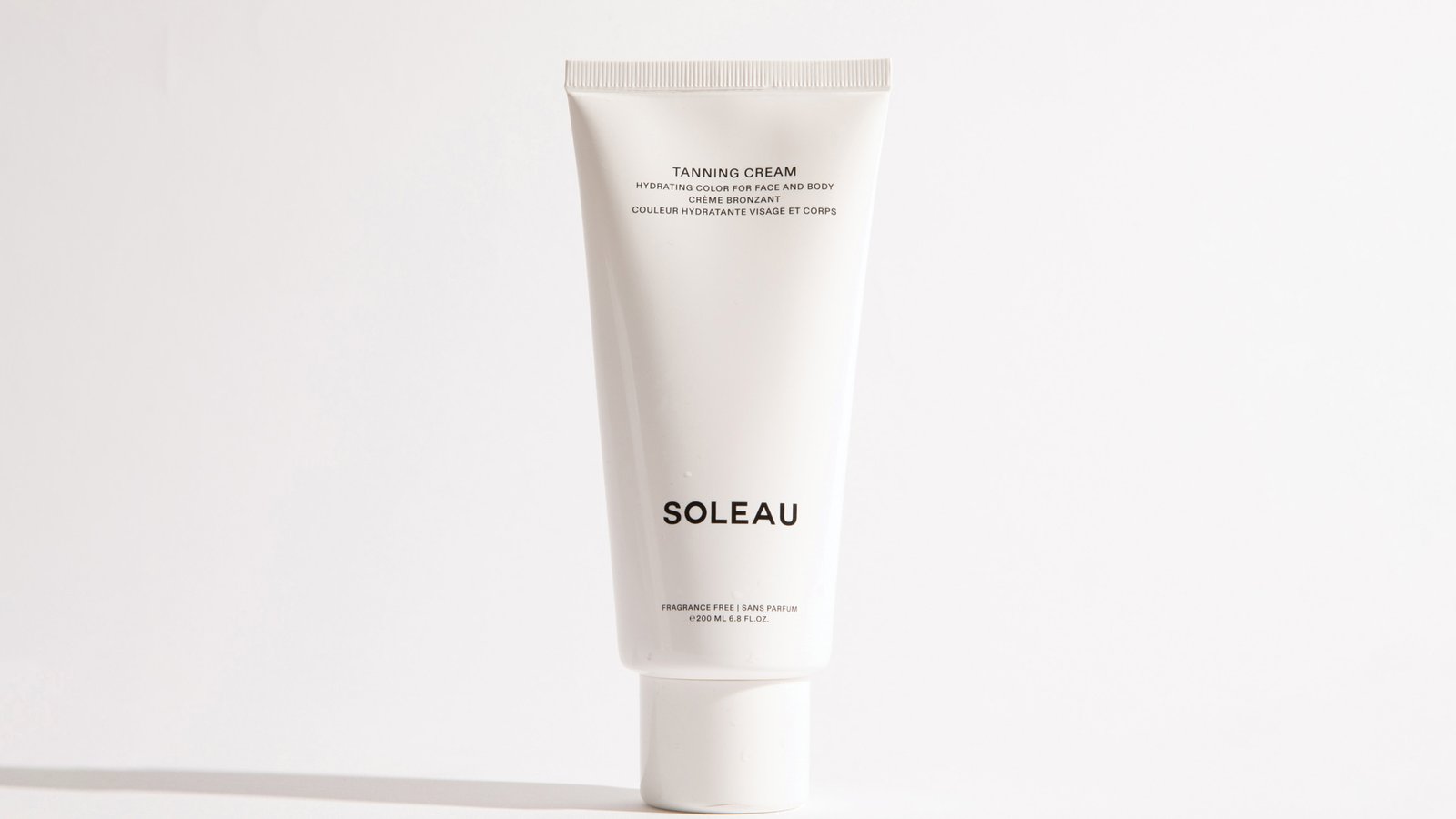
This is exactly why we keep coming back to Soleau Tanning Cream. It hits every one of these criteria: clean ingredients with no synthetic fragrance, a cream formula that applies like a moisturizer, color that develops golden-brown rather than orange, and a fade that comes off gradually over about 7 days without the patchiness.
I've tested it alongside St. Tropez Self Tan Bronzing Mousse (good product, but dries fast and streaks on dry skin) and Loving Tan Deluxe Bronzing Mousse (deep color, but the scent is overwhelming). Soleau's approach is quieter and more wearable, and it's the one I'd put in a beginner's hands without hesitation.
Patrice T. described it well: "The tanning cream is so easy to use and results happen overnight. Plus, it doesn't have a scent that most other tanning products have. It is also a good moisturizer so I can tan and hydrate my skin at the same time."
How to Prep Your Skin for Sunless Tanning
Prep is half the result. Skip it and your tan will be patchy by day 3, even if you apply perfectly.
Exfoliate 24 hours before. Dead skin cells sitting unevenly on the surface absorb DHA unevenly. A gentle body scrub or an exfoliating mitt the day before your application makes a real difference.
I use a simple drugstore exfoliating glove: cheap, doesn't leave oil residue that can interfere with absorption, and takes about 5 minutes in the shower. Avoid anything with heavy oil or glycolic acid on application day itself, though; those can mess with DHA development.
Shave or wax the day before, not the day of. Freshly shaved skin has tiny micro-abrasions that make it more porous. More porous means the DHA absorbs faster, which can make recently shaved areas look darker than surrounding skin. Twenty-four hours is enough time for skin to settle.
Skip moisturizer right before applying. Or apply it at least 30 minutes earlier. Any lotion sitting on your skin creates a partial barrier that prevents even absorption.
The one exception: a small amount of plain lotion on your elbows, knees, and ankles. Those areas are drier and more absorbent, so a slight barrier there prevents them from going darker than the rest of you.
Dry off completely first. After your shower, pat dry (don't rub) and wait 15-20 minutes before you start. Wet skin dilutes the product and causes streaks.
How to Apply Sunless Tanner Without Streaks
Use a tanning mitt. I can't say this strongly enough. A mitt distributes product evenly, prevents the DHA from staining your palms, and helps you blend the borders between sections. They cost about $5-8 and they're the single biggest upgrade you can make to your application technique. Don't try to use your bare hands.
Work in sections rather than trying to do your whole body at once. I go legs first, then torso, then arms. That gives you time to blend each section before moving to the next, and you can overlap slightly at the joints without creating obvious seam lines.
Use long, sweeping strokes, not circular rubbing. On your legs, sweep from ankle to hip in one motion. On your arms, go from wrist to shoulder. Circular motion tends to leave product bunched up in one spot.
Less is more on your first application. You can build color over multiple sessions, but you can't easily remove too much product once it's absorbed. Start lighter than you think you need to. A subtle result on day one looks more natural than an aggressive one, and you can always apply again the next day.
For your hands and feet, use whatever's left on the mitt after you've finished your main sections. These areas need less product because the skin is already dry and more absorbent.
Apply to the tops of hands and feet only, feathering it out toward the fingers and toes. Wash your hands thoroughly when you're done, getting between your fingers and around your cuticles, even if you used a mitt.
What to Do After You Apply
Wait at least 30-45 minutes before getting dressed. Loose, dark-colored clothing is best for the first few hours, since any product that hasn't fully absorbed can transfer to fabric. Avoid sweating, swimming, or showering for at least 6 hours, ideally overnight. The longer you leave it, the deeper the color develops.
When you do shower, use lukewarm water and a gentle wash. Hot water and aggressive scrubbing will strip color faster.
How Long Sunless Tan Lasts (and How to Extend It)
Most sunless tans last 5-7 days before noticeable fading begins. Some formulas and skin types get closer to 10 days.
The main variable is how quickly your skin cells turn over. Frequent swimmers, people who exfoliate often, and anyone with naturally dry skin will find their tans fade faster. Moisturizing daily after your first application makes a real difference because hydrated skin sheds cells more evenly, which means the fade is more gradual and uniform.
Rather than letting your tan fully fade before reapplying, top up every 4-5 days. Starting over from zero is harder than maintaining existing color, and it's easier to control depth when you're layering onto a base rather than building from scratch. Our guide on building a gradual tan through layering has more detail on this approach.
One thing that speeds up fading fast: long, hot baths. The heat and extended water exposure both strip color. Showers are better than baths while you're maintaining a sunless tan.
Common Mistakes Beginners Make
These are the ones I see most often.
Applying too much product on the first go. The instinct is to put on a thick coat to get a visible result. This usually leads to uneven color and patchy fading. Start with a thin, even layer and build from there.
Forgetting to blend joints. Elbows, knees, ankles, and wrists all need extra attention. These areas are naturally drier and more folded, which means product can concentrate in the creases. After applying to each section, go back over the joints with the very edge of your mitt using minimal pressure.
Not waiting long enough before getting dressed. I've ruined more than one pair of leggings by impatience. The color needs time to absorb before it'll stop transferring. Thirty minutes minimum. An hour is better.
Expecting perfection the first time. The first application is about learning how your skin responds to the formula and where your technique needs adjusting. Don't apply the night before a big event; apply a few days before so you have time to correct anything. Your second application will almost always look better than your first.
For a full walkthrough of the step-by-step process, see our complete self-tanner application guide. And if you want to compare specific products before committing to one, our best sunless tanning lotion roundup covers the top options with detailed comparisons.
If you're still deciding between doing it yourself at home versus booking a spray tan at a salon, our self tanner vs. spray tan comparison lays out the real differences in cost, convenience, and results.
Sunless tanning has a learning curve, but it's not a steep one. Get the prep right, use a mitt, work in sections, and start lighter than you think you need to. The disasters happen when people rush the first application. Slow down, and you'll be surprised how good the results can be.
Try Soleau Tanning Cream →Frequently Asked Questions About Sunless Tanning
What is sunless tanning?
Sunless tanning means coloring your skin without UV exposure using a product that contains DHA (dihydroxyacetone), a sugar that reacts with amino acids in your skin's outer layer to produce a brown color. The result looks like a natural tan but fades as those skin cells shed, usually over 5-10 days.
Does sunless tanning turn you orange?
Cheap formulas with low-quality DHA often develop orange undertones, especially on fair skin. A well-formulated sunless tanner will develop a golden-brown color rather than orange. Read reviews specifically for comments about undertones, not just whether the product worked overall.
How long does a sunless tan last?
Most last 5-7 days before fading becomes noticeable. Well-moisturized skin can hold color for closer to 10 days. Frequent swimming, hot baths, and dry skin all speed up the fade.
Is sunless tanning safe?
Yes. DHA has been FDA-approved for external use since 1977. It only affects the dead outer layer of skin cells. The inhalation concerns you sometimes read about apply to spray tan booths, not at-home creams and lotions.
Can I apply sunless tanner every day?
You can, but it's usually not necessary. For gradual color building, applying every other day over a week works well without over-saturating your skin. Once you've reached your target color, maintaining it every 4-5 days is enough.