Spray Tan for Wedding vs. Self-Tanner: Which Wins?

A bride I talked to last year booked her spray tan appointment for the morning of her wedding. Her mobile artist got a flat tire and never showed. She spent her wedding day panicked, hunting for a drugstore bronzer an hour before photos.
That story is the reason this comparison exists. Spray tan for a wedding is genuinely a good option, but so is self-tanner, and almost nothing written about this choice actually picks a side. After eight years testing tanning products and watching brides work through this exact decision, I'm going to pick one.
Here's the honest category-by-category breakdown, plus which option I'd actually choose if it were my wedding.
I'll say upfront that this isn't a formula versus formula fight. Both methods use similar tanning chemistry underneath. What actually separates them for a wedding is timing and how much control you keep over the result.
Timing and the Trial Run
Spray tan wants precision. Book your session 2 to 3 days before the wedding, no closer and no earlier, since the color peaks and starts fading within that window. A trial run 3 to 4 weeks out lets you test the shade and the technician before it counts.
Self-tanner is more forgiving because it isn't one appointment. You build color over 2 to 3 weeks leading up to the day, testing shades and reapplying as needed. There's no single point of failure. If one application looks off, you have weeks to adjust before anyone sees you in a dress.
Winner: Self-tanner. A multi-week buildup gives you more room to fix a mistake than a single salon booking does.
The Real Cost of Each Option
A single spray tan session runs $35 to $75. Add the trial run and a day-of touch-up, and a bride is often paying for two or three sessions before the wedding even starts. Wedding party group bookings for four or more people usually land between $80 and $165 per person.
One bottle of self-tanner covers the same buildup period for a fraction of that, and everyone in your wedding party can tan on their own schedule instead of coordinating salon slots for eight bridesmaids.
Winner: Self-tanner. The math isn't close once you count the trial run and touch-up most brides end up booking anyway.
Color Control and Fixing Mistakes
A spray tan session is a one-shot decision. You pick a level, usually 1 through 3, and that's the depth you're committing to for your wedding day. If it comes out darker than expected, you're stuck with it or scrambling for a same-week fix.
Self-tanner is correctable in a way spray tan isn't. Too light? Layer another coat tomorrow. Too dark in one spot? Exfoliate it down before the next application. You're never locked into a single guess made by someone else.
Winner: Self-tanner. Buildable beats one-shot for anyone who has never had a spray tan go exactly to plan.
Will It Ruin Your Dress?
This is the fear that keeps brides up at night, and it's not unfounded. Spray tan bronzer can transfer onto satin and silk if you sweat or if your session was too close to the ceremony.
Guide color rinses off in your first two showers, but the DHA underneath can still react with sweat and leave faint marks on delicate fabric. Satin and silk show it fastest, since both fabrics are smooth enough to pick up color on contact. Lace and heavier cotton blends hide the occasional smudge far better.
Self-tanner carries the same theoretical risk in the first hours after application, but since you're applying it weeks ahead, your skin has fully absorbed and set the color long before you ever put on the dress. There's no fresh product anywhere near the fabric on the actual day.
Winner: Self-tanner, specifically because of the timing gap, not because the chemistry is different.
The No-Show Risk
Mobile spray tan artists are a wedding-day dependency you don't need. Traffic or a double-booked calendar. Either one can leave you without a tan on the one day you can't reschedule.
Self-tanner removes that dependency completely. You control the entire process yourself, weeks in advance, with zero risk of someone else's schedule interfering with yours.
Winner: Self-tanner. This is the category spray tan cannot compete in, full stop.
Effort: The One Category Spray Tan Wins Outright
Credit where it's due. Spray tan asks nothing of you beyond showing up and standing still for fifteen minutes. Self-tanner asks for two to three weeks of evening applications, and that's real effort on top of everything else a bride is juggling.
If your schedule is already stretched thin and you can carve out one appointment more easily than a dozen small ones, that convenience is a legitimate reason to book the spray tan.
Winner: Spray tan. Hands-off convenience is the one thing self-tanner genuinely cannot match.
If you're tempted to buy your own machine instead of booking a salon appointment, our guide to spray tanning yourself at home covers what the equipment actually costs and what the first few sessions are like before you commit to either route.
Coordinating a Full Wedding Party
Getting eight bridesmaids into a salon for matching spray tans means coordinating schedules and hoping everyone's appointment goes smoothly on the same tight timeline.
Self-tanner lets each person build their own color on their own schedule, which matters more than it sounds like it should when you're already managing a dozen other wedding logistics.
Winner: Self-tanner, purely on the logistics. Spray tan can still work well for a smaller party with a trusted local studio.
The One Scenario Where Spray Tan Wins
Fairness means admitting where the other option genuinely comes out ahead. If your wedding is in five days and you've never touched a self-tanner, a professional spray tan session is the faster route to an even result. Self-tanner rewards weeks of practice, not last-minute cramming.
A bride who has used the same spray tan studio for years and has never had a transfer problem also has a real case for sticking with what already works. I'm not going to tell someone with a five-year track record to switch two weeks before her wedding.
For everyone else, especially first-timers deciding between the two, the math and the risk profile both point the same direction.
Your 3-Week Self-Tanner Timeline
- 3 weeks out: patch test your chosen formula and do a first full application on a low-stakes day.
- 2 weeks out: reapply every 2 to 3 days, checking color depth after each session.
- 1 week out: you should be at your target depth. Switch to light maintenance applications only.
- 2 days out: one final light layer to top off any faded spots, focused on legs and arms.
- Morning of: nothing new. Your tan is already set, so there's nothing to worry about transferring onto the dress.
| Category | Spray Tan | Self-Tanner | Winner |
|---|---|---|---|
| Timing Flexibility | One 2-3 day window | Builds over 2-3 weeks | Self-Tanner |
| Total Cost | $80-$165 per person | One bottle, reusable | Self-Tanner |
| Fixable Mistakes | Locked in same-day | Layer or exfoliate anytime | Self-Tanner |
| Dress Transfer Risk | Real, especially on satin | Minimal by wedding day | Self-Tanner |
| Day-Of Reliability | Depends on the artist showing | Entirely in your hands | Self-Tanner |
| Effort Required | One appointment, done | Weeks of evening applications | Spray Tan |
How We Tested
I compared spray tan sessions at three studios against a three-week self-tanner buildup, tracking color depth and evenness at the same intervals for both methods.
I also stress-tested fabric transfer by wearing white cotton and silk swatches against freshly tanned skin at multiple time points. See more on our approach at How We Test.
None of this means spray tan is a bad choice. If you have a trusted local studio and a bride who's done it before without issue, it still looks beautiful and takes zero effort on your part.
But if you've never had a spray tan and your wedding is the day you want to try it for the first time, that's a real gamble. Save the experiment for a low-stakes weekend, not the one day you can't redo.
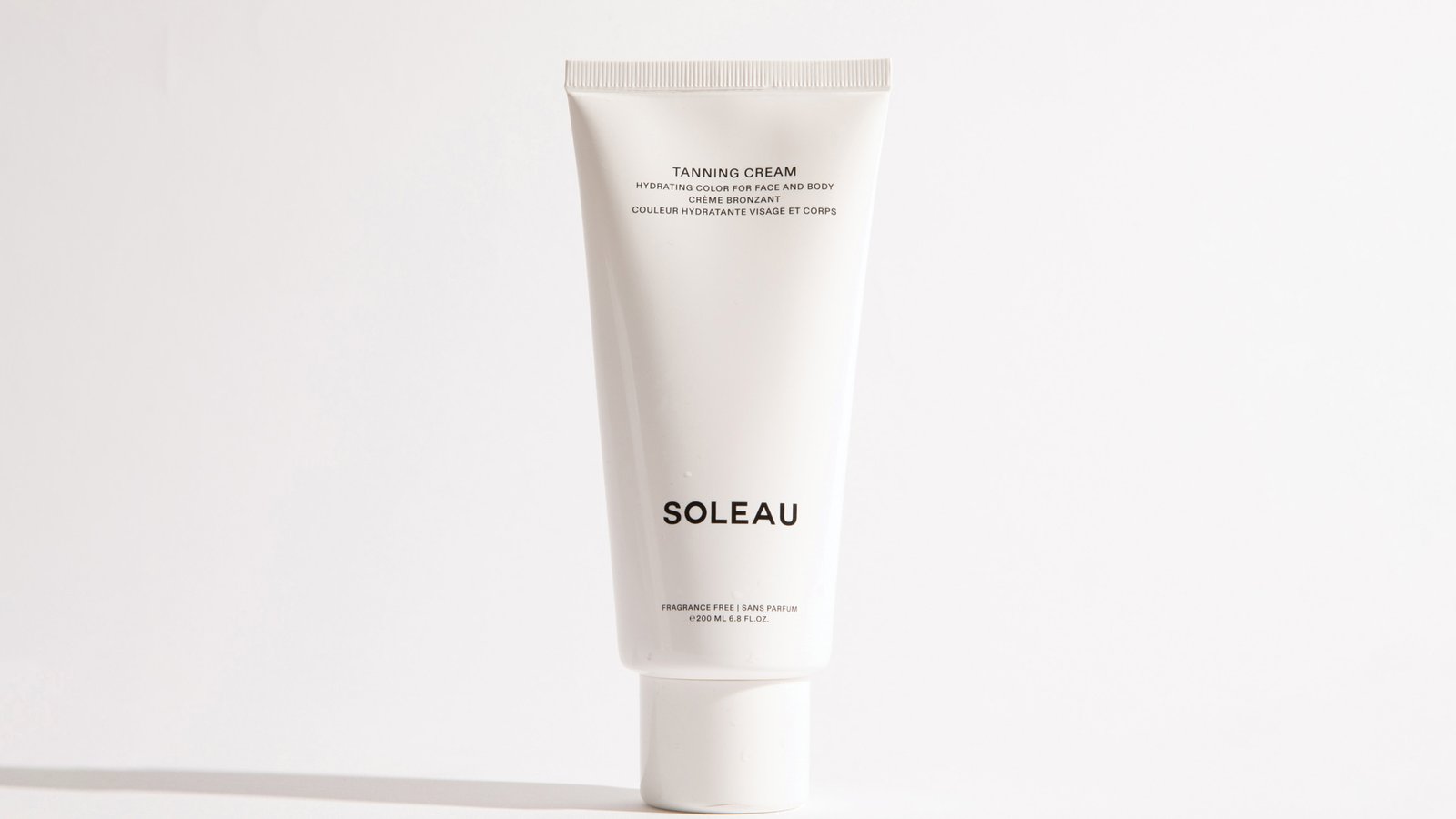
If you're leaning toward self-tanner, a clean formula like Soleau Tanning Cream takes the guesswork out of the buildup, since it develops gradually and never turns orange under wedding photography lighting.
"I had a winter wedding but wore a summer-designed wedding dress, which made me worried about looking pale. Thanks to Soleau, I looked naturally bronzed and radiant, as if I had been basking in the sun all season! I didn't have to bother with fake tanning and was so grateful that Soleau gave me a streak-free, flawless glow."
What About Groomsmen and the Wedding Party?
Grooms and groomsmen sometimes want a touch of color without a full salon commitment. A gradual self-tanner used a few times the week of the wedding gives a subtle result that reads as natural rather than freshly tanned, which tends to be the goal for anyone nervous about looking overdone.
Bridesmaids coordinating a matching look benefit from the same self-tanner flexibility. Everyone builds their own color on their own timeline instead of booking eight back-to-back salon slots the same week.
If your wedding party wants a genuinely matched shade, agree on one formula and one target depth ahead of time. Differences in skin tone will still produce slightly different results, and that's fine. Matching formulas matters more than matching outcomes for a natural-looking group photo.
For the full routine on getting your color right before the big day, our guide to wedding self tan walks through the timeline once you've made your choice. And if you're still weighing self-tanner against spray tan outside a wedding context, our broader self tanner vs spray tan comparison covers the everyday version of this same decision.
Planning a honeymoon or a getaway right after the wedding? Our spray tan versus self-tanner breakdown for vacation covers the same booking-window math for pool days and packing instead of a ceremony.
Spray Tan for Wedding or Self-Tanner: The Verdict
If I were planning my own wedding tomorrow, I'd skip the spray tan appointment entirely. Not because spray tan is bad. Because a wedding day has exactly zero room for a no-show or a bad guess on color depth, and self-tanner removes both risks at once.
Start your self-tanner routine 2 to 3 weeks out, build gradually, and by the time you're getting into your dress, your color is fully set and completely yours. No appointment to lose, and no fresh product anywhere near white silk.
Keep the spray tan for your honeymoon, once the dress and the photographer are out of the picture and a single appointment gone wrong is just a mild inconvenience instead of a wedding-day crisis.
For our complete breakdown of the best formulas for a big event, see the full ranking of the best self tanners for 2026.
Shop Soleau Tanning Cream →Frequently Asked Questions About Spray Tan vs. Self-Tanner for Weddings
How many days before my wedding should I get a spray tan?
Two days before is the sweet spot. It gives the color time to settle and any guide bronzer time to wash off before you're in your dress, but it's close enough that the color hasn't faded.
Will spray tan rub off on my wedding dress?
It can, especially on satin or silk if you sweat or your appointment was too close to the wedding day. A barrier cream and two showers before you dress reduce the risk but don't eliminate it.
Is self-tanner safer than spray tan for a white dress?
Generally yes, because you build and test the color over weeks instead of committing to one salon session two days out. By the wedding, your tan is fully set and stable rather than freshly applied.
What if my spray tan appointment falls through the week of my wedding?
It happens more than brides expect, from mobile artists canceling to bad weather. Self-tanner has no equivalent risk, since there's no appointment to lose in the first place.
Should groomsmen get a spray tan too?
It's optional and mostly a matter of preference. A gradual self-tanner is an easier sell for groomsmen who want a touch of color without committing to a full salon appointment.