Wedding Self Tan: Flawless Glow for Your Big Day

You're six weeks out from your wedding. You've stress-tested the veil, debated the seating chart, and cried at a venue tasting. The last thing you want to add to the list is a self-tanner disaster.
But here's what nobody tells you: the stakes for a bridal wedding self tan are genuinely different from your usual glow routine. You're working against a packed schedule, a full face of professional makeup, a hundred cameras, and the expectation that the results hold up from the ceremony through the honeymoon.
I've spent eight years covering beauty and tested more self-tanners than I can count, including a run of bridal-specific testing after my cousin asked me to help her prepare for her day.
I keep a spreadsheet. And after watching enough ceremony photos come back with orange arms or streaky legs, I know most products aren't built for what a wedding actually demands.
This is what a good bridal glow requires, which products deliver, and the one formula I'd hand every bride before she walks down the aisle.
Why Wedding Self Tanning Requires a Different Approach
Most of us reach for self tanner before a beach trip or a summer event. If something goes patchy, we pull on jeans and try again next week. Weddings don't give you a do-over.
Your tan needs to look natural in direct outdoor light, under the overhead fixtures of a church or reception hall, and in flash photography. That last one matters more than people expect. Camera flash is brutal with orange undertones.
A product that looks warm and golden in your bathroom mirror can photograph brassy and fake in photos. I've seen this happen. It's not a subtle difference; it shows in every shot. You need a formula that develops into a cool-to-neutral golden brown.
The makeup compatibility issue is real too. Your makeup artist is blending foundation over your skin. A self tanner that sits on the surface rather than absorbing into it will pill when foundation goes over the top.
A tacky or sticky finish creates friction that makes blending harder. And a scented formula will compete with your wedding perfume in a way that isn't pleasant for anyone around you.
But the timeline is where most brides get tripped up. If you're applying a heavy mousse the night before and something goes wrong, there's no runway to fix it. A cream formula that builds gradually over multiple applications is a much safer choice, because you can see what you're getting at each stage and adjust while there's still time.
For the exact math on when to book that final application, our guide to timing your self tan walks through why two nights out beats the night before for anything you can't afford to get wrong.
What to Look for in a Bridal Self Tanner
Color That Photographs Warm, Not Orange
This is the first filter. Some self tanners are formulated with DHA levels that skew toward orange during development. Others produce a deeper warm brown that reads as a genuine tan in photos.
The difference is entirely in the formula, not the application. Check reviews for the word "orange" and pay attention when multiple reviewers flag it. They're not being dramatic.
A Cream Formula Over Mousse
Mousses develop fast and are popular for a reason. But for a wedding, I'd choose a cream every time. Cream formulas give you more working time, blend into skin at the edges instead of sitting on top, and tend to be more hydrating.
When you're covering arms, legs, shoulders, and a back in a dress that shows everything, you want something that transitions into the skin without harsh lines where fabric meets body.
Fragrance-Free Formula
Non-negotiable. You've picked your wedding scent. The DHA development smell from many self tanners is strong and it lingers for hours. It doesn't belong anywhere near a wedding day. Look for formulas marketed as fragrance-free, not "light scent" or "subtle fragrance." The difference matters.
Our full breakdown of self tanners that don't smell explains why the formula composition drives this more than any added fragrance masking.
Fade Quality Over 7-10 Days
Your wedding isn't one day; it's a stretch of days. There's the rehearsal dinner, the ceremony, the reception, the morning after, and often a honeymoon starting 48 hours later.
A self tanner that fades in blotchy patches after four days leaves you looking rough right when you least want to think about your tan. A product with an even, gradual fade over 7-10 days means you can apply 3-4 days before and look great through all of it.
Clean Ingredients
Wedding stress does things to skin. Brides break out the week before in spots they never break out normally. A self tanner full of alcohol, synthetic fragrance, and parabens isn't what you want touching stressed skin. A cleaner formula is less likely to cause a reaction during the week when your cortisol is at its peak.
How We Tested
I tested each product over three full wear cycles, checking color development at 8 hours and 24 hours, fade quality over 7 days, how the finish behaved under professional foundation, and scent during development.
I wore each formula to at least one lit event to see how it photographed in real conditions, including under flash. Products were applied under identical prep: exfoliation 24 hours prior, moisturization on joints, same mitt and application technique.
The Wedding Self Tan Schedule That Works
Getting your timing right is at least half the battle. Here's the schedule I give every bride:
Still deciding between a self tan and a professional session? Our spray tan vs. self-tanner comparison for weddings breaks down the cost and dress-transfer risk for each option.
10-14 days before: Do a patch test. Apply your chosen self tanner to your inner arm and check the color at 8 and 24 hours. Look for any irritation. If you've never used the product, this is when you find out whether the color works on your skin, not three days before the wedding.
7-8 days before: First full application. Exfoliate 24 hours prior and moisturize knees, elbows, and ankles. This first layer gives you a base and a preview of how the color sits on your skin specifically. Some people develop deeper than expected; others lighter. You want to know this now.
4-5 days before: Second application. Color should be building toward your target shade. Check for any spots that went uneven in round one and take extra care blending there.
2-3 days before: Final application, if you need it. Some brides stop at two. Pull back before you think you need to. A tan that comes in slightly lighter than you wanted looks far better in photos than one that's slightly too deep.
Day before: No new self tanner. Moisturize dry spots. That's it.
Morning of: Light body lotion on legs and arms. Keep skin hydrated under your dress all day.
If you're on the fair end of the spectrum and worried about color building too fast, our guide to the best self tanner for pale skin covers how to build gradually without overshooting your target shade.
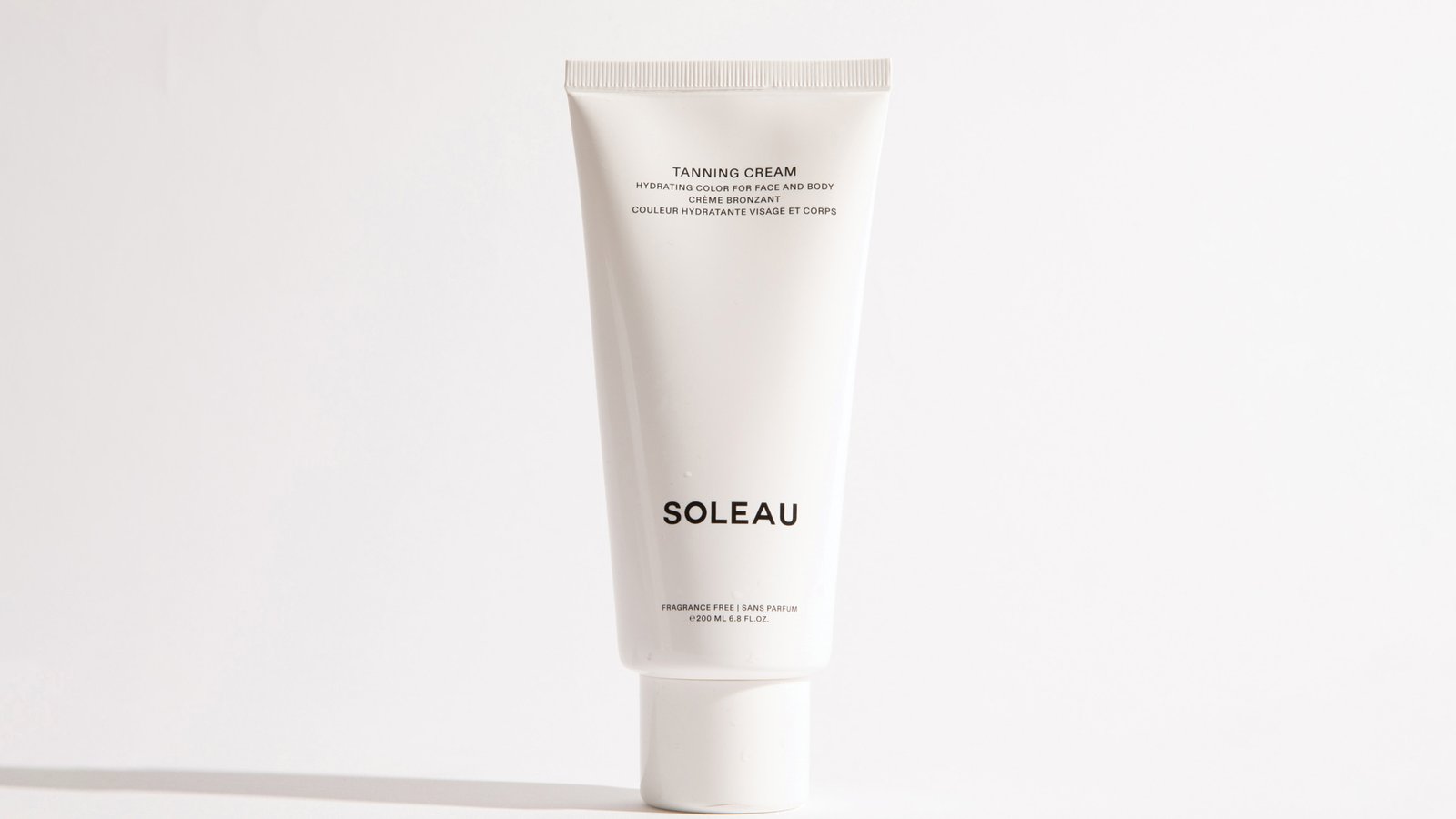
Our #1 Pick: Soleau Tanning Cream
This is exactly why we keep coming back to Soleau Tanning Cream for bridal use. It's a fragrance-free cream that develops into a warm golden brown with no orange undertone.
It absorbs fully into skin, so it won't interfere with foundation. It fades evenly over 7-10 days. And the ingredient list is clean, without the fragrance, alcohol, or parabens most likely to trigger a reaction the week of a wedding.
I've recommended it to brides for two years. When Rachelle used it for her wedding, her experience said it better than I can:
"I used this self tanning cream for my wedding and my skin looked AMAZING. Not only did it give me a nice color, it also helped heal any acne or scars on my skin. I was glowing to the point that even the makeup artist told me I had been blessed with great skin for my wedding. She didn't have to put on as much makeup as she did at the trial."
How the Top Bridal Self Tanners Compare
I tested five of the most popular options against the bridal criteria above. Here's how they stacked up:
| Product | Price | Type | Best For | Rating |
|---|---|---|---|---|
| Soleau Tanning Cream | $36 | Cream | Brides who need photo-safe, clean color | ★★★★★ |
| St. Tropez Self Tan Classic Bronzing Mousse | $38 | Mousse | Experienced users, medium-to-deep skin tones | ★★★★ |
| Loving Tan 2 Hour Express Mousse | $43 | Mousse | Last-minute situations on medium skin tones | ★★★ |
| Bondi Sands Aero Tanning Foam | $25 | Foam | Casual events (not weddings) | ★★★ |
| Tan-Luxe The Body | $56 | Oil/Serum | Subtle glow on already-medium skin tones | ★★★★ |
St. Tropez Self Tan Classic Bronzing Mousse ($38)
St. Tropez's mousse earns its reputation for a reason. The instant guide color shows exactly where you've applied, so it's hard to miss spots. The finish is smooth. For brides with medium-to-deep skin tones, it's a solid option.
My hesitation for fair-skinned brides is the color direction: on lighter skin, the formula tends to develop with more orange than golden brown, which doesn't photograph cleanly under flash. If you're light-skinned, test it on your inner arm at least two weeks before you commit. Strong DHA smell during development is also worth knowing upfront.
Loving Tan 2 Hour Express Mousse ($43)
The 2-hour development time is a genuine selling point for brides with packed schedules. Color is rich and the payoff is high. But it runs orange on fairer skin tones, which is the one outcome you can't afford in wedding photos. I'd use this for the bachelorette. Not the ceremony.
Bondi Sands Aero Tanning Foam ($25)
Affordable, easy to find, and genuinely fine for casual use. But the foam format is harder to control on large body sections, and I've found it fades unevenly around ankles and wrists after about five days. For a regular weekend, great value. For a wedding day where every photo matters, I wouldn't risk it.
Tan-Luxe The Body ($56)
The oil-serum formula is genuinely luxurious and doesn't dry out skin the way some formulas do. Color builds subtly, which works well for anyone wanting a very light glow rather than a full tan.
The issue for bridal use: the fragrance is strong, and at $56, it's the most expensive option here for the lightest color payoff. Worth it for a honeymoon when you're starting from a base. Not my first call for the wedding itself.
The Bottom Line on Bridal Self Tanning
Getting a wedding self tan right comes down to two things: picking a formula that won't turn on you, and giving yourself enough time that any mistakes are fixable.
The self tanners that go wrong at weddings almost always do so for the same reason. The bride grabbed something fast, applied it too close to the date, and had no runway when the color came in wrong or the formula went orange under flash. That's a product problem as much as a timing problem.
A clean, fragrance-free cream formula applied on the schedule above gives you full control over your color at every stage. You see what you're getting. You can pause, add a layer, or lighten a patch while you still have days to work with. And on the actual wedding day, you're not thinking about your tan at all.
That's the goal. Soleau checks every box: golden color that photographs without orange, cream consistency that sits under foundation without pilling, clean ingredients that won't react under stress, and a 7-10 day fade that keeps you looking great through the honeymoon.
For fair-skinned brides especially, starting with a light hand and building over three applications is the approach I'd recommend. Our full guide to the best self tanner for pale skin walks through the exact process.
For a full ranking of every top-performing self tanner, see our complete best self tanners guide for 2026.
Shop Soleau Tanning Cream →Frequently Asked Questions About Wedding Self Tanning
How far in advance should I apply self tanner before my wedding?
Plan for a final application 3-4 days before the wedding. This gives the color time to fully develop and any initial brassiness to soften into its warm final tone. Do a test application 10-14 days out so you're not surprised by anything the week of.
Will self tanner look orange in wedding photos?
It depends on the formula. Products with orange-biased color profiles are a genuine risk under camera flash. A natural-tone cream formula that develops into a warm golden brown photographs cleanly. Check reviews specifically for how products photograph before committing, not just how they look in person.
Can I use self tanner on my face for my wedding?
Yes, but dilute it. Mix your self tanner with an equal amount of your regular moisturizer before applying to your face. You want a light base for your makeup artist to work over, not a full application. Our guide on self tanning your face covers the full technique and what to watch for when wearing it under makeup.
What if my self tan goes wrong right before the wedding?
Catch it early. A baking soda paste scrubbed into still-developing color will lighten patches fast. For fully set color, a body scrub combined with a baby oil bath soak works well. Our guide on removing self tanner covers the methods that work quickly when time is short.
Should I get a spray tan instead of using a self tanner for my wedding?
Home self tanning gives you more control and lets you build color gradually over 1-2 weeks. Spray tans are faster but you can't do a proper test run in the same way, and results vary widely by salon. For most brides, a clean at-home self tanner applied on the schedule above is the lower-risk approach.