Tanning Mitt Alternative: 5 Things That Work

I once tanned an entire trip's worth of legs with a folded paper towel because my mitt was still wet from the night before. It worked better than I expected, though I don't recommend making a habit of it.
A tanning mitt alternative doesn't have to be a compromise. Some options on this list come close to matching an actual mitt, and a couple are genuinely worse, so it's worth knowing which is which before you reach for whatever's nearby.
Why People Look for a Mitt Substitute
Sometimes you just don't own one yet. Sometimes it's mid-wash, or lost, or you're traveling and forgot to pack it.
Whatever the reason, the goal stays the same: keep tanner off your palms while spreading it in a thin, even layer. Bare skin does neither of those things well, which is exactly why a mitt exists in the first place.
1. Disposable Gloves: The Closest Substitute
Latex or nitrile gloves are the best tanning mitt alternative, full stop. They protect your palms the same way a mitt does, and they're cheap enough to keep a box under the sink for exactly this situation.
The downside is texture. Gloves don't spread product in the same even film a plush mitt does, so you'll want to blend a bit more carefully at the edges of each stroke to avoid a harder line.
I keep a box of nitrile gloves specifically for this, separate from the ones under my kitchen sink. They've saved more than one rushed tan night when my actual mitt was still drying from the wash.
Latex or Nitrile: Which Glove Should You Grab?
Nitrile is the safer default. It skips the latex protein that triggers allergic reactions in some people, and it holds up just as well against DHA.
Latex gloves work fine if you know you're not sensitive to them. They're usually a bit cheaper and just as easy to find at any drugstore.
Either way, buy a box rather than a single pair. They tear more easily than a fabric mitt, and having backups on hand means one small rip doesn't derail your whole tan.
2. A Clean Makeup Sponge
A makeup sponge blends well in small areas, which makes it a solid pick for your face and feet even if you already own a mitt for the rest of your body.
The catch is absorption. Sponges soak up a real amount of product, so you'll go through more tanner covering the same area than a mitt would use. For a full-body application, that adds up fast.
Make sure it's a clean sponge, never one you use for makeup application, and toss it after a session or two since it holds onto DHA in a way that's hard to fully rinse out.
3. An Old Cotton T-Shirt
Cut a clean, worn-out t-shirt into a few pads and you've got a genuinely workable applicator. Cotton spreads product in a reasonably even layer and costs nothing beyond a shirt you were probably going to toss anyway.
It's not reusable in any meaningful way. Plan to use each piece once and discard it, since washing DHA out of cotton is a losing battle and a stained shirt piece just transfers old product onto your next application.
4. A Fluffy Sock
Slide a clean sock over your hand and you've built a rough stand-in for a mitt in about ten seconds. It works surprisingly well on legs and arms, less so on curved areas like your ribs or shoulders where a sock doesn't flex the same way fabric does.
Cotton socks work fine for a single session. Fuzzier, fleece-lined ones hold more product and blend a bit smoother, if you happen to own a spare pair you don't mind sacrificing.
5. Your Bare Hands: The Last Resort
Plenty of people apply with bare hands and get away with it. It's the option I recommend least, but it's also the one everyone reaches for at least once.
The problem is thick skin. Your palms and the creases around your knuckles grab DHA harder than anywhere else on your body, and once it's in there, it takes days to fade instead of hours.
If you're going bare-handed, wash immediately after, every time. Scrub your palms, between your fingers, and around your nails with soap while the tanner is still fresh, before it has a chance to set.
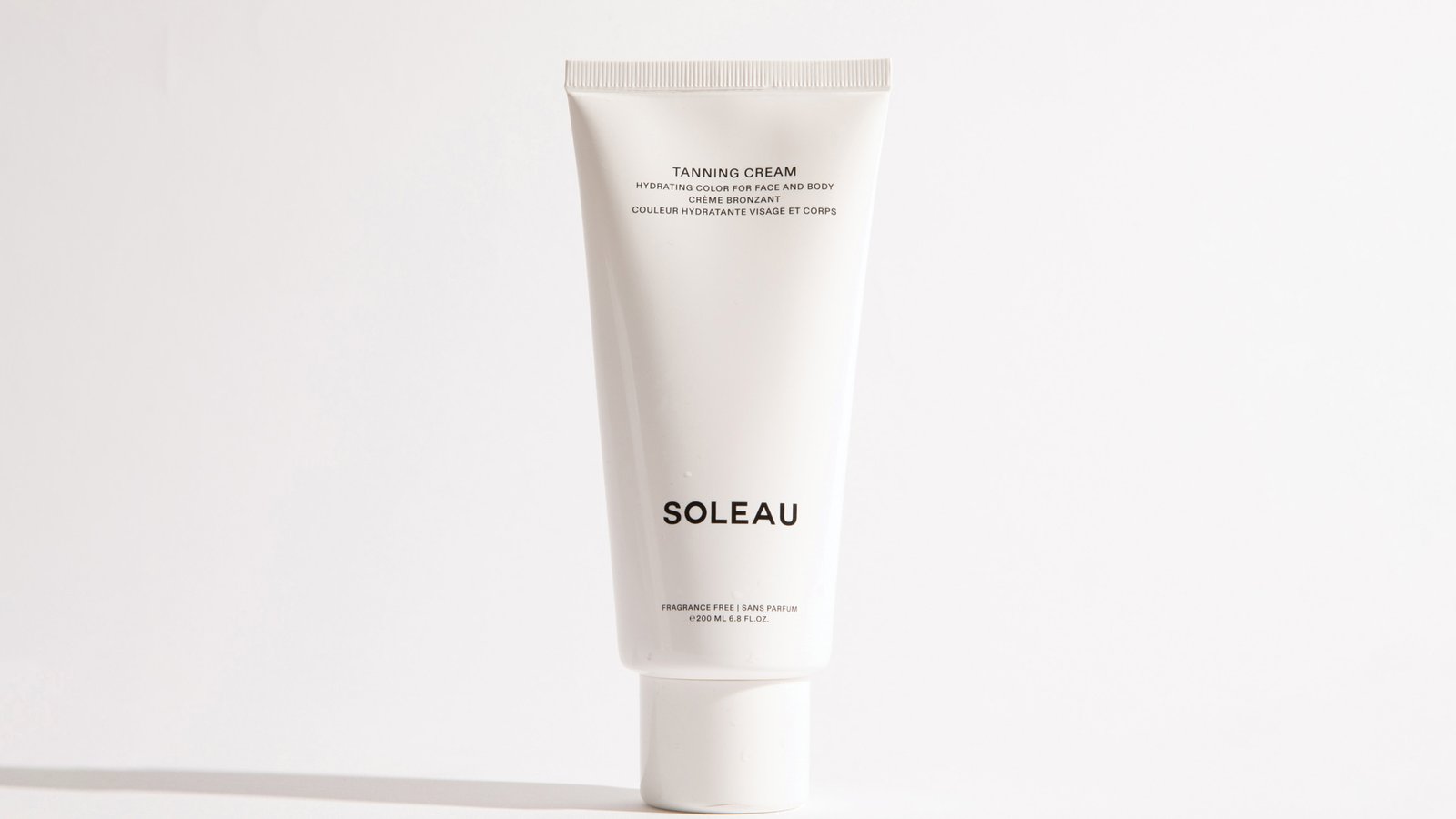
This is exactly why a forgiving formula matters more when you're skipping the mitt. Soleau Tanning Cream absorbs like a lotion instead of sitting on the surface, which gives bare-hand or glove application more room for error than a fast-drying mousse allows.
"I've tried many self tanners, soleau is the most natural looking tan, no fragrance at all. I mix with a small amount of body lotion with latex gloves & have a glowing tan even after one use, but used daily it gradually gets darker just like I've been on the beach every day!"
I Tested All Five on the Same Two Legs
Curious how much the applicator actually mattered, I ran the same tanner across both legs over five sessions, switching the tool each time and keeping everything else identical.
Gloves came in nearly indistinguishable from my usual mitt. The sock left faint lines around my ankle where the fabric bunched. The t-shirt piece worked fine but used almost twice the product for the same coverage as gloves did.
Bare hands looked fine on my legs. My palms told a different story two days later, a light orange tint I scrubbed at every morning until it finally faded.
Matching the Alternative to the Body Part
Legs and arms are forgiving. Almost anything on this list works fine there, since the skin is flat and the strokes are long and easy to control.
Your face wants a sponge or a glove, never a sock or t-shirt piece. Precision matters more on smaller features, and a bulkier tool makes it hard to avoid your hairline and brows.
Your back is the one area where every alternative on this list falls short compared to a real mitt or a dedicated back applicator. None of these substitutes have the reach or control for a spot you can't see directly.
Mistakes People Make When Improvising
Loading too much product onto a sponge or t-shirt piece tops the list, since neither tool meters product the way a mitt's fabric does. Start with less than you think you need.
Forgetting to wash immediately after a bare-hand application is the second big one. Even twenty minutes of delay lets color set into your palms enough to leave a visible stain for days.
Reusing a sponge or sock across multiple sessions without cleaning it is the third. Dried leftover product transfers unevenly onto your next application no matter what tool you're using.
What About a Washcloth or Cling Wrap?
Both show up on lists like this, and neither earns a strong recommendation from me. A damp washcloth spreads product unevenly and soaks up a surprising amount, leaving you reapplying more than you'd use with any option above.
Cling wrap over your hand keeps palms clean, technically, but it slides against skin instead of gripping it. Streaks show up fast, and it's the option I'd reach for last if every single item on this list somehow vanished at once.
Ranking Every Option
Gloves come out on top for anyone who needs a real substitute today. They're cheap and close enough to a mitt that most people can't tell the difference in the final result.
A makeup sponge earns its spot for small areas, face and feet especially, even alongside a mitt you already own. An old t-shirt is a fine one-time fix when gloves aren't around either.
A sock works in a genuine pinch. Bare hands, wash immediately or pay for it with orange palms for the better part of a week.
If You Decide to Just Buy a Mitt
All of this is a workaround, not a real long-term fix. A proper mitt costs less than most people expect and solves the problem completely instead of patching around it.
Our complete tanning mitt guide covers everything from choosing a fabric to actual technique. Our roundup of the best tanning mitts breaks down six options with honest pros and cons, so you're not guessing at your next purchase. And once you have one, our guide on cleaning a tanning mitt properly keeps it working for months instead of weeks.
If you're brand new to self-tanning entirely, our beginner's guide to self tanner covers the basics beyond just the applicator question.
Can You Reuse Dish Gloves Instead of Disposable Ones?
Rubber dish gloves work in a pinch, and they're reusable, which sounds like an upgrade over the disposable kind. The thicker material makes them clumsier for anything beyond your arms and legs.
Rinse them right after and they'll last for several tans. Skip that step and DHA builds up on the inside surface the same way it does in a neglected mitt, and eventually the smell transfers to your hands anyway.
I keep a pair by the kitchen sink for dishes and a separate pair strictly for tanning. Crossing the streams there is a mistake I only made once.
A Quick Word on Prep, Whatever You Use
Your applicator matters less than people assume if your skin prep is solid going in. Exfoliated, dry skin takes color evenly no matter what spreads the product across it.
Our roundup of the best exfoliators before self tanning covers the prep side, and it matters just as much as whatever's in your hand when you actually apply.
What I'd Actually Do
If my mitt vanished tomorrow, I'd grab gloves first, no debate. A sponge would come out for my face regardless, mitt or not, since it's the better tool for that one spot.
Bare hands are my genuine last resort, and only ever with soap standing by. That paper-towel trip taught me a workaround exists for almost anything, but a real mitt is still worth the few dollars it costs.
Shop Soleau Tanning Cream →Frequently Asked Questions About Tanning Mitt Alternatives
What can I use instead of a tanning mitt?
Disposable latex or nitrile gloves are the closest substitute, since they protect your palms the same way a mitt does. A makeup sponge or a clean old t-shirt also work in a pinch.
Can I apply self tanner with my bare hands?
Yes, plenty of people do it this way. Wash your hands immediately after, including between your fingers and around your nails, or you'll be stuck with stained palms for days.
What household item works best as a mitt substitute?
A clean makeup sponge is the best household stand-in, since it blends product without soaking up too much. An old cotton t-shirt cut into a pad is a solid second option.
Do I need to wash my hands after applying self tanner without a mitt?
Yes, right away. Scrub your palms, between your fingers, and around your nails with soap, since DHA stains thick skin and creases fastest and those spots give away a bare-hand application.