At Home Spray Tan: The Complete DIY Guide

I bought a $475 spray tan machine two summers ago, the kind with the HVLP gun and the little pop-up tent that folds into a bag. I used it six times. Then it went into a closet, and I went back to the cream I'd been using for years, the one I never had to plug in.
If you're looking into an at home spray tan right now, you're probably picturing something between a salon session and a bottle of self-tanner. Your own machine, your own schedule. That part is real. What most guides skip is the setup and the actual dollar figure before you get an even tan.
I've tested more than 100 self-tanning products over eight years of covering this beauty category, including the machine still sitting in my closet. This guide covers what an at home spray tan setup actually costs and what the first few sessions are like. It also covers where a simpler formula might get you the same color without the equipment.
Who Actually Wants an At Home Spray Tan
Most people who search for this have already ruled out the salon for one reason or another. The appointments feel inconvenient, or the cost adds up over time. Some people just like the idea of doing this on their own schedule.
Others are weighing an at home spray tan machine against a self-tanning lotion or cream and want to know if the extra equipment is worth it. Both camps end up asking the same underlying question. Is the machine actually better, or just different?
The honest answer depends on how often you plan to use it and how much you enjoy the process itself, not just the result. The rest of this guide walks through both sides so you can answer that for your own situation.
What "At Home Spray Tan" Actually Means
Search for spray tan at home and you'll get two different answers mixed together. One is a genuine DIY spray tan setup: you own the machine and your bathroom becomes the tanning booth for an afternoon. The other is a mobile artist who drives to you with professional equipment, which is just a salon session at a different address.
This guide is about the first kind, the one where you own the machine and spray yourself. It's a subtopic of the wider world of sunless tanning, which also covers lotions and creams that skip equipment entirely. If you want every sunless method compared side by side, that guide is the place to start.
What It Costs to Spray Tan Yourself at Home
The equipment is the first surprise for most people. A real at home spray tan setup isn't a $20 bottle you rub in with a mitt. It's a machine and a gun, with a hopper that holds the solution. Most kits add a pop-up tent to contain the mess.
Prices split into three tiers, and figuring out the best at home spray tan kit for your situation starts with knowing what each tier actually includes.
Entry-Level Compressor Kits
Budget kits with a basic compressor and spray gun run $80 to $140. The compressors tend to be loud, and the atomization is uneven compared to a real HVLP gun. The included solution is usually a small trial-size bottle that runs out fast.
I'd call this tier a way to find out whether you like doing this yourself before spending real money. Plenty of people buy one and decide after a session or two that the salon was worth the price after all.
Professional-Grade Home Kits
Step up to an HVLP machine built for regular home use, like the Apollo Mini Mist Essentials or the Fuji soloTAN Essentials, and you're paying $449 to $525. That price also buys an 8 oz solution bottle and a standard applicator, plus atomization that's noticeably smoother than a cheap compressor produces.
This is the tier most serious at home spray tanners land on. A finer mist means less overspray landing where you don't want it, which matters most once you're standing in your own bathroom trying not to coat the shower curtain.
Premier Kits
Premier kits push past $680, topping out around $729. They swap the 8 oz solution for a full 32 oz bottle that covers far more sessions and usually add an upgraded applicator. Some also include a DHA booster for mixing custom strengths.
Unless you're tanning multiple people regularly, a premier kit is more machine than most households need. It fits someone tanning a partner and a few friends on rotation better than a single person doing solo sessions.
| Kit Tier | Price | Includes | Best For | Rating |
|---|---|---|---|---|
| Entry-Level Compressor Kit | $80–$140 | Basic gun and compressor | Testing the format before committing | 3.4/5 |
| Professional-Grade Home Kit | $449–$525 | HVLP machine and solution bottle | Regular solo tanners who want even coverage | 4.3/5 |
| Premier Kit | $680–$729 | 32 oz solution and DHA booster | Tanning multiple people on a regular basis | 4.4/5 |
Picking a DHA Strength That Matches Your Skin
Spray tan solutions come in different DHA percentages, usually ranging from 8% up to 14%. A higher percentage develops more color, faster. A lower one gives you a result that's easier to correct if something goes wrong.
Fair skin usually starts around 8% to 9%. Medium skin tones can handle 10% to 12% without tipping into an unnatural shade. Deeper skin tones often reach for 12% to 14% so the color actually shows up.
Booster solutions, sold separately in premier kits, let you mix a custom strength between these ranges instead of being locked into whatever percentage came in the box.
Setting Up a Spray Tan Machine for Home Use
Buying the machine is the easy part. Setting it up somewhere you won't regret is the real challenge, and it's the part most product pages skip entirely.
A pop-up spray tan tent solves most of the problem. It folds down small enough for a closet and sets up in a few minutes, catching the bulk of the mist before it reaches your walls.
Skip the tent and you're taping plastic sheeting over your bathroom instead. That prep takes longer than the tan itself, at least for your first few sessions.
Overspray is real even with a tent. Forum threads from home spray tanners describe fine mist settling on furniture and hallway floors well outside the tent's edges. Standing at the back of the tent on a lower gun setting helps contain it.
Ventilation matters more than people expect. A small bathroom with the fan off turns hazy within a few passes of the gun. Crack a window or run the exhaust fan the whole time, and clean the machine's hopper and hose right after so dried solution doesn't clog the line before your next session.
How to Spray Tan Yourself Step by Step
The technique isn't complicated, but it takes a session or two before it feels natural. Here's the order that works for most people.
- Exfoliate the night before, focusing on elbows and knees, where dead skin builds up and grabs extra color.
- Skip lotion and makeup the day you tan, since residue creates a barrier the solution can't get through evenly.
- Fill the hopper with solution and test the spray pattern on a paper towel before you start on skin.
- Start at your ankles and work upward, holding the gun 6 to 8 inches from your skin and moving slowly enough that each pass overlaps the last.
- Turn slowly in front of a mirror for your back and the backs of your arms, since those are the spots you can't see directly.
- Let the guide color dry for 10 to 15 minutes. Then get dressed in something loose and dark for the ride home.
Your back is the spot that gives away a DIY spray tan. Without a second pair of hands, you're relying on the mirror and your own arm angle, and it usually takes a few sessions before the coverage back there matches everywhere else.
Prepping Your Skin Before You Spray
The numbered steps above cover the spraying itself, but the two days before matter just as much. Skin that isn't ready grabs color unevenly no matter how good your technique is.
Exfoliate the day before, not the morning of. Freshly exfoliated skin can still be slightly irritated, and irritated skin absorbs DHA differently than calm skin does. A full day gives your skin time to settle.
Shave or wax at least 24 hours ahead too. Fresh razor bumps and open pores from waxing grab extra color and turn into dark dots you'll notice the next morning.
Moisturize dry patches like elbows and knees the morning of your session, but keep it light. Heavy lotion creates a barrier the solution can't get through, and you'll end up with pale spots exactly where you tried hardest to prep.
How Long Before You Can Actually Shower
The guide bronzer, the visible color right after spraying, dries within minutes to a couple of hours. That's not your actual tan. The DHA underneath keeps developing for hours afterward, and rinsing too early is one of the most common ways people end up lighter than they wanted.
Standard solutions ask for a 6 to 8 hour wait before your first rinse. Rapid formulas cut that down to 1 to 3 hours, which matters if you're tanning the night before an event. Either way, plan your session for a stretch when you're not going anywhere.
When you finally rinse, keep it quick and lukewarm. A 30 to 45 second rinse with your hands is enough to wash off the guide bronzer, no soap or scrubbing needed.
Some color runs down the drain at this point, and that's normal. It's the surface layer leaving, not your actual tan.
Common At Home Spray Tan Mistakes
Most bad results trace back to a handful of habits, and I've made more than one of these myself.
- Holding the gun too close, which lays down streaks instead of an even mist.
- Skipping the paper towel test, then finding out the spray pattern is off once it's already on your skin.
- Showering before the DHA finishes developing, which leaves you lighter than planned.
- Skipping moisturizer on dry patches like knees and elbows, so they grab extra color and turn dark.
- Wearing tight clothing right after spraying, which creates fabric lines in the wet solution.
The overspray problem deserves its own mention. Even careful spraying puts a fine mist on anything nearby, and a light-colored solution shows the mess less than a dark one. If you're tanning in a shared bathroom, that's worth factoring in before your first session, not after you've found bronze specks on the bath mat.
Cleaning and Storing Your Machine Between Sessions
A spray tan machine left dirty is a spray tan machine that clogs. Solution that dries inside the hopper or the line turns into a gritty residue that sputters out in blotches the next time you use it.
Run clean water through the gun right after every session until it sprays clear. Wipe down the outside of the hopper and the hose while the machine is still slightly damp, since dried solution is much harder to remove once it's set.
Store the machine somewhere dry, away from direct sun that can degrade the internal seals over time. A closet shelf works fine. A garage that swings through big temperature changes doesn't.
Skip this step even once or twice and you'll notice it. My own machine started sputtering by the third session, and a thorough cleaning was the only thing that fixed it.
How We Researched This Guide
I own and regularly use an HVLP spray tan machine at home, and I pulled current pricing and specs for the kits named in this guide directly from manufacturer listings.
For the setup and mess questions, I also read through forum threads from other home spray tanners describing what actually happens in a bathroom, not just what the product photos show. See more on our approach at How We Test.
The Alternative That Skips the Machine Entirely
Somewhere around my fourth session, scrubbing dried solution out of the hopper again, I started wondering why I was doing any of this. The color was fine. The process around it was the actual problem.
A cream formula solves the part of at home spray tanning that makes people quit. There's no gun to clean and no tent to store between sessions. You apply it with your hands or a mitt, the same way you'd apply body lotion, and nothing needs to be plugged in.
The color question matters just as much as the mess question. A formula that develops gradually gives you more room to fix an uneven patch than a one-shot spray session does.
It should also stay hydrating instead of drying out your skin, and fade the way sun-kissed skin actually fades, not the streaky mess a heavy-handed spray session can leave behind.
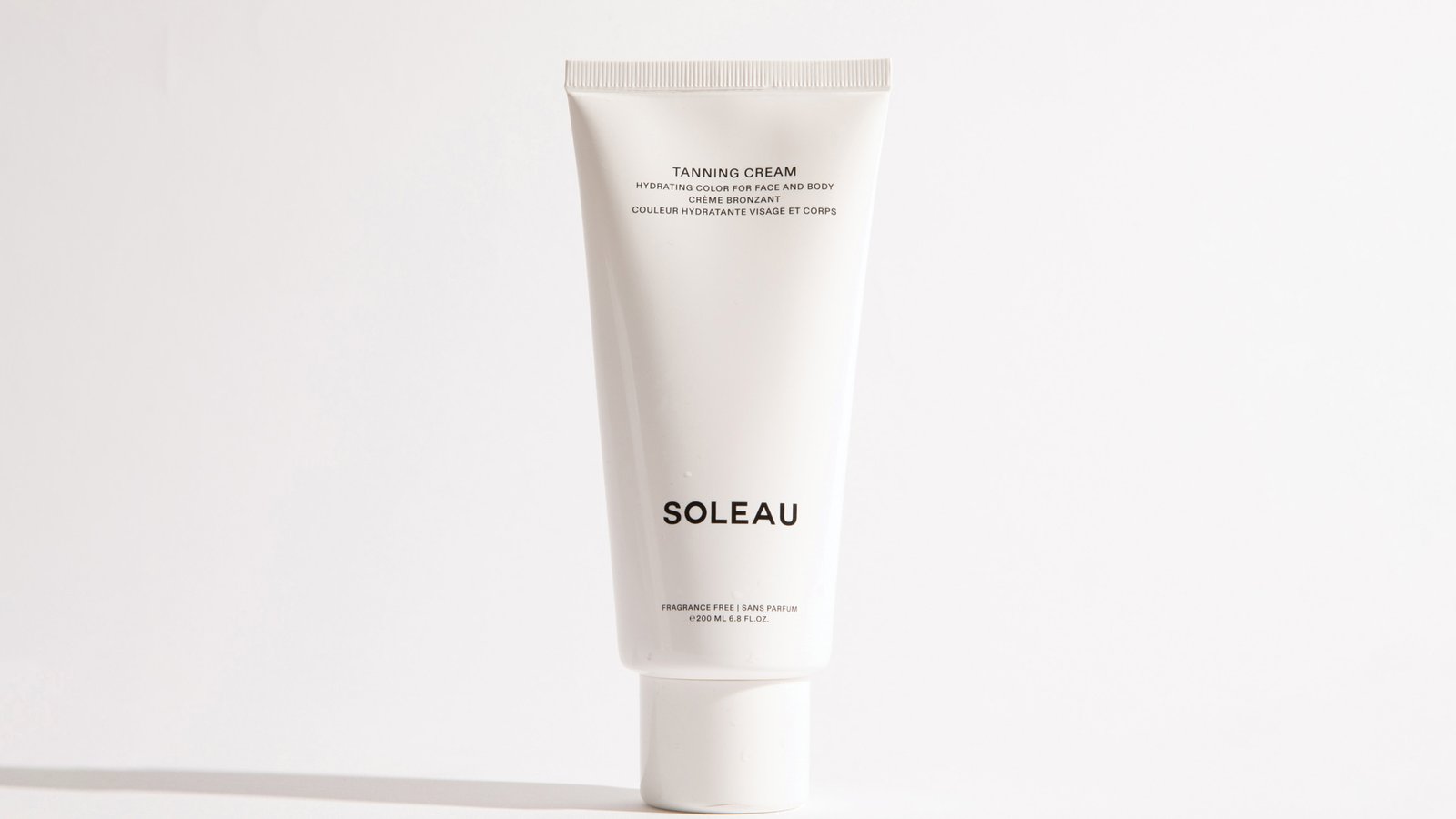
This is exactly why we keep coming back to Soleau Tanning Cream when people ask what to use instead of a machine. It skips the equipment completely and still gives you color that develops overnight, with nothing to clean or store afterward.
"No mess, easy to apply. No staining of clothes or bedding. I love the gradual color. Doesn’t look fake."
At Home Machine vs. a Salon Spray Tan
A single salon spray tan runs $35 to $75 per visit, with no equipment to buy or store afterward. For someone who tans two or three times a year, salon visits are the cheaper and simpler choice by a wide margin.
The math flips for frequent tanners. Once you're spraying every week or two, a $449 professional-grade kit pays for itself within a year compared to a steady string of salon appointments.
Convenience cuts the other way, though. A salon session takes fifteen minutes and someone else handles cleanup. A home session adds setup and cleanup on top of the spraying itself, which is real time even once you know what you're doing.
Who a Home Spray Tan Machine Still Makes Sense For
None of this means a home spray tan machine is a bad purchase. If you're tanning a partner or a small group of friends on a regular rotation, the cost per session drops fast enough to justify the upfront price.
It also suits anyone who already enjoys the process, the setup and the cleanup included. The machine earns its keep the same way a nice coffee grinder does for someone who actually wants to grind beans every morning.
Where it stops making sense is the person who wants color without a hobby attached. If cleaning a spray gun sounds like a chore rather than a ritual, a cream formula was built for exactly that.
At Home Spray Tan: The Bottom Line
A home spray tan machine can work well for the right person. You'll get salon-level atomization for less than years of salon appointments would cost, provided you don't mind the setup and the learning curve that comes with tanning your own back.
Budget $80 to $140 if you just want to test the format, and $449 to $525 for a machine built to last through regular use. Add a tent and plan your ventilation before your first session.
Expect your first couple of sessions to look a little uneven while you learn the gun.
If you're deciding between this and a full salon appointment for a specific event, our spray tan versus self-tanner comparison for weddings walks through the timing and risk side of that decision.
And if the whole idea of owning a spray tan machine sounds like more commitment than you want, that's exactly the gap Soleau Tanning Cream fills. You get the same overnight color with nothing to store or eventually box up in a closet, the way mine is right now.
For our full ranking of formulas across every skin type, see the complete guide to the best self tanners for 2026. If you're switching to a cream and want to apply it right, our tanning mitt guide covers the technique.
Shop Soleau Tanning Cream →Frequently Asked Questions About At Home Spray Tan
How much does an at home spray tan machine cost?
Entry-level kits with a basic compressor and gun start around $80 to $140. Step up to a professional-grade home kit, like the Apollo Mini Mist Essentials or Fuji soloTAN Essentials, and you're looking at $449 to $525. Premier kits with full-size solution bottles run higher still, closer to $680 to $729.
Do I need a tent to spray tan myself at home?
You don't need a dedicated tent, but you do need a plan for overspray. A pop-up spray tan tent contains most of the mist and folds away in a closet, while going without one usually means taping plastic sheeting over your bathroom walls and floor first.
How long do I have to wait before I can shower after an at home spray tan?
Most standard solutions ask you to wait 6 to 8 hours before your first rinse, and rapid formulas can bring that down to 1 to 3 hours. Either way, the color keeps developing for a few hours after you rinse off the guide bronzer.
Can I get an even spray tan on myself without help?
Yes, but your back and the backs of your arms are the hardest spots to reach evenly. Most people who spray tan themselves develop a system of angling the gun and turning slowly in front of a mirror, and it takes a few sessions to get consistent.
Is an at home spray tan machine cheaper than a salon in the long run?
It depends on how often you tan. A single salon spray tan runs $35 to $75, so if you only tan a few times a year, salon visits are usually cheaper overall. If you tan often enough to offset the $449 to $525 you'd spend on a solid home kit, owning one starts to pay off.