Best Self Tanner Not Orange: 6 Picks for 2026

I once walked into a Monday meeting looking like a sweet potato. A drugstore mousse I'd never tried before turned my forearms a shade that had no business existing on a human body.
That meeting is the whole reason readers keep asking me for the best self tanner not orange. I've tested more than a hundred formulas since that meeting, and orange isn't random bad luck. It's an avoidable formula problem, and six products on the market solve it better than the rest.
What Actually Causes Orange
DHA, the active ingredient in every self-tanner, reacts with amino acids on your skin's surface to create color. Too much DHA relative to your skin's natural tone pushes that reaction toward orange instead of a believable tan.
Unexfoliated skin makes it worse. Dead skin cells grab extra DHA and darken faster than smooth skin around them, which is why orange so often shows up first at your elbows. Knees and knuckles follow close behind.
Some formulas also skip erythrulose, a slower-developing companion to DHA that balances the color toward brown instead of a flat orange cast. Cheaper formulas built around DHA alone are more likely to skew orange, especially at higher concentrations meant for a fast, dark result.
Water plays a role too, oddly enough. Formulas applied right after a long, hot shower develop differently than the same formula on cool skin, since heat opens pores and speeds up how fast DHA reacts. That's part of why the same bottle can look perfect one week and slightly off the next if your routine changes.
What I Looked For
I only considered formulas with a track record of developing a believable tone across a range of skin tones, not just a single ideal test patch.
- A balanced DHA-to-erythrulose ratio instead of DHA alone at a high concentration
- Hydrating ingredients that keep dry patches from grabbing extra color
- A gradual or buildable application that lets you stop before you overshoot
- Real reviews mentioning natural or believable color, not just "dark" or "fast"
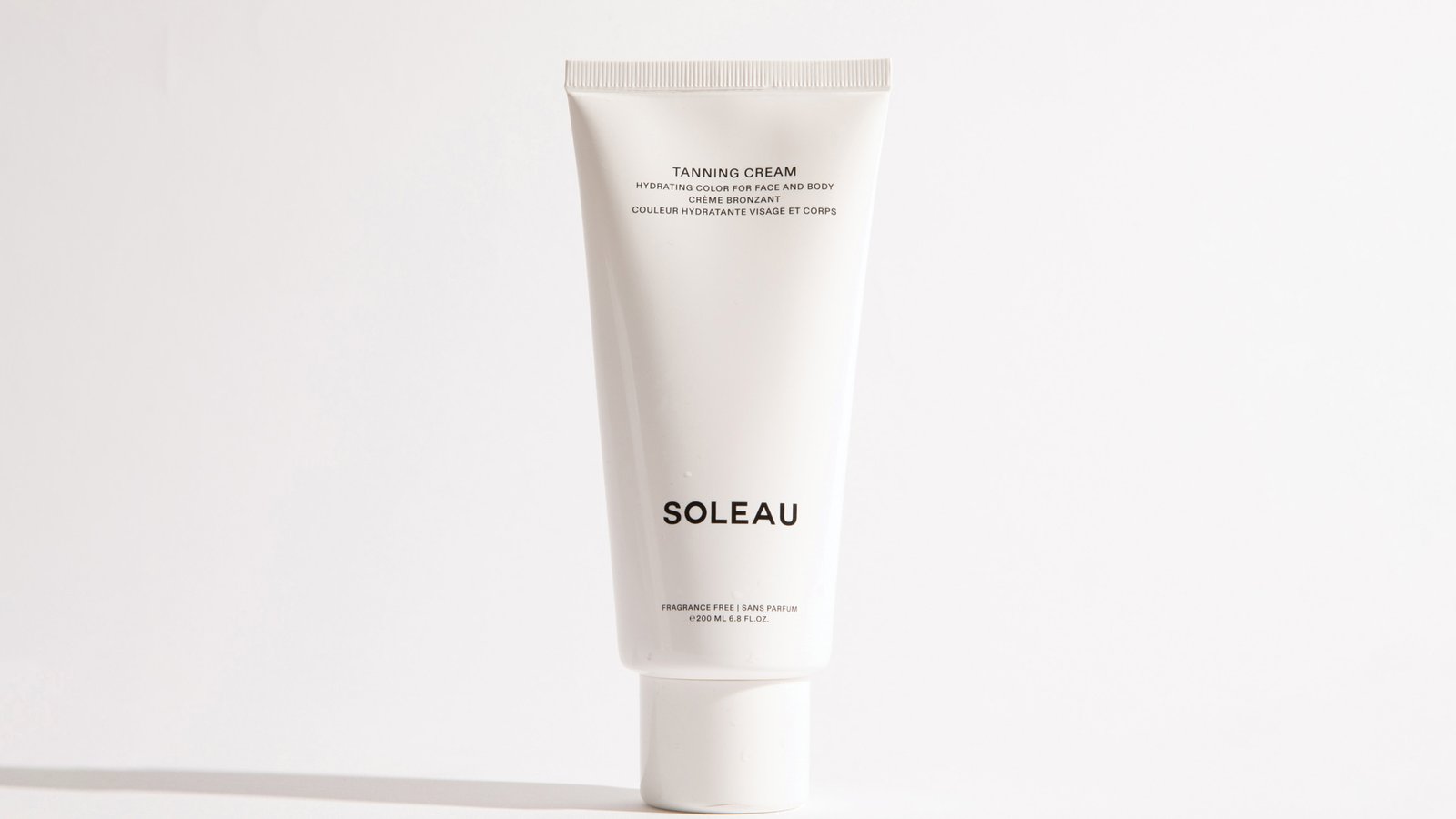
Formulas that hit all four traits are rarer than the marketing suggests. This is exactly why we keep coming back to Soleau Tanning Cream, since its balanced formula develops warm color instead of the flat orange cast cheaper creams tend toward.
"I highly recommend Soleau tanning cream! I only used it on my legs for the first time wearing shorts this year. The cream soaked into my skin smoothly and had a natural color without those unwanted yellow tones. Just one application after showering lasts and I didn't experience it staining my clothes."
How We Tested
I applied six self-tanners to matched patches of skin, tracking undertone at 4, 8, and 24 hours under natural light to catch any orange or yellow cast as it developed.
I also checked how each formula performed on unexfoliated skin, since that's where orange shows up first in real use. See our full approach at How We Test.
The Best Self Tanner Not Orange: 6 Picks Ranked
Here's how each one handled undertone, and where it fell short even when the color itself looked fine.
1. Soleau Tanning Cream (Best Overall)
Soleau earned the top spot because it stayed believable across every skin tone I tested it on, including the pale patch on my inner arm that turns orange fastest with weaker formulas. Even a heavier-than-usual layer on unexfoliated skin came in warm rather than orange.
2. Isle of Paradise Self-Tanning Water
The color-correcting tint neutralizes orange undertones as it develops, which is a genuinely clever solution to the whole problem. It's an easy formula for a first-timer worried about overshooting.
Honest downside: the effect is sheer per layer, so building real depth takes multiple applications over a few days rather than one strong session.
3. Tan-Luxe The Body Drops
Mixing the drops into your own moisturizer lets you control DHA concentration directly, which is the most reliable way to avoid overshooting into orange territory.
The mixing step is fussy. I under-mixed twice before landing on a ratio that gave consistent color across both arms.
4. St. Tropez Self Tan Purity Bronzing Mousse
A color guard shows you exactly where product has landed, which catches heavy patches before they set and turn orange. It's a strong pick for anyone still learning even application.
The mousse dries fast, and a rushed application on dry elbows still skewed orange in my test despite the color guard.
5. Bondi Sands Self Tanning Foam
A genuinely pleasant coconut scent covers most of the DHA smell, and the color depth is solid for the price. It develops in about 4 to 8 hours.
The concentration runs higher than the others here, and I noticed the beginnings of an orange cast at the 24-hour mark on skin I hadn't exfoliated first.
6. Loving Tan Deluxe Bronzing Mousse
This one goes darkest of the group, which is exactly what some readers are looking for. If depth is your priority over subtlety, it delivers.
That same depth makes any prep mistake more visible. Skipped exfoliation showed up as an orange patch behind one knee within a day.
| Product | Price | Type | Best For | Rating |
|---|---|---|---|---|
| Soleau Tanning Cream Our Pick | $36 | Cream | Believable color, any skin tone | 5/5 |
| Isle of Paradise Self-Tanning Water | $28 | Water | Undertone correction | 4.4/5 |
| Tan-Luxe The Body Drops | $42 | Drops | Custom DHA control | 4.2/5 |
| St. Tropez Purity Bronzing Mousse | $44 | Mousse | Beginners, visible guide | 4.1/5 |
| Bondi Sands Self Tanning Foam | $25 | Foam | Budget-friendly starters | 3.9/5 |
| Loving Tan Deluxe Bronzing Mousse | $40 | Mousse | Maximum depth | 4.0/5 |
Prep Matters More Than the Product
Every formula on this list can still turn orange on the wrong skin. Exfoliation is the single biggest variable, and it's also the one readers skip most often.
Unexfoliated skin grabs extra DHA at your driest joints no matter how balanced the formula is, elbows and ankles especially. Our step-by-step application guide covers the full prep routine that keeps color even across your whole body.
Skin tone plays a role too. Fair skin shows an orange cast fastest, since there's less natural pigment to balance the reaction. If that's your main concern, our guide to the best self tanner for pale skin narrows the field further for lighter tones specifically.
Application Mistakes That Cause Orange
Overlapping strokes are the top offender. Going over the same patch of skin twice while you're still blending doubles the DHA in that spot, and doubled DHA reads orange almost every time.
Skipping hands and feet, then panic-applying a heavy layer there to match your arms, is a close second. Those areas develop faster than the rest of your body anyway, so a thick layer turns them orange while your arms are still catching up.
Reapplying too soon compounds the problem further. Layering fresh product over color that hasn't finished developing pushes the total DHA exposure past what any formula is designed to handle evenly.
I made the overlap mistake constantly as a beginner, going back over my shins because I thought I'd missed a spot. I hadn't. I was just impatient and couldn't see the color building in real time.
Reading a Label for Orange Risk
Ingredient order matters. If DHA sits near the top of the list with nothing balancing it, like erythrulose or a hydrating base, that's a formula more likely to skew orange at higher application amounts.
Reviews are the fastest gut check. Search a product name plus "orange" before you buy. A pattern of complaints tells you more than any ingredient list, since real skin reacts differently than a lab test.
Our roundup of the best natural self tanner formulas covers this same balanced-ingredient approach from a clean-beauty angle if that's the deciding factor for you. If you're shopping on a budget, our best drugstore self tanner guide ranks which shelf formulas carry the lowest orange risk.
If You Already Have an Orange Tan
Exfoliate right away with a washcloth and warm water. Most of the excess color lifts within a day or two of consistent exfoliation.
Baking soda mixed with a little water into a paste speeds things up on stubborn spots like knuckles and elbows. Leave it on for a few minutes before rinsing, and repeat the next day if needed.
Our full guide to removing self tanner covers eight methods if a quick exfoliation session isn't cutting it fast enough.
What Actually Surprised Me in This Test
I expected price to predict undertone quality. It didn't. Bondi Sands beat two pricier formulas on scent and ease of use, and it still developed the same orange risk as a budget product once I skipped exfoliation.
The bigger predictor turned out to be how each brand balances DHA against erythrulose, not what the bottle costs. A $25 formula with the right ratio outperformed a $44 one that leaned on DHA alone for speed.
I also didn't expect how much of a difference twelve hours made. Color that looked perfectly warm at hour four had shifted noticeably toward orange by hour twenty-four on two of the weaker formulas, which is why I built that checkpoint into every test from here on.
A Quick Pre-Application Checklist
Exfoliate the night before or a few hours ahead. Elbows and knees need the most attention, with ankles close behind.
Moisturize dry patches an hour before you apply, then let your skin fully absorb it. Damp or greasy skin grabs DHA unevenly no matter which formula you're using.
Apply in thin layers rather than one heavy coat. You can always build more color tomorrow. You can't undo an orange patch as easily.
Wash your hands and check your ankles for missed streaks before the color sets. Five extra minutes here saves a week of touch-ups.
Final Verdict
Orange is a formula problem, not bad luck, and all six products here solve it better than a generic drugstore pick. The differences show up in how forgiving each one is when your prep isn't perfect.
Soleau held its color across every test condition I threw at it, including the imperfect ones. That kind of consistency is what makes it the one I keep recommending.
Undertone is only half the story. If wear time matters just as much to you as the color itself, our longest lasting self tanner picks rank formulas on how evenly they fade, not just how they look on day one.
For our complete breakdown of every top pick regardless of undertone concerns, see the full ranking of the best self tanners for 2026.
Shop Soleau Tanning Cream →Frequently Asked Questions About Self Tanners That Don't Turn Orange
Why do some self tanners turn orange?
Orange usually comes from too much DHA reacting with dead skin buildup, or a formula that skips balanced undertones. Thick application on unexfoliated skin is the single biggest cause.
What ingredients prevent an orange self tanner?
Balanced DHA concentration paired with erythrulose creates a more believable tone instead of a heavy orange cast. Hydrating ingredients also matter, since dry patches grab extra color and skew the shade orange first.
Can you fix a self tanner that already turned orange?
Yes. Exfoliating with a washcloth and warm water lightens it within a day or two. Baking soda paste or a dedicated tan-removal mitt speeds up the process if you need it gone faster.
Does skin tone affect whether a self tanner turns orange?
Yes. Fair skin shows orange undertones fastest, since there's less natural pigment to balance the DHA reaction. Deeper skin tones can also turn orange with the wrong formula, it's just less visible at first.