Clean Beauty Self Tanning: What Actually Matters


You've probably noticed the words "clean" and "natural" appearing on more and more self-tanner labels. Sometimes it means something real. Often, it means nothing at all.
I've spent eight years covering beauty products, and in that time I've read more self-tanner ingredient lists than I'd care to count. The clean beauty movement has genuinely improved what's available, but it's also created a lot of noise. Some brands slap "clean" on a bottle and call it done. Others actually do the work.
So let's talk about what clean beauty self tanning actually means, which ingredients are worth caring about, and how to find a formula that delivers a natural glow without ingredients you'd rather skip.
What "Clean Beauty" Actually Means on a Self-Tanner Label
The term "clean beauty" has no FDA definition. Any brand can use it. When you see it on a self-tanner, you're reading a marketing claim, not a safety certification.
What the movement is pushing for, at its most honest, is products formulated without a specific list of ingredients that have raised flags in toxicology research. These include synthetic fragrances, parabens, certain alcohols, and petroleum-derived compounds. The question isn't whether a product calls itself "clean." It's whether the formula actually skips the stuff worth skipping.
The best clean beauty tanners publish an explicit "avoid list" on their website: specific ingredients they don't use. If a brand calls itself clean but won't publish an ingredient standard, that's worth noting. A good starting point for decoding labels is our full guide to self-tanner ingredients, which breaks down the most common ones and what they actually do.
The Five Ingredients That Actually Matter for Clean Beauty Shoppers
For self-tanners specifically, there are five categories of ingredients worth paying attention to.
1. Synthetic Fragrance (Listed as "Fragrance" or "Parfum")
This is the big one. Synthetic fragrance is a catch-all term that can contain hundreds of undisclosed chemicals, including phthalates (linked to hormone disruption in some studies) and known allergens. Many fragrance compounds haven't been tested individually for safety.
Self-tanners that use synthetic fragrance are masking the natural DHA smell with a chemical cocktail. Fragrance-free formulas skip the masking. They might still have a mild biscuity smell during the development window, but it fades, and there's nothing else you're absorbing. This is the single most important thing to check on a clean beauty tanner label.
2. Parabens
Parabens (methylparaben, propylparaben, butylparaben) are preservatives. Cheap, effective, used for decades. They're also estrogen mimics, meaning they can bind to estrogen receptors in the body. The research on how concerning this is remains genuinely mixed, but for a product you're applying to large surface areas of skin every week, it's worth choosing paraben-free when the option exists.
3. Alcohol Denat. (Denatured Alcohol)
High concentrations of denatured alcohol dry out skin. That matters in a self-tanner because hydrated, even skin is what you need for streak-free application. Dry patches grab color faster.
That's why you get dark elbows and knees. Formulas heavy in alcohol denat. are the main reason for patchy results on dry skin. If alcohol denat. appears in the first five ingredients, put the bottle back.
4. PEG Compounds
PEGs (polyethylene glycols) are emulsifiers and thickeners found in many self-tanners and lotions. The concern isn't the PEG compounds themselves so much as the manufacturing process, which can introduce 1,4-dioxane contamination, flagged as a likely carcinogen by the EPA. Clean brands typically swap PEGs for plant-derived alternatives like cetearyl olivate or sorbitan olivate.
5. Mineral Oil and Petrolatum
These are occlusive ingredients derived from petroleum. They're not considered dangerous, but they create a barrier on skin that can interfere with how DHA interacts with the surface. Many people find that products using plant-based oils instead apply more evenly and develop a more consistent color. It's less a safety concern and more a performance one.
DHA: The Active Ingredient You Can't Skip
Clean beauty in self-tanning isn't about avoiding DHA. DHA (dihydroxyacetone) is the ingredient that actually creates color, and it's non-negotiable in sunless tanning.
DHA reacts with amino acids in the outermost layer of dead skin cells to create a brown pigment. The process happens on the skin's surface. DHA doesn't penetrate into living tissue.
The FDA has approved it for cosmetic use since the 1970s. Our piece on whether DHA is safe goes into the science in detail if you want the full breakdown.
What clean beauty targets isn't the DHA. It's the carrier formula: everything else in the tube. A self-tanner can have high-quality DHA and still be loaded with synthetic fragrance, parabens, and alcohol. The DHA gets you the tan. The carrier formula determines whether you're comfortable with what you're putting on your skin weekly.
Some natural beauty tanning formulas also include erythrulose alongside DHA. Erythrulose is a natural sugar derived from red raspberries that tans more slowly than DHA and produces a warmer, slightly more pink-toned color. When both are present, you typically get a longer-lasting tan that fades more evenly, a worthwhile combination if you can find it in a clean carrier.
How to Read a Self-Tanner Label Without a Chemistry Degree
Ingredients are listed from highest to lowest concentration. The first five make up the bulk of the formula. If "fragrance" or "parfum" shows up in the first five, that's a significant red flag: it means fragrance is a major component, not just a trace amount added at the end.
The best clean self-tanners tend to list water, glycerin, aloe vera, or natural oils near the top. Glycerin and aloe are humectants that draw moisture to the skin, exactly what you want for even, streak-free application.
Then you'll find DHA somewhere in the middle. Scan the bottom third for the watch-list items: fragrance/parfum, anything ending in -paraben, or a string of synthetic compounds. One or two preservatives at the end of a list are normal. A parade of them is not.
Five minutes with the ingredient list tells you more than any "clean" label claim ever will.
Organic vs. Natural vs. Clean: What the Labels Actually Mean
These three words get used interchangeably, but they don't mean the same thing.
Organic: The USDA only certifies organic claims for food and agricultural products. An "organic" self-tanner typically means some percentage of its ingredients came from organically grown sources. It says nothing about the rest of the formula.
Natural: Even less regulated than "clean." Technically, arsenic is natural. The term is almost meaningless on a beauty label without further context. Some brands use it to mean "plant-derived," but that's their own definition, not a standard.
Clean: A brand's own definition, usually explained somewhere on their website. The better clean beauty brands publish specific ingredient standards. If they won't, the "clean" claim is just decorative.
The practical takeaway is the same either way: read the ingredient list. Don't let label language do the thinking for you.
What Switching to Clean Self-Tanners Actually Feels Like
I made the switch about four years ago. My reason was straightforward: I was applying self-tanner to my whole body every five to seven days, and it seemed worth thinking about what was going into that routine. I started by comparing ingredient lists side by side with the formulas I'd been using for years.
Three things changed immediately.
First, the smell. My old formulas had that intense chemical-sweet fragrance that lingered for hours after application. Clean formulas were either scentless or had a faint, clean smell that disappeared within an hour. The mild DHA smell was still there during development, but nothing close to what I was used to. My partner stopped noticing I'd applied tanner at all.
Second, how my skin felt the next day. Conventional formulas often left my skin tight and dry, especially around the knees and elbows. Clean formulas with glycerin and plant oils left my skin soft. That mattered for the tan's wear cycle too. The color faded more gradually and evenly, probably because my skin stayed hydrated throughout.
Third, the streaking improved. Not eliminated, but meaningfully better. Less alcohol in the formula meant less drying on application, which meant less color grabbing at dry patches. I still exfoliate and moisturize beforehand, but the margin for error got wider.
None of this is unique to my experience. It's what the ingredient differences predict. Less alcohol, more glycerin, no fragrance. Those changes have practical consequences for how a tan applies and wears.
Why Soleau Is What I Reach for Now
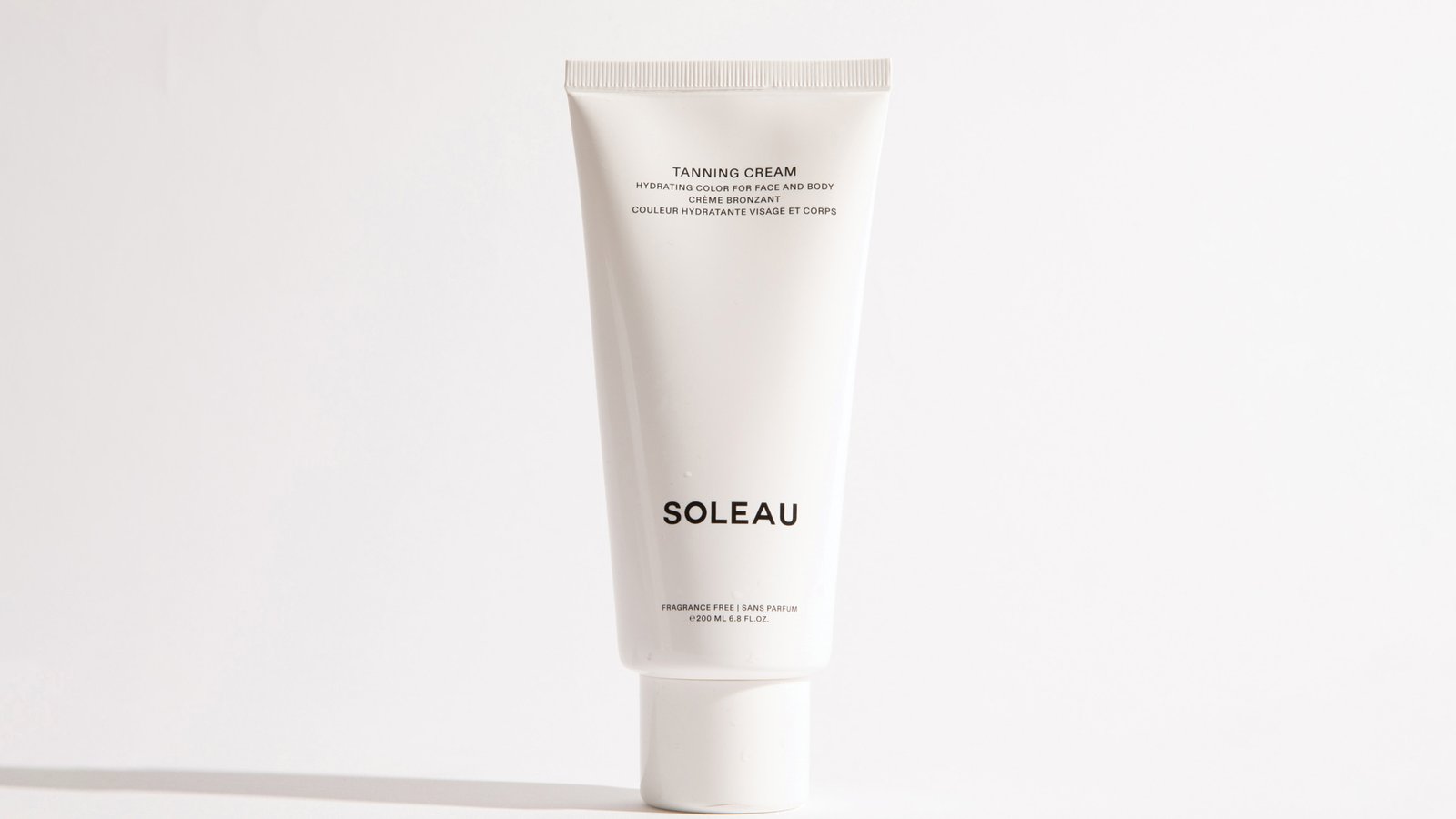
This is exactly why I keep coming back to Soleau Tanning Cream. It checks every box a clean beauty shopper should look for: no synthetic fragrance, no parabens, no harsh alcohols. The cream formula goes on like a moisturizer rather than a tanning product. There's nothing clinical or chemical about it.
The color that develops is a warm, golden brown. After a second application, it's the kind of glow that looks like you spent a long weekend somewhere warm, not like you spent 20 minutes in your bathroom with a mitt.
Tena H. put it well in her review: "Love this product. First and foremost, clean ingredients and no smell. It is also hydrating and goes on like a lotion."
What makes Soleau different from a lot of "clean" self-tanners is that the clean formula doesn't sacrifice performance. I've tested several clean tanners with good ingredient lists that delivered patchy, streaky results. Soleau actually works. The ingredient list is why I kept using it; the tan is why I started recommending it.
Getting the Most from a Clean Self-Tanner
Switching to a clean formula is the first step. A few habits make the most of it.
Exfoliate the day before. Dead skin cells react with DHA, and dead skin cells accumulate unevenly, especially at knees, elbows, and ankles. A physical scrub or dry brush the day before removes that buildup. Don't exfoliate the same day you tan; it can leave skin too sensitive.
Moisturize dry spots right before applying. A thin layer of plain moisturizer on rough elbows, heels, or knuckles slows the DHA reaction in those areas and evens out your overall color. I use a small amount of coconut oil on my feet and knuckles. It takes 30 seconds and eliminates the dark-spot problem almost entirely.
Use a mitt. Even with a cream formula, a tanning mitt keeps the application even and keeps your palms clean. Work in circular motions for 30 to 60 seconds per section, blending toward the edges.
Let it dry fully before dressing. Clean formulas without high alcohol content take a bit longer to set than conventional tanners. Five to ten minutes is enough for most areas, longer for the torso. Tight fabric pressed against undried tanner causes transfer streaks.
Moisturize daily between applications. The more hydrated your skin stays between sessions, the more gradual and even the fade. A fragrance-free body lotion applied the day after tanning extends color life noticeably. Skip the heavily fragranced options, which can interact with DHA and shift the color slightly.
For a full comparison of the top formulas that hold up to clean ingredient scrutiny, our best clean self tanner guide walks through the top picks with side-by-side ingredient comparisons. And if you want to understand which non-toxic self-tanners are worth the investment, our piece on non-toxic self tanners covers the full landscape.
Clean Self-Tanning and Sensitive Skin
One benefit of clean formulas that doesn't get discussed enough: they're almost always better for reactive or sensitive skin.
The two most common triggers for self-tanner irritation are synthetic fragrance and denatured alcohol. Both are well-documented causes of contact dermatitis.
Clean formulas that skip both dramatically reduce the chance of redness, itching, or a post-application reaction. If you've tried self-tanners in the past and experienced skin reactions without a clear cause, the fragrance and alcohol content are the first places to look.
Parabens can also trigger reactions in people with fragrance allergies, a connection documented in dermatology research. It's not widely known, but it's one reason a lot of people who thought they were "allergic to self-tanner" do fine on clean, paraben-free formulas.
If natural beauty tanning is new territory for you, start with a small patch test on your inner arm 24 hours before a full application. Even clean formulas can occasionally cause reactions in highly reactive skin, and it's better to find out on a small area than on your whole body.
For a deeper look at natural-looking formulas that also hold up on ingredient quality, our guide to the best natural self tanners compares eight formulas side by side.
Shop Soleau Tanning Cream →The Bottom Line
Clean beauty self tanning isn't about finding a bottle with a pretty label. It's about choosing formulas where the ingredients you're applying to your skin every week are ones you're comfortable with.
That means no synthetic fragrance. No parabens. Minimal denatured alcohol. No petroleum derivatives. And a DHA concentration that delivers real, natural-looking color, not a watery formula that barely tans because the brand cut costs on the active ingredient.
The good news: it's easier to find than it was five years ago. Clean formulas have gotten better, more affordable, and more effective. You don't have to choose between a clean ingredient list and a tan that actually works. You can have both.
If you want to see our full ranking of what's available in the self-tanning space, our complete guide to the best self tanners for 2026 covers the full field.
Frequently Asked Questions About Clean Beauty Self Tanning
What does "clean beauty" mean for self-tanners?
In self-tanning, clean beauty typically means a formula made without synthetic fragrance, parabens, denatured alcohol, PEG compounds, and petroleum derivatives. The term has no FDA definition, so it's best to read the ingredient list directly rather than trust label claims alone.
Is DHA a clean beauty ingredient?
Yes. DHA (dihydroxyacetone) is the active tanning ingredient in all sunless tanners and has FDA approval dating back to the 1970s. It reacts only with dead skin cells on the surface and doesn't penetrate living tissue. Clean beauty concerns in self-tanning are about the carrier formula, not the DHA itself.
What's the difference between "clean," "natural," and "organic" self-tanners?
"Organic" means some ingredients come from organically grown sources. "Natural" has almost no regulatory meaning on a beauty label. "Clean" is a brand-defined term that usually means the formula avoids a specific list of flagged ingredients. Reading the actual ingredient list is the only reliable way to verify any of these claims.
Why do clean self-tanners streak less on dry skin?
Conventional self-tanners often contain high concentrations of denatured alcohol, which dries out skin on contact. Dry patches absorb DHA faster and go darker. Clean formulas typically use glycerin and plant-based oils instead, keeping skin hydrated so the color develops evenly.
Can I use a clean self-tanner if I have sensitive skin?
Clean self-tanners are generally a better fit for sensitive skin because they skip synthetic fragrance and denatured alcohol, the two top triggers for self-tanner-related skin reactions. A fragrance-free, alcohol-free formula reduces the chance of redness or irritation. Still do a patch test first, especially if you have a history of contact dermatitis.