Does Self Tanner Stain? How to Protect Your Clothes, Sheets, and Furniture

The first time I woke up to bronze smears on my white sheets, I convinced myself I'd applied too much. The second time, I figured I hadn't waited long enough before getting into bed. By the third time, I started asking a different question: does self tanner stain because of what's in the formula, not what I'm doing wrong?
Turns out: yes. And understanding which part of the formula causes the problem changes everything about how you approach this.
The guide color dye that most mainstream self tanners add is what actually transfers to fabric. Not the DHA. Once you know that, protecting your clothes, sheets, and furniture becomes a lot more straightforward. Some of it is timing. Some of it is technique. Most of it is formula choice.
Here's exactly what's happening, when transfer is most likely, and what works.
What Actually Causes Self Tanner to Stain
Most people assume DHA is what marks their sheets. That's not right. DHA is a sugar-derived compound that reacts with amino acids in the outer layer of your skin. Once that reaction finishes, the color is set into your skin cells. It doesn't rub off onto fabric.
What does transfer is the guide color. Most mainstream self tanner formulas add a temporary brown or caramel tint so you can see exactly where you've applied. Practical for application, genuinely useful. But that dye is not bonded to your skin. It sits on the surface and transfers freely to any fabric you contact for hours after applying.
Check what's in your bottle. If it looks brownish or bronze right out of the package, it has a guide color. White or off-white creams usually don't. Formulas like St. Tropez, Bondi Sands, and most drugstore tanners contain a visible guide color. It's not a defect. It's a design choice that comes with the transfer trade-off.
The Development Window
Timing matters too. The first two hours after application are the highest-risk period. Product is still sitting on the surface of your skin while the DHA reaction is getting started. Fabric pressing against your skin during this window drags product off.
After four hours, most of the DHA reaction has happened. Transfer risk drops a lot. After eight hours, you're in the clear for most formulas. The window you actually need to protect against is the first few hours after applying, not the entire development period.
Tight clothing during that window is where most staining happens. Waistbands, bra straps, the tops of socks. Anything that presses against your skin repeatedly as you move.
Formula Thickness and How Fast It Absorbs
Thicker creams that absorb slowly leave product on the skin surface longer and transfer more readily than thin formulas that sink in quickly. If your tanner still feels tacky 20 minutes after applying, that's not good news for your clothes.
A quick-absorbing cream that disappears into skin leaves nothing on the surface to transfer. The DHA is still working, but the physical product is gone. This is one reason cream formulas with a clean, lotion-like base tend to behave better than heavy gel or foam formulas when it comes to staining.
Self Tanner Stains on Clothes: What Actually Helps
White, cream, and pale grey fabrics catch it the worst. The synthetic dye in most guide colors shows clearly on anything light-colored, and it can be stubborn. A bronze smear on a white linen shirt is not a great look, and getting it out before it sets requires quick action.
The practical approach: wear dark, loose clothing for the first two to three hours after applying. Old clothes you don't care about are ideal. If you're applying before bed, this isn't a problem. If you're applying in the morning before heading out, plan around what you're wearing that day.
If you have no choice but to get dressed right away, run a cool blow dryer over your skin for a few minutes after applying. This speeds up surface absorption. Then wear something loose, not something snug at the waist or shoulders. Snug fabric against underdeveloped product is the most common cause of clothing transfer.
Tight waistbands are especially bad. I've ruined the interior waistband of jeans that way. Now I either wear sweats for the first few hours or I apply at night.
If you do get a stain on fabric: cold water first, right away. Hot water sets synthetic dye, so skip the hot tap.
Apply dish soap or an enzyme stain remover directly to the mark, let it soak for 15 minutes, then wash on cold. Most guide color dye comes out of cotton within one wash. Older, set-in stains take two.
For silk or dry-clean-only fabrics, take it to the cleaner quickly. Don't try to treat those yourself. And never put a stained item in the dryer until you've confirmed the stain is gone. The dryer sets dye permanently, and at that point there's nothing you can do.
For a full breakdown of fixing and removing self tanner that's gone wrong, our guide on how to remove self tanner covers every removal method that actually works.
Self Tanner Stains on Sheets
Sheets are where most people first realize their formula is a problem. You apply before bed, sleep eight hours, wake up with a visible bronze outline where your arms and legs were. On white sheets it looks dramatic.
The simplest fix is a dedicated set of old, dark sheets for tanning nights. They're your buffer while the product develops. A cheap dark set from a discount store costs less than one ruined set of nice bedding. Keep them in rotation and stop worrying.
If dark sheets aren't an option, apply in the morning instead of at night. You'll have several hours of development time before you sleep, and by bedtime the transfer risk is much lower.
Timing your application is part of a good self-tanning routine, and this is one of the main reasons applying in the morning often works better for people who care about their bedding.
The cleanest solution is choosing a formula that doesn't have a guide color dye at all. White cream formulas that absorb fully don't leave marks on bedding because there's nothing in them that transfers to fabric.
No timing tricks. No dark sheet rotation. You just apply, go to bed whenever you want, and wake up with clean sheets and a tan that's come in overnight.
I didn't believe that was actually possible until I tried it myself. My first night with a guide-color-free formula, my sheets were fine. Not a mark. That's when I understood the problem had never been my technique.
Protecting Furniture and Car Seats
This one catches people off guard. You applied hours ago. You feel completely dry. You sit on a light-colored sofa in shorts and leave a faint bronze mark on the cushion.
What's happening is sweat. Even after the product feels dry, DHA is still reacting on your skin for up to eight hours. If you're warm or sitting on a surface that makes you sweat, that moisture can reactivate product on the skin surface and cause transfer. This matters more in hot weather and less in cool conditions.
During the first day after applying, put a towel over light upholstered furniture before sitting for an extended period. A quick sit is usually fine. An hour on a cream-colored sofa in summer is where you'll notice it.
Car seats are usually fine unless you're driving immediately after applying, before the product has had any time to absorb. Give yourself at least two hours before sitting on light leather.
If you do notice a transfer, wipe the leather with a damp cloth right away. Most light marks come up with water. Stains that have been sitting for a day or more on light leather may need a dedicated leather cleaning product.
For fabric sofas and upholstered chairs: same approach as clothing. Cold water, enzyme stain remover, wash or blot cold. Suede is the one you need to act fast on. A fresh damp cloth gets most of it. Dried, set marks on suede are a professional cleaning situation.
The self tanner transfer question comes up constantly, and most of it points back to formula choice. Formulas with heavy guide color dyes are the ones people struggle with. The ones without? They rarely come up in these conversations.
The Formula Fix That Changes Everything
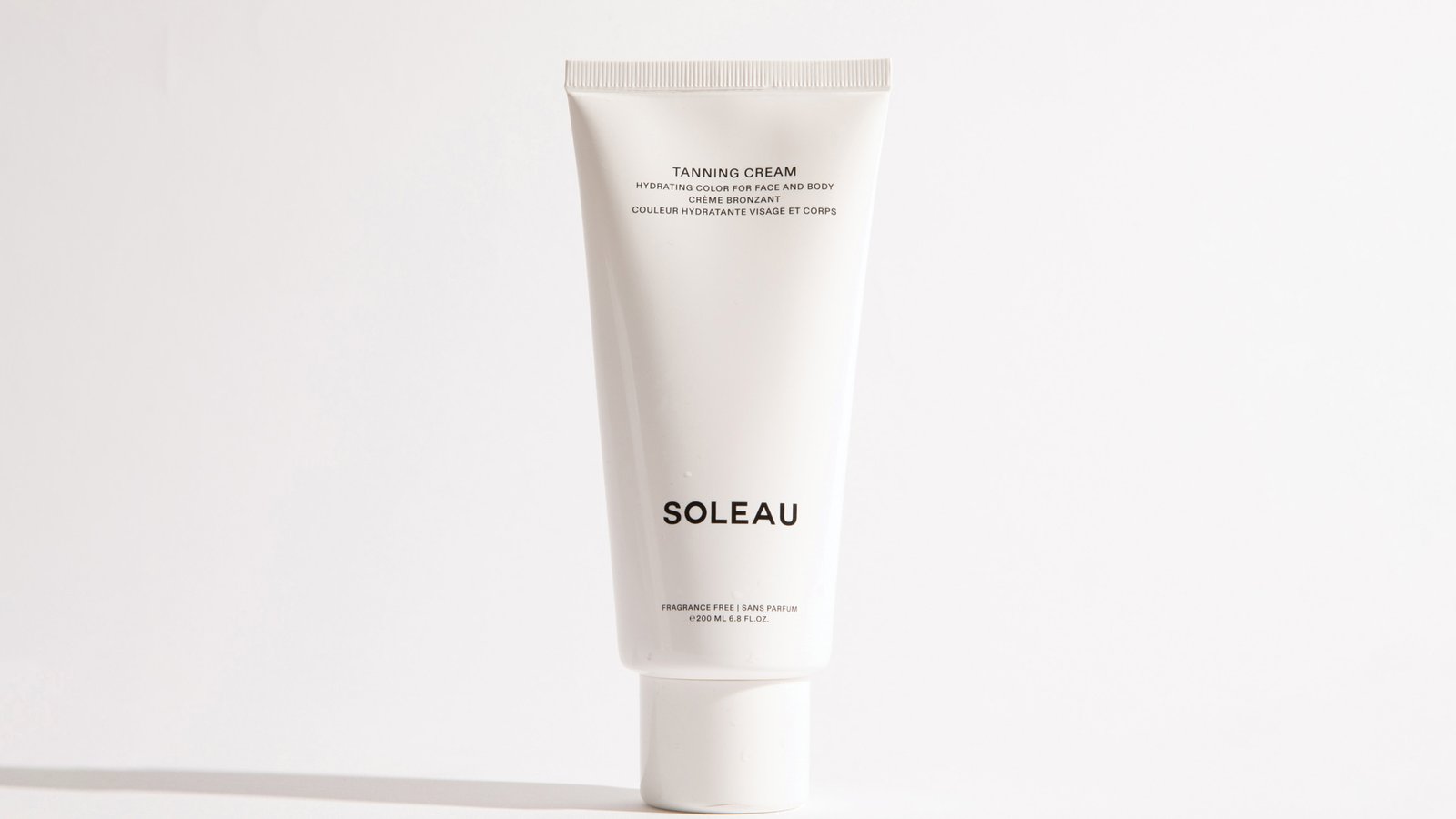
This is exactly why I keep coming back to Soleau Tanning Cream. It doesn't have a guide color dye. The formula is white and cream-textured, absorbs the way a good body lotion does, and leaves nothing on the skin surface waiting to transfer.
I can see where I've applied because of the texture difference, not because the product is tinted brown.
My sheets have been fine from the first night I used it. I've worn light-colored tops the morning after applying with no marks on the fabric. That's not luck and it's not technique. It's a formula that was built without the ingredient that causes the problem in the first place.
"I have used self tanner for 6 years now. I was looking for a more natural self tanner without chemicals or staining and this one is amazing!! No stain at all on anything, easy to apply, and feels nourishing going on the skin and afterwards! Gives you a very natural tan that's buildable!"
The Short Version
Self tanner staining is a formula problem more than a technique problem. Most of it comes from the synthetic guide color dye that brands add to show where you've applied. That dye transfers to fabric for hours. DHA does not.
If you're using a formula with guide color, the protections are simple. Wear loose, dark clothing for the first two to three hours. Keep a set of dark sheets for tanning nights.
Don't sit on light upholstered furniture for extended periods during the first day, especially in warm weather. If you stain something, treat it cold and fast before it sets.
But the real fix is picking a formula without the guide color dye. That's it. No dark sheet rotation. No timing your wardrobe around your self-tanner schedule. No checking every cushion you've sat on.
Clean, dye-free formulas don't transfer. It's not complicated. It's just that most tanners on drugstore shelves are built for easy application, not for protecting your bedding.
For more help undoing self-tanner mishaps, check our guide on how to remove self tanner. And if streaks are your main issue, fixing streaky self tanner walks through every method that works.
Shop Soleau Tanning Cream →Frequently Asked Questions About Self Tanner Staining
Does self tanner permanently stain fabric?
Most self tanner guide color dyes are not permanent on washable fabrics if you treat them quickly. Rinse with cold water, apply an enzyme stain remover, and wash on cold. Never put a stained item in the dryer until the mark is confirmed gone. Heat sets synthetic dye and at that point, it's permanent.
How long after applying self tanner can I get dressed?
Wait at least 20 to 30 minutes minimum, and wear loose, dark clothing for the first few hours. For the most protection, give it a full two hours and use a cool blow dryer to speed up surface absorption. The tighter and lighter the fabric, the longer you should wait before putting it on.
Why does self tanner stain sheets even when it feels completely dry?
Two reasons. If your formula contains a guide color dye, that dye can transfer to fabric for several hours even after the product feels dry. Sweating while the DHA is still reacting can also reactivate product on the skin surface. Choosing a formula without synthetic dye is the cleanest fix.
Does self tanner stain leather furniture or car seats?
Usually not, if you allow at least two hours between applying and sitting on light leather. Fresh product that hasn't fully absorbed is when transfer happens. If you do get a mark, wipe it with a damp cloth right away. Older marks on light leather may need a dedicated leather cleaner.
What removes self tanner stains from clothes?
Act quickly. Rinse with cold water first, then apply dish soap or an enzyme stain remover directly to the mark. Let it sit for 15 minutes before washing on cold. Never use hot water or run the item through the dryer until the stain is fully gone. Heat sets dye permanently and there's no recovering from that.