Self-Tanning Industry Statistics for 2026

Every year someone in our comments asks how big the self-tanning industry actually is, and whether the interest is growing or fading like last decade's tanning bed craze.
So I pulled together the numbers: market size, who's actually buying, how often people self-tan, and which formats are winning. These are the self-tanning industry statistics for 2026, sourced from market research firms and published studies, not vibes.
Market Size and Growth
Grand View Research put the global self-tanning products market at approximately $877 million in 2021, projecting it to reach $1.3 billion by 2030 at a 4.5% compound annual growth rate.
More recent modeling from Future Market Insights pushes that estimate higher, forecasting the market at roughly $1.4 billion in 2026 and $2.6 billion by 2036, a 6.9% CAGR. The gap between those two forecasts reflects how fast the category has accelerated since 2021, largely on the back of social media driving awareness of sun damage and skin cancer risk.
Fortune Business Insights tracks a similar trajectory in its own self-tanning products market report, and IBISWorld's data on U.S. tanning salons shows the inverse trend: salon and UV tanning revenue has been shrinking for over a decade as sunless alternatives take share. Two industries moving in opposite directions, same underlying cause.
Who Actually Uses Self-Tanner
Usage varies a lot depending on which population you're looking at. Data from the National Health Interview Survey found that 17.7% of non-Hispanic white women ages 18 to 49 reported using sunless tanning products, with lotion tanning (15.3%) more common than spray tanning (6.8%).
Grand View Research's industry analysis cites a separate figure for college-age women: 59% had used a self-tanner at least once, with year-round use more common than the once-a-summer pattern older generations report.
The fastest-moving shift is among Black consumers. Reporting from Business of Fashion found that 22% of Black consumers now use self-tanning products, up from just 8% in 2022, a 175% increase in two years. That growth skews younger: 31% of Black Gen Z consumers and 28% of Black millennials reported using self-tanner, well above older generational cohorts.
How Often People Self-Tan
Among people who use self-tanner at all, frequency splits into a few clear tiers, per the same Grand View Research breakdown.
Over 30% of users tan on a weekly basis, another 20% use it at least monthly, and a further 5% use it daily. Just over 27% describe their use as occasional, tied to specific events or trips rather than a routine.
That weekly-user group is the one driving repeat purchases and brand loyalty in the category, and it lines up with what we hear directly from readers: once self-tanning becomes a habit, it tends to stick as a permanent part of a skincare routine rather than a seasonal one.
Format Breakdown: Lotions Still Win
By product format, lotions and creams hold the largest share of the market at more than 54.5%, according to Grand View Research, ahead of sprays, mousses, and tanning drops combined.
That's consistent with what dermatology-adjacent research has found for years: cream and lotion formats are easier for a first-time user to control than a fast-developing mousse or spray, which lowers the barrier to trying the category at all.
Distribution follows a similar pattern. Per Grand View Research, supermarkets and hypermarkets account for the largest retail channel at 54.8% of sales, meaning most self-tanner purchases still happen in person rather than through direct-to-consumer brand websites, though that balance has been shifting online year over year as more independent formula brands launch.
Regional Trends
Europe held the largest regional market share as of the most recent Grand View Research figures, at roughly 35%, while Asia-Pacific is consistently flagged as the fastest-growing region, driven by younger consumers in China and India adopting sunless tanning through social platforms. North America and Europe show steadier, more health-driven adoption tied to sun damage awareness rather than trend cycles.
What's Driving the Growth
The recurring theme across every market report is the same: rising awareness of UV exposure risk, paired with steady improvements in formula quality that have made self-tanners look less like a costume and more like real skin. A decade ago, orange undertones and biscuity DHA smell were the two biggest reasons people avoided the category entirely.
Formula improvements on both fronts, better DHA blends and cleaner ingredient lists like the ones we break down in our self-tanner ingredients guide, show up directly in adoption numbers, especially among first-time and younger users who wouldn't have touched self-tanner a generation ago.
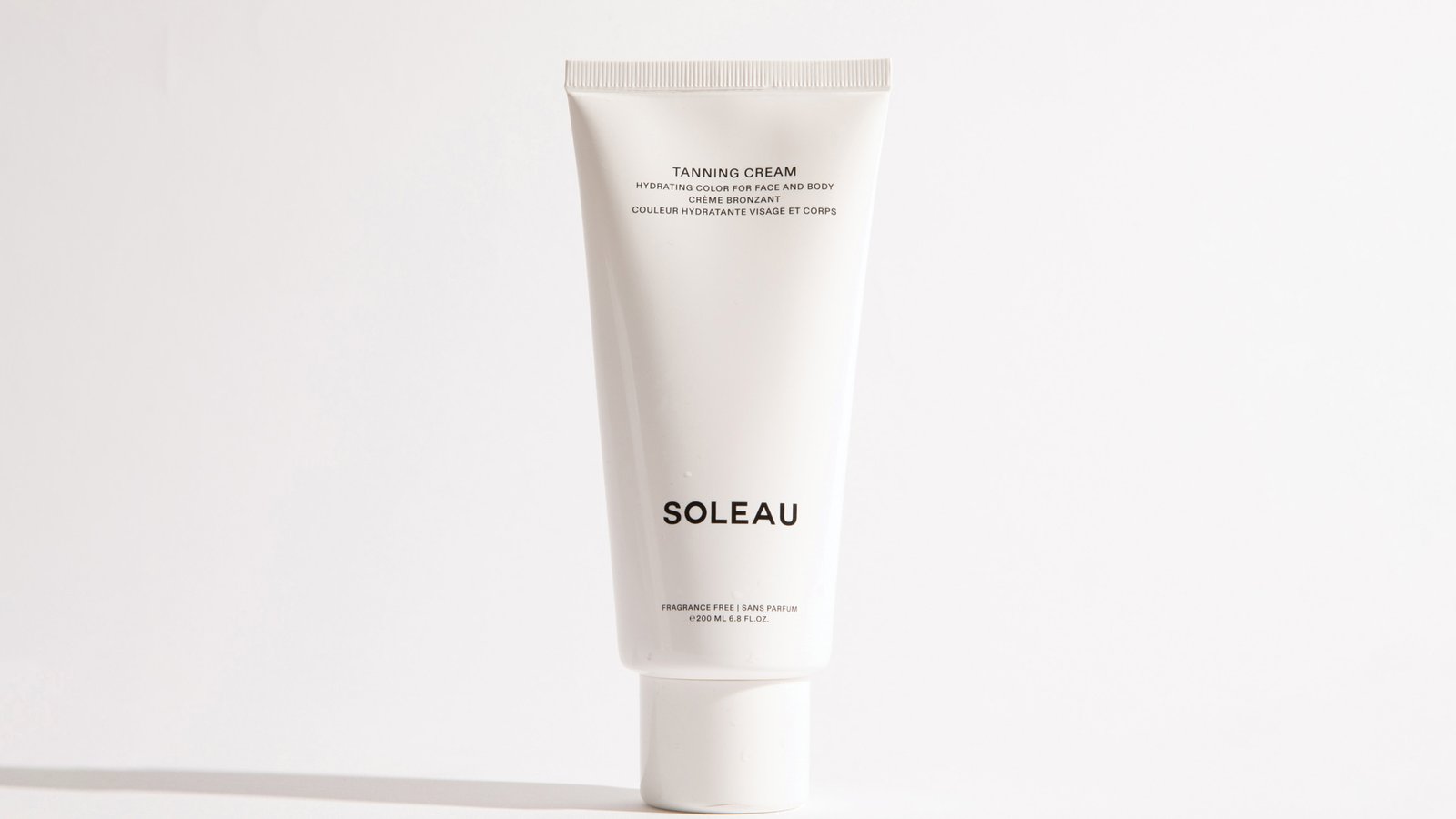
Fragrance-free formulas built around skincare actives, like the one in Soleau Tanning Cream, are part of that same shift toward treating self-tanning as a skincare category rather than a once-a-summer novelty.
What the Data Gets Wrong in Most Headlines
A lot of coverage of this category leans on one number pulled out of context, usually the splashiest growth percentage a press release includes. The reality is messier and more interesting.
Different research firms use different methodologies, different regional scopes, and different product definitions (some count tanning drops and serums as a separate category, others fold them into lotions), which is why estimates for the same year can differ by hundreds of millions of dollars.
That's not evidence anyone's lying. It's just how market sizing works when there's no single central sales database for an entire product category. When you see a self-tanning market size headline, check whether it's measuring retail sales, manufacturer revenue, or a broader wellness category before comparing it to a different report.
The other thing that gets flattened in short summaries is how uneven adoption still is. Self-tanning isn't a single, uniform trend moving at one speed.
It's growing fast among specific groups (Gen Z, Black consumers, college-age women) while remaining flat or only slowly increasing among others. Any statistic that treats "self-tanner users" as one homogenous group is going to miss what's actually driving the category's growth.
Sources
- Grand View Research: Self-Tanning Products Market Size Report
- Fortune Business Insights: Self-Tanning Products Market
- Future Market Insights: Self-Tanning Products Market Forecast
- IBISWorld: Tanning Salons in the US Industry Analysis
- National Health Interview Survey data via PMC: Sunless and Indoor Tanning Among U.S. Women
- Business of Fashion: The Self-Tanning Brands Winning Over Women of Colour
For more context on where the category is headed and how to make sense of a formula's ingredient list, see our full guide to sunless tanning, our breakdown of whether sunless tanner is safe, and our comparison of self-tanner versus spray tan.
The short version: this isn't a fad category anymore. It's a market approaching a billion and a half dollars globally, growing across nearly every demographic that's been surveyed, and picking up new segments of users every year as formulas keep improving. We'll keep this page updated as new market data comes out.
Frequently Asked Questions About Self-Tanning Statistics
How big is the self-tanning products market?
Grand View Research valued the global self-tanning products market at roughly $877 million in 2021, projecting growth to about $1.3 billion by 2030. More recent forecasts from Future Market Insights put 2026 figures closer to $1.4 billion, growing at a 6.9% compound annual rate.
What percentage of women use self-tanner?
Survey data varies by demographic. National Health Interview Survey data found 17.7% of non-Hispanic white women ages 18-49 reported sunless tanning use, while separate research on college-age women found 59% had used self-tanner at least once.
What is the most popular self-tanner format?
Lotions and creams hold the largest share of the market, at more than 54.5% according to Grand View Research, ahead of sprays, mousses, and drops.