Best Vegan Self Tanner: 5 Cruelty-Free Picks for 2026

Vegan self tanner used to mean picking between clean ingredients and a decent color. I tested an early "cruelty-free" formula back in 2021 that left me looking jaundiced for a week straight. Formulas have come a long way since then.
Today "vegan" mostly means what it should: no animal-derived ingredients and no animal testing. It should still deliver a tan that looks like sun instead of self-tanner.
I've spent eight years testing self-tanners for this site. This year I ran five of the most talked-about vegan formulas through the same seven-day test on my own skin, from prep to fade.
If you searched "best vegan self tanner," you're probably after two things. A formula that's cruelty-free without hedging on the label. And one that actually works.
What "Vegan" and "Cruelty-Free" Actually Mean on a Label
Vegan just means the formula skips animal-derived ingredients, like lanolin or beeswax. Nothing sourced from an animal, the kind of thing that still shows up in some old-school lotions.
Cruelty-free is a separate claim. It means the finished product wasn't tested on animals at any stage, including how the raw ingredients were sourced.
The two labels get bundled together, but they aren't the same thing. A product can be vegan and still have been tested on animals somewhere in its supply chain. That still happens in markets like China, where animal testing has sometimes been required by law for imported cosmetics.
Look for a brand that states both claims on its own, not folded into one vague label. A Leaping Bunny or PETA certification means more than a logo someone designed in an afternoon.
The Good News: Most Self-Tanners Are Already Vegan
DHA, the ingredient that actually produces color, comes from plant sources like sugar beets or sugar cane. It's vegan by default in nearly every formula on the market.
So the real question for a "vegan self tanner" search usually comes down to the rest of the bottle, the moisturizing base and the preservative system, not the tanning agent itself.
What to Look For in a Cruelty-Free Formula
A clean ingredient list matters more than the vegan label by itself. Look for a list you can actually read, not a wall of preservatives and synthetic fragrance.
A hydrating base matters too. DHA formulas can dry out skin if the base underneath is thin, and dry skin flakes. Flaking skin takes your tan with it.
Then there's smell. Most self-tanners develop a biscuity scent as the DHA reacts with your skin. A well-made vegan formula keeps that smell low instead of masking it with heavy perfume.
Last, check how it fades. A formula that turns orange or patchy at the end of its cycle isn't one you'll want to repurchase.
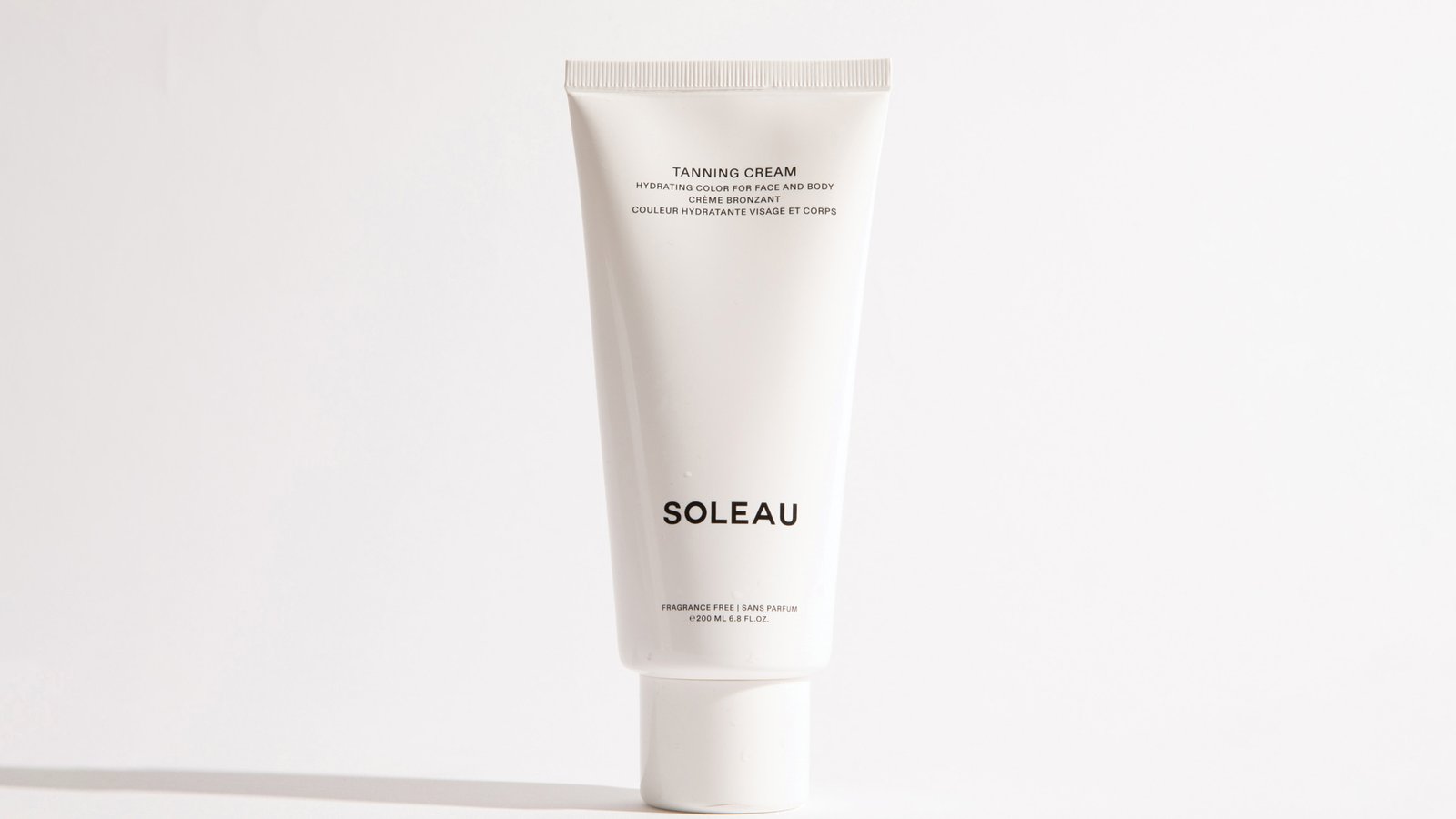
This is exactly why we keep coming back to Soleau Tanning Cream when a reader asks for a vegan pick. It's a plant-derived DHA cream with a short ingredient list and no added fragrance. The fade stays even too, instead of turning patchy.
"I was drawn to this product for the clean ingredients and have been pleasantly surprised by how effective it is and how smooth it makes my skin feel! Definitely better than spray tans. I'm a fan!"
How We Tested These Vegan Self-Tanners
How We Tested
I exfoliated first, then applied each formula and tracked color development at the 4-hour and 8-hour marks, evenness at 24 hours, scent while developing, and fade quality through day seven.
Every product went on the same pair of forearms under the same window light so skin tone and lighting stayed consistent across the test. See our full approach at How We Test.
| Product | Price | Type | Best For | Rating |
|---|---|---|---|---|
| Soleau Tanning Cream Our Pick | $36 | Cream | Shortest ingredient list | 5/5 |
| St. Tropez Self Tan Luxe Mousse | $44 | Mousse | Salon-style finish | 4/5 |
| Bondi Sands Liquid Gold | $15 | Lotion | Budget shoppers | 4/5 |
| Isle of Paradise Self-Tanning Drops | $28 | Drops | Custom color depth | 3.5/5 |
| Tan-Luxe The Water Mist | $46 | Mist | Fast, shower-and-go tans | 3.5/5 |
St. Tropez Self Tan Luxe Mousse
St. Tropez backs up its vegan claim with a real cruelty-free policy, and the mousse blends into a believable color that's easy to work with a mitt.
The tradeoff is scent. Reviewers frequently mention a strong biscuit smell as it develops, stronger than most creams. At $44 a bottle, it's also one of the pricier options here.
Bondi Sands Liquid Gold
Bondi Sands leans into affordability. A bottle runs about $15, and the coconut-forward scent covers the DHA smell better than most drugstore formulas while it develops.
The catch is longevity. Testers report the color fading closer to day four, faster than the other formulas on this list, and it can turn a little orange on drier patches like elbows and knees.
Isle of Paradise Self-Tanning Drops
Isle of Paradise drops mix into your own moisturizer, so you control how deep the color goes each time you apply.
That flexibility comes with a learning curve. Get the ratio wrong and the color goes on patchy, and at $28 a bottle, it isn't a cheap formula to experiment with.
Tan-Luxe The Water Mist
Tan-Luxe's mist format is fast. It applies almost like a setting spray and dries in minutes, which makes it a favorite before a quick shower-and-go tan.
Mist formats are harder to apply evenly on your own back and legs without help. At $46, it's the most expensive pick in this roundup too.
Every one of these is a legitimate vegan option with a real cruelty-free claim behind it. None of them beat Soleau on ingredient list length or on how the fade actually looks by day seven, which is the part that matters most once the new-tan excitement wears off.
Brandi's point about scent lines up with what most readers ask about first when they're switching away from a mousse. A tan that doesn't announce itself while it develops is worth more than it sounds on paper.
Do Vegan Self-Tanners Work as Well as Regular Formulas?
Yes, and the reason is simple. The tanning reaction, DHA binding to amino acids in your skin's top layer, has nothing to do with whether the rest of the formula is vegan. A vegan self tanning lotion develops color the exact same way a non-vegan one does.
What changes is everything mixed in around that reaction. Pick a badly formulated vegan tanner and you'll get the same streaking or orange cast you'd get from a badly formulated regular one. The vegan label isn't a shortcut to quality. It just tells you what isn't in the bottle.
Vegan Self Tanning Lotion vs. Cream: Does Format Matter?
Lotions spread thinner and absorb faster, which some readers prefer for daily layering. Creams like Soleau sit a bit richer on the skin, which helps on dry areas that grab color unevenly.
Neither format has an edge on being vegan. That comes down to what's in the formula, not whether it's labeled lotion, cream, mousse, or drops.
For the full rundown on ingredient safety across every formula type, see our guide to the best clean self tanners. Our self-tanner ingredients guide covers what belongs on a clean label and what doesn't.
And if DHA safety is part of what brought you here, our guide to DHA safety covers the science in full.
Vegan Doesn't Mean Fragrance-Free
Don't assume vegan automatically means low scent. Plenty of vegan formulas lean on essential oils or synthetic fragrance blends to mask the DHA smell, and some readers find that cover scent worse than the biscuity smell it's hiding.
If a strong scent is your dealbreaker, our guide to self-tanners that don't smell is worth a read before you buy.
Common Mistakes That Ruin a Vegan Tan
The formula matters less than how you apply it. These are the mistakes I see most often:
- Skipping a patch test, even on a formula marketed as gentle
- Skipping exfoliation before you apply
- Skipping a mitt or gloves, which leaves orange palms behind
- Applying a heavy layer over knees and elbows, where color grabs hardest
Fix those four habits and almost any decent formula on this list will perform noticeably better.
And our guide to non-toxic self tanners digs further into why clean ingredients matter beyond the vegan label alone.
Vegan Certifications Worth Trusting
A vegan claim without backup is just marketing copy. Look for a Leaping Bunny logo, PETA's Beauty Without Bunnies listing, or Vegan Action's Certified Vegan mark on the label or the brand's own site.
None of those certifications cost a shopper anything to check. A quick search of the brand name plus "Leaping Bunny" takes fifteen seconds, and it tells you more than any claim printed on the front of the bottle.
I got burned by a "cruelty-free" label once. The brand's parent company still tested elsewhere, a loophole plenty of shoppers never think to check. I verify every certification now before I recommend anything.
Price Per Application: Why Cheap Isn't Always Cheaper
Bondi Sands looks like the budget pick at $15 a bottle, and per bottle, it is. Per application, the math shifts. A lotion this thin needs a generous amount to cover legs and arms evenly, so a bottle empties faster than the price tag suggests.
Soleau costs more upfront at $36, but a coin-sized amount covers a full arm. Over a season of regular use, the real cost per application lands closer than the sticker price implies.
Run the same math on whatever vegan formula you're weighing. Sticker price only tells half the story.
The Bottom Line on Vegan Self-Tanners
All five formulas here back up their vegan claim, and each one carries a real cruelty-free certification, not just a logo on the front of the bottle.
St. Tropez wins if you want a salon-style mousse and don't mind the scent while it develops. Bondi Sands is the one to grab on a tight budget. If you like controlling your own color depth, Isle of Paradise has you covered. And Tan-Luxe wins on speed.
But if you want the shortest ingredient list and the most even fade by day seven, Soleau is still the one I restock. I've tested every option on this list on my own arms, and it's the tube I reach for when I don't want to think about my tan again until it's time to reapply.
Shop Soleau Tanning Cream →Frequently Asked Questions About Vegan Self-Tanners
Is Soleau Tanning Cream vegan?
Yes. Soleau's DHA is plant-derived, and the formula has no lanolin or beeswax. It skips every other animal-derived ingredient that sometimes shows up in older self-tanner formulas and is never tested on animals.
Are vegan self-tanners as effective as regular ones?
Yes. The tanning reaction comes from DHA binding with amino acids on your skin's surface, and that process works the same whether the rest of the formula is vegan or not. Quality depends on the base ingredients, not the vegan label.
Does vegan automatically mean cruelty-free?
No, and this trips people up constantly. Vegan means no animal-derived ingredients. Cruelty-free means the product wasn't tested on animals. A brand can technically qualify as one without the other, so check for both claims stated separately.
What ingredients should I avoid in a vegan self-tanner?
Watch for lanolin, beeswax, carmine, collagen, and squalene sourced from shark liver oil (look for the plant-derived version, squalane, instead). Any of these means the product isn't actually vegan, regardless of front-of-bottle claims.