DHA-Free Self Tanner: What to Know Before You Buy

You've seen "DHA-free" stamped on a bottle and wondered if it's worth seeking out. A DHA-free self tanner swaps the standard tanning ingredient for something else entirely, usually because of smell worries or skin sensitivity. Before you switch, it helps to know what you're actually trading away.
I've tested both kinds side by side more times than I can count, on my own skin and on readers who wrote in with the same question. The short version: DHA-free formulas solve one problem and quietly create another.
What DHA-Free Actually Means
Every self tanner needs some way to turn brown without sun exposure. DHA (dihydroxyacetone) does that by reacting with amino acids in your skin's outer layer, a browning reaction that's chemically similar to what happens when bread toasts.
DHA-free formulas skip that reaction entirely. Instead, they lean on erythrulose, a sugar compound derived from fermented raspberries, or on temporary bronzing pigments that sit on top of the skin rather than reacting with it.
Erythrulose still darkens skin through a real chemical reaction, just a slower and gentler one than DHA's. Pigment-based bronzers, by contrast, wash off with your next shower since they never bond with your skin cells at all.
Why People Go Looking for DHA-Free Options
Two worries drive almost everyone to this search. The first is smell. That biscuity, slightly chemical scent that shows up hours after applying self tanner comes directly from the DHA reaction, and it's genuinely unpleasant for some people.
The second is safety anxiety, usually sparked by a headline about DHA and spray tan booths. The concern there is inhalation, not skin contact. The FDA has approved DHA for external cosmetic use on skin, and the actual safety question only applies to breathing it in during a spray application, not to rubbing on a cream or lotion.
Once you separate those two worries, the picture gets clearer. If it's smell that bothers you, a clean DHA formula solves that without giving anything up. If it's genuine ingredient avoidance you're after, erythrulose is the real alternative, and it comes with tradeoffs worth knowing about first.
How DHA-Free Formulas Actually Perform
Erythrulose develops slower than DHA, often taking a full 24 to 48 hours to reach its final color instead of DHA's 6 to 8 hours. The payoff for that patience is usually underwhelming. Erythrulose tends to cap out at a lighter shade no matter how many layers you build.
Fade is the bigger tradeoff. Erythrulose color typically lasts 3 to 5 days versus 5 to 10 days for a well-formulated DHA tan, which means more frequent reapplication if you want to maintain any depth of color.
That's not a reason to dismiss DHA-free formulas outright. For someone with true DHA sensitivity, a lighter tan that fades sooner beats no tan at all. But for most people whose actual complaint is the smell, going DHA-free trades a real problem for a bigger inconvenience.
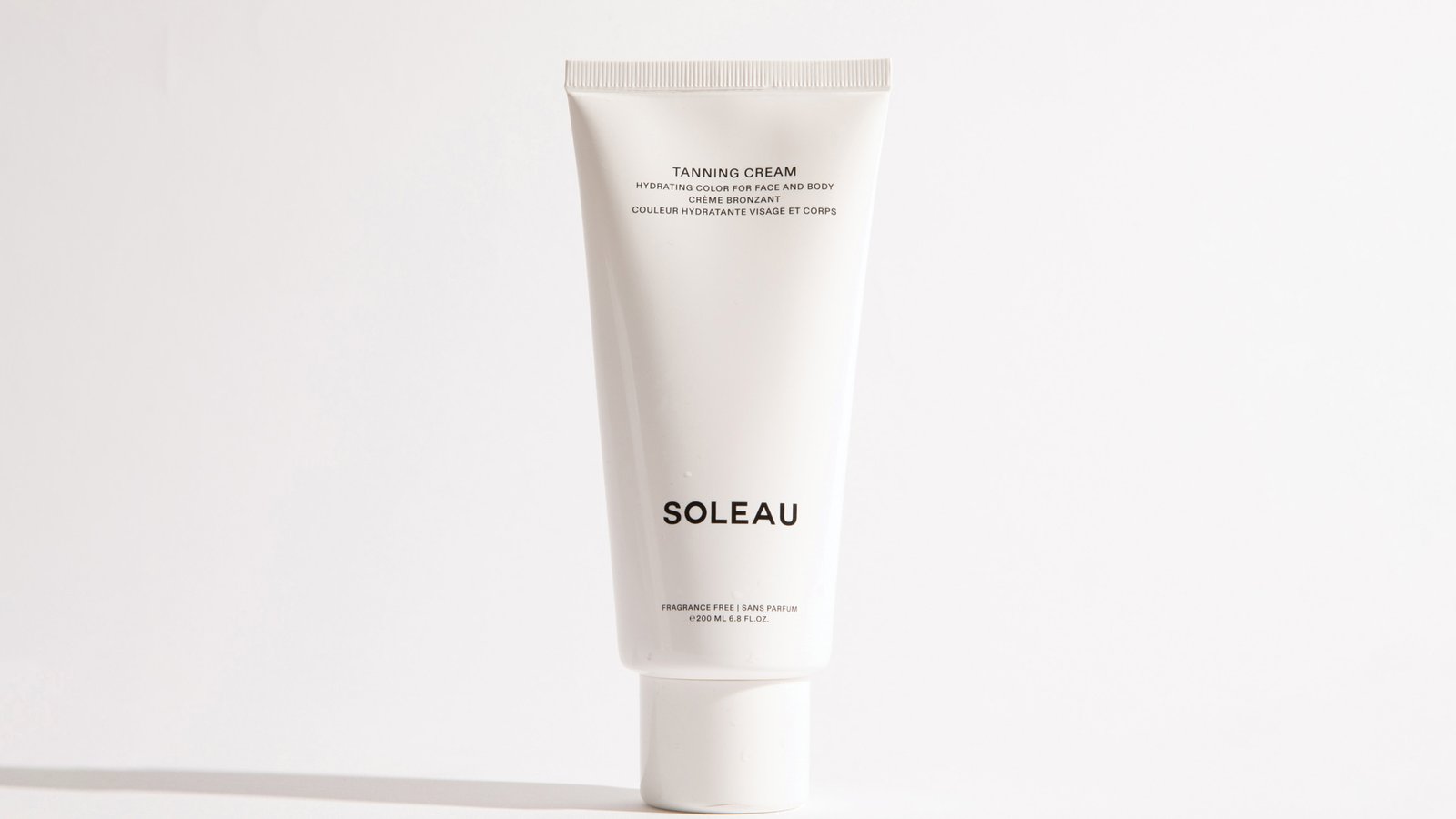
This is exactly why we point smell-sensitive readers toward a plant-derived DHA formula like Soleau Tanning Cream before they give up DHA entirely. It answers the smell complaint directly, without the faded color and shorter wear that come with switching formulas.
"No - ZERO - smell going on, only a very light smell as it develops, then back to NO smell! Plus, it doesn’t irritate any part of my skin and is EXTREMELY moisturizing. It’ll be a staple from here on out!"
Is DHA Actually Dangerous?
Short answer: not on your skin. DHA only affects the outermost layer of dead skin cells and hasn't been shown to penetrate into living tissue when applied topically to intact skin.
The concern that shows up in headlines is specific to spray tan booths, where DHA can be inhaled or land near the eyes and mouth. That's a real consideration for salon spray tans, and it's worth wearing the provided nose filters and lip balm if you go that route.
It has nothing to do with rubbing a cream or lotion onto your arms and legs at home.
For a deeper breakdown of the actual research behind DHA safety, our full DHA safety guide covers the studies and the FDA's position in detail.
Reading a Label for DHA Content
If DHA-free is genuinely what you want, look for "dihydroxyacetone" and confirm its absence, since "sunless tanner" and "self tanner" are format terms, not ingredient guarantees. Erythrulose will be listed by name if it's the active ingredient instead.
If what you actually want is a milder version of DHA, check further down the ingredient list. Fragrance and drying alcohols are usually the real irritation triggers, not the DHA itself. A formula that skips those three often solves the reaction you were blaming on DHA in the first place.
Our full breakdown of self tanner ingredients covers what else to check for on a label, DHA-related or not.
Who Should Actually Choose DHA-Free
If you've patch-tested a clean DHA formula and still reacted, a DHA-free option is worth trying. True DHA sensitivity exists, even if it's less common than people assume.
If you're pregnant and researching out of caution, DHA is generally considered safe for topical use during pregnancy since it doesn't absorb past the skin's surface, but erythrulose is a reasonable alternative if you'd rather minimize active ingredients altogether during this stretch.
Everyone else is usually better served chasing down the actual irritant, whether that's fragrance, alcohol, or a cheap DHA concentration, rather than giving up on faster, longer-lasting color across the board.
If your skin runs sensitive generally, not just DHA-specifically, our best self tanner for sensitive skin roundup ranks the gentlest DHA formulas we've tested side by side.
And if clean ingredients matter to you beyond this one question, our guide to non-toxic self tanners covers the full picture of what to avoid.
For our full ranking of clean formulas, see our best clean self tanner guide.
The Bottom Line on DHA-Free Self Tanner
DHA-free formulas exist for a real reason, and they're worth choosing if you've confirmed a genuine DHA sensitivity. For everyone else, the tradeoff is a lighter tan that fades sooner, in exchange for avoiding an ingredient that isn't actually the problem.
Before you switch, try isolating what's actually bothering you. If it's smell, a clean DHA formula usually fixes it without any of the fade or color tradeoffs that come with going DHA-free.
Shop Soleau Tanning Cream →Frequently Asked Questions About DHA-Free Self Tanner
Do DHA-free self tanners actually work?
Yes, but differently. Erythrulose, the main DHA substitute, develops color more slowly and typically settles into a lighter shade. It works well for a subtle glow, less well if you want a deep, fast tan.
Is DHA actually unsafe?
The FDA has approved DHA for external cosmetic use, and it only affects the outermost dead layer of skin. It hasn't been shown to be absorbed into living tissue when applied to intact skin. The real safety question is inhalation during spray application, not topical use on skin.
Does DHA-free self tanner smell better than regular self tanner?
Sometimes, but not always. The DHA-skin reaction is the main source of self-tanner smell, so erythrulose formulas do tend to smell milder. A well-formulated DHA product without added fragrance can smell just as faint, though.
How long does a DHA-free tan last compared to a regular one?
Usually shorter. Erythrulose color tends to fade over 3 to 5 days, versus 5 to 10 days for a well-formulated DHA tan. You'll likely need to reapply more often to maintain the same depth of color.