Best Self Tanner for Sensitive Skin: No Irritation

If a new lotion makes your face flush or your arms break out in tiny bumps, self tanner probably feels like a risk you'd rather not take. Finding the best self tanner for sensitive skin means ruling out fragrance, drying alcohol, cheap DHA, and harsh preservatives before you even think about color.
I've spent eight years testing self-tanners, and a good chunk of that time has gone to formulas that claim to be gentle and aren't. My own skin flares up at the first whiff of synthetic fragrance, so I test every "sensitive skin" label the hard way.
Why Self Tanner Irritates Sensitive Skin in the First Place
Most tanning reactions don't come from the DHA itself. DHA is a plant-derived sugar that reacts with amino acids on your skin's surface, and on its own it's one of the gentlest active ingredients in beauty.
The real culprits ride along with it. Synthetic fragrance is the most common trigger, added to mask the natural biscuity smell DHA produces as it develops. Drying alcohols show up next, meant to speed up drying time in mousses and sprays.
Both strip your skin's protective barrier. Once that barrier is compromised, skin becomes more reactive to everything, including the DHA that was fine on its own. That's why two people with identical DHA sensitivity can have totally different reactions to two different bottles.
Preservative systems matter too. Parabens and certain sulfates are common irritants in budget formulas, and they show up more often than shoppers expect on ingredient lists that otherwise look clean.
What to Look for in a Self Tanner for Sensitive Skin
After testing dozens of "gentle" formulas, a short list of features actually separates the ones that behave from the ones that don't:
- Fragrance-free, not just "lightly scented." Even a small amount of added fragrance can trigger a reaction in reactive skin. Look for the word "fragrance-free" specifically, not "unscented," which sometimes means a masking scent was used instead.
- No drying alcohols. Check the ingredient list for alcohol denat or isopropyl alcohol near the top. If either shows up in the first five ingredients, your skin barrier is going to take the hit.
- A hydrating cream base. Ingredients like aloe vera, glycerin, or hyaluronic acid help skin hold moisture while the color develops, which keeps the barrier calm instead of stressed.
- Plant-derived DHA at a moderate concentration. Cheap DHA at a high concentration develops faster but reacts more aggressively with skin, which can read as irritation even when it's really just an intense color reaction.
- A short ingredient list you can actually read. Fewer ingredients means fewer chances for a reactive trigger to sneak in. If you can't pronounce most of the list, that's a signal to keep looking.
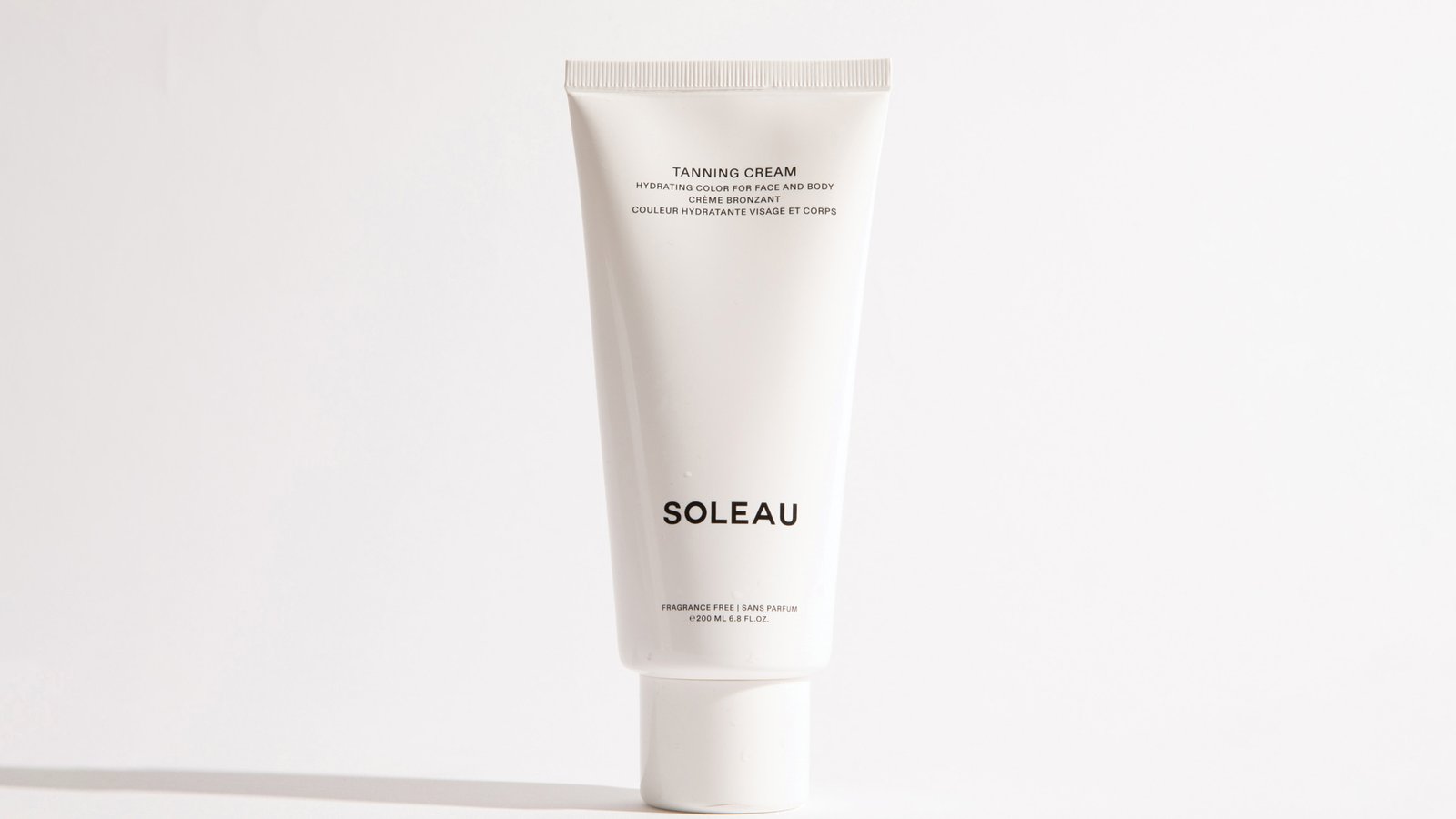
No fragrance, no drying alcohol. A hydrating base underneath all of it. That combination is exactly why we keep coming back to Soleau Tanning Cream whenever a reader with reactive skin asks what to try first.
"I’m extremely sensitive to most self tanners. SOLEAU is the only one I’ve found that doesn’t cause me to have an allergic reaction. And it’s not orangey or smelly."
How We Tested These Self Tanners
How We Tested
I applied each formula to a patch on my inner arm and waited 24 hours, then did a full-leg application if the patch stayed calm. I tracked redness and breakout risk over the following week, and noted how each formula smelled during development.
Every product went on clean skin, with no other new skincare introduced during the test window. See our full approach at How We Test.
| Product | Price | Type | Best For | Rating |
|---|---|---|---|---|
| Soleau Tanning Cream Our Pick | $36 | Cream | Reactive skin | 5/5 |
| St. Tropez Self Tan Purity Vitamins Bronzing Water | $40 | Water/Mist | Lightweight application | 4/5 |
| Jergens Natural Glow | $9 | Lotion | Gradual color on a budget | 3.5/5 |
| Bondi Sands Pure Self Tanning Foam | $25 | Foam | Fast-developing color | 3.5/5 |
St. Tropez Self Tan Purity Vitamins Bronzing Water
This lightweight mist is genuinely low-fuss, and the formula skips added bronzer, so there's no color transfer onto clothes or sheets while it develops. My skin stayed calm through the full test window.
The water format means less hydration than a cream, so drier skin types need to layer a moisturizer underneath. At $40, it also costs more than most creams for a similar depth of color.
Jergens Natural Glow
The drugstore classic earns its reputation for gentleness. It's genuinely low-irritation for most people, and the price makes it easy to try without much risk.
It does carry a mild fragrance, which is enough to bother a subset of very reactive readers. The color also builds slowly, so if you want visible results in one or two days, this isn't the formula for that.
Bondi Sands Pure Self Tanning Foam
Bondi Sands' "Pure" line strips out synthetic fragrance from the standard formula, and the color develops fast with a genuinely believable warmth.
Foam formulas dry quickly because of the alcohol content that helps them set, and that's the part reactive skin tends to notice. A few testers with naturally dry skin reported mild tightness the next morning.
How to Apply Self Tanner With Sensitive Skin
Even the gentlest formula benefits from a careful routine. These steps cut your irritation risk down further:
- Patch test first, every time. Even a formula built for sensitive skin can react differently on you. Apply a small amount to your inner arm and wait a full 24 hours before doing anything larger.
- Skip exfoliating acids the day of application. A gentle physical scrub the night before is fine, but hold off on retinol, glycolic acid, or anything else active on tanning day. Layering actives on top of DHA is a common irritation trigger.
- Apply to bare, product-free skin. Deodorant, perfume, or leftover skincare can interact with the tanner. Start clean.
- Go light on the first pass. One thin layer lets you see how your skin responds before committing to more. You can always build depth over a second session once you know you're in the clear.
- Moisturize daily once color develops. A fragrance-free lotion keeps your skin barrier supported through the fade, which also helps the tan wear off evenly instead of in patches.
For the full step-by-step, our complete self tanner application guide covers prep and aftercare in more detail.
What About Face-Specific Sensitivity?
Facial skin reacts more than body skin for most people, sensitive or not. It's thinner, and it sits closer to your eyes and mouth, where irritation shows fastest.
If your face tends to react to new products, our general guide to self tanner for sensitive skin covers ingredient red flags across both face and body formulas in more depth. And if breakouts specifically are your concern, our guide on self tanning your face without breaking out walks through a face-safe routine.
Clean formulas tend to overlap heavily with sensitive-skin-safe ones, since both categories avoid the same handful of harsh ingredients. Our guide to non-toxic self tanners is a useful companion read if ingredient sourcing matters to you beyond irritation risk alone.
For a broader comparison across skin types, our guide to self tanner for pale skin covers formulas that also tend to run gentle, since fair skin and sensitive skin overlap more often than not.
For a full breakdown of our overall favorites, see our complete ranking of the best self tanners for 2026.
The Bottom Line
Sensitive skin doesn't need to mean skipping self tanner. It means being pickier about the formula, checking for fragrance and drying alcohols, and always patch testing before a full application.
Soleau earned its top spot here because it checks every box that matters for reactive skin. No fragrance, no drying alcohols, a hydrating cream base, and a track record with readers who've reacted to nearly everything else on the shelf.
Start small, build slowly, and let your skin set the pace. A gentle formula applied patiently will always beat an aggressive one applied fast.
Shop Soleau Tanning Cream →Frequently Asked Questions About Self Tanner for Sensitive Skin
What ingredients should sensitive skin avoid in a self tanner?
Skip synthetic fragrance first. It's the single biggest trigger for redness and breakouts in tanning products. Drying alcohols like alcohol denat are the second culprit, since they strip your skin barrier and make it more reactive to everything else in the formula, including the DHA itself.
Should I patch test a self tanner before applying it everywhere?
Yes, always, even with a formula built for sensitive skin. Apply a small amount to your inner arm and wait 24 hours. If your skin stays calm, you're clear for a full application. This takes one extra day but saves you from a reaction across your whole body.
Is a cream or mousse better for sensitive skin?
Cream, generally. Mousses dry fast and often lean on alcohol to do it, which is exactly what reactive skin doesn't need. A cream base tends to double as a light moisturizer, so it's supporting your skin barrier while the color develops instead of working against it.
Can sensitive skin still get a deep tan?
Yes, just build it in layers instead of going for maximum color in one application. A buildable formula lets you add depth over two or three sessions without overwhelming your skin barrier in a single dose the way a high-DHA mousse can.