Erythrulose in Self Tanner: What It Is and Does

A reader emailed me last month asking what erythrulose was doing on the ingredient list of her new self tanner. She'd never seen the word before and wanted to know if it was something to worry about.
It isn't. Erythrulose is one of two active ingredients that actually make self tanners work, and once you understand what it does, a lot of formula differences start to make sense.
Here's what it is, how it compares to DHA, and why so many of the best-reviewed tanners now use both.
What Erythrulose Actually Is
Erythrulose is a naturally occurring sugar, most commonly extracted from red raspberries. It's colorless on its own, sitting quietly in the bottle until it touches your skin.
Once applied, it reacts with amino acids in the outermost layer of skin cells. That chemical reaction, called a Maillard reaction, is the same basic process that browns bread in a toaster. It produces melanoidins, which give skin its tanned color.
DHA (dihydroxyacetone) works through the exact same reaction. The two ingredients are close cousins chemically, which is why they're so often used together rather than as competitors.
How Erythrulose Differs From DHA
Speed is the biggest difference. DHA develops fast, often showing visible color within an hour or two and reaching full depth by the six to eight hour mark.
Erythrulose is slower. It typically takes two to three days to become visible and keeps deepening until around day four to six. That sounds inconvenient on paper, but it has a real upside.
Because erythrulose comes in gradually, it tends to fade out gradually too, instead of dropping off all at once the way a fast DHA tan can. A formula built entirely on erythrulose lasts longer for that reason, even though it takes patience upfront.
Color tone differs slightly as well. Erythrulose alone tends to produce a result that runs lighter and more golden. DHA alone can push toward the orange or reddish-brown side, especially at higher concentrations or on skin that runs more acidic.
Where Erythrulose Actually Comes From
Raspberries are the most common source, though it also occurs naturally in certain fungi and can be produced synthetically for cosmetic use at scale.
It was first identified in the late 1800s, but nobody thought to put it in a tanning product until the 1990s. Before that, DHA had the self-tanning category to itself since the 1960s, which is part of why so many people still assume DHA is the only ingredient doing the work.
It isn't marketed much on its own, which is exactly why so many shoppers don't recognize the name. Brands tend to put DHA front and center since it's the ingredient people already know, leaving erythrulose buried in the fine print even when it's doing real work in the formula.
That's starting to change as more brands lean into ingredient transparency. I've noticed more product pages calling it out by name in the last year or two, usually alongside language about "gradual, natural-looking color."
Does Erythrulose Count as "DHA-Free"?
No, and this trips people up. A product can list erythrulose prominently while still containing DHA in the same formula. "Contains erythrulose" is not the same claim as "DHA-free."
If you're avoiding DHA specifically, whether for a sensitivity or just personal preference, you'll need to check the full ingredient list rather than assuming a mention of erythrulose means DHA isn't also present. Some formulas do skip DHA entirely and rely on erythrulose alone, but that's the exception, not the rule.
Read the label the same way you'd check for any allergen. The word you're actually looking for is "dihydroxyacetone." If it's not there, you've found a genuinely DHA-free option.
Skin Tone and Skin Type Considerations
Erythrulose tends to behave consistently across skin tones, since the reaction depends on the amino acids present in dead skin cells rather than your natural pigment.
Where it helps most is on drier skin. Because it builds gradually rather than reacting all at once, there's less risk of the blotchy, too-dark patches that can show up on dry elbows and knees when a fast-acting DHA formula grabs unevenly.
People with more sensitive skin sometimes tolerate erythrulose-forward formulas better too, simply because the slower reaction is gentler on skin that flares up easily. That's anecdotal more than clinical, but it lines up with what I hear from readers over and over.
If you deal with keratosis pilaris or generally rough patches on your arms and legs, exfoliation still matters more than which tanning active you pick. No ingredient fixes uneven texture on its own. It just reacts to whatever surface it's given.
Why Formulas Combine Them
Most cream and lotion self tanners you'll find on shelves use both ingredients rather than picking one. It's a deliberate pairing, not a marketing gimmick.
DHA gives you the immediate color so you're not staring at pale skin wondering if anything happened. Erythrulose extends that color's life and smooths out the transition as the DHA portion starts to fade first.
The combination also tends to look less orange than DHA alone. Erythrulose's undertone runs cooler and more golden, which balances DHA's tendency to skew warm, which is one reason ingredient-conscious shoppers look for both names together on a label.
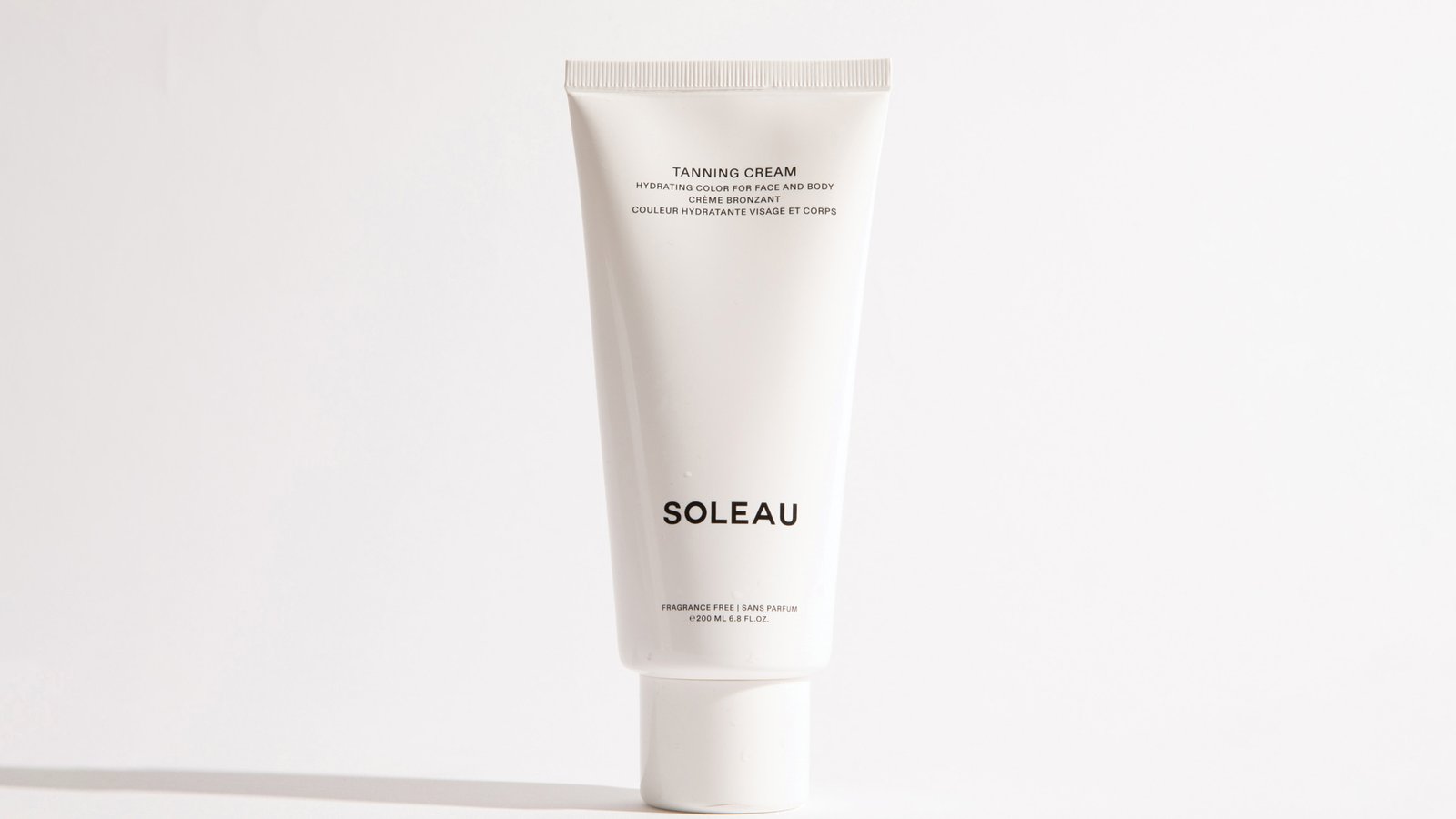
This is exactly why we keep coming back to Soleau Tanning Cream when readers ask about clean, natural-looking ingredient lists. It pairs both actives in a cream base instead of leaning on DHA alone the way some cheaper mousses do.
"The ingredients are clean and there is barely any scent once it develops. Color is natural and long lasting."
Erythrulose vs Other "Natural Tan" Claims
Erythrulose gets lumped in with a lot of marketing language it doesn't actually belong to. "Natural glow" oils and beta-carotene supplements all use the word "natural" too, same as bronzing drops, but they work in completely different ways.
Beta-carotene, taken orally or applied topically, can shift skin tone slightly over time by depositing pigment in fat layers. It doesn't involve the amino-acid reaction that DHA and erythrulose rely on, and the color shift is subtle at best.
Bronzing drops and tinted oils usually just sit on top of skin as a cosmetic stain that washes off with your next shower. They're not a self tan in the technical sense at all, just makeup with a different name.
Erythrulose is the real thing. It's a genuine tanning active with a documented mechanism, not a marketing rebrand of a product that was never going to change your skin color to begin with. That distinction matters if you're specifically shopping for ingredients that do what the label claims.
What to Look For on a Label
If you're shopping with ingredients in mind, erythrulose usually appears as "erythrulose" plainly on the ingredient list. There's no confusing alternate name to hunt for.
DHA is sometimes listed as "dihydroxyacetone" in full. Both are considered safe for cosmetic use by the FDA when applied topically, and neither is a new or experimental ingredient. Erythrulose has been used in self tanners since the 1990s.
Our full self tanner ingredients guide breaks down everything else worth checking on a label, from preservatives to fragrance carriers, if you want the fuller picture beyond just the two tanning actives.
And if you've specifically been told to avoid DHA for skin sensitivity reasons, our DHA-free self tanner guide covers what your other options look like, erythrulose included.
Applying an Erythrulose-Blend Formula the Right Way
Because part of the color takes days to show up, patience matters more here than with a fast DHA-only mousse. Don't judge the final result after just one application.
Apply on schedule, usually every one to three days depending on the product, and let the erythrulose portion catch up to the DHA portion over the course of a week. The color you see on day one isn't the color you'll have on day five.
I tested a DHA-erythrulose cream over three weeks a while back, applying every other night on my left arm and comparing it directly to a DHA-only mousse on my right. By day five, the mousse side had already started patching around my elbow. The blended side was still smooth and had actually deepened slightly since day three.
Exfoliating before your first application still matters, the same as with any self tanner. Erythrulose doesn't skip that step just because it develops more gently.
Is Erythrulose Actually Better?
Better isn't quite the right word. It's different, and it solves a problem DHA can't solve on its own.
My honest take after testing more ingredient lists than I can count: a formula that only uses DHA is cutting a corner, not keeping things simple. Erythrulose costs more to source, and skipping it usually means a faster fade and a higher chance of that orange cast creeping in after a few days.
I switched to erythrulose-DHA blends years ago after noticing my tan held its color longer and looked less like a spray-tan orange by day four. It's a small ingredient with an outsized effect on how natural your color actually looks toward the end of its life.
If DHA safety is the thing on your mind rather than erythrulose specifically, our deep dive on DHA safety covers the actual research behind it.
For the full picture on what "clean" self tanning even means beyond one or two ingredients, our best clean self tanner roundup is the place to start.
Curious what's actually in the formula we recommend most? Our breakdown of Soleau's full ingredient list shows exactly where erythrulose sits alongside everything else in the tube.
Shop Soleau Tanning Cream →Frequently Asked Questions About Erythrulose
What is erythrulose?
A plant-derived sugar, most often sourced from red berries, that reacts with amino acids in the top layer of skin to produce a tan. It works on the same principle as DHA but develops more slowly.
Is erythrulose safer than DHA?
Both have long safety records in cosmetic use at the concentrations found in self tanners. Erythrulose isn't a safer replacement for DHA so much as a complement. Formulas combine them because they behave differently, not because one is riskier.
How long does erythrulose take to develop color?
Two to three days to become visible, with the deepest color showing around day four to six. That's much slower than DHA, which typically shows color within a couple of hours.
Does erythrulose smell like regular self tanner?
It doesn't carry the biscuity DHA scent on its own. Most formulas still smell like self tanner overall though, because they combine erythrulose with DHA rather than replacing it entirely.
Can erythrulose be used alone without DHA?
Some formulas do this, and the result is lighter and more subtle, building gradually. Most cream and lotion self tanners still pair it with DHA so the color develops faster and goes deeper, while erythrulose smooths out the fade.