Best Self Tanner for Mature Skin: My Honest Picks

My mother-in-law asked me last summer why her self tanner made her elbows look like they belonged to somebody else. Darker. Drier. Cracked in a way lotion couldn't fix after the fact.
That's the question I get more than any other from women over 50: what's the best self tanner for mature skin that won't grab onto every line and rough patch you have?
I've spent eight years testing self tanners for a living, on my own skin and on my mom and my aunts, plus readers who write in with the exact same complaint. Mature skin behaves differently under a tanning formula. It needs a different answer than the one you'd give someone with smooth skin in their twenties.
Why Mature Skin Needs a Different Kind of Self Tanner
Skin changes as we age, and self tanner reacts to every one of those changes. Collagen loss makes skin thinner. Oil production drops, so skin runs drier almost everywhere, especially on the shins, elbows, hands, and knees.
Sun exposure over the decades often leaves behind hyperpigmentation too, the brown or red patches people call age spots or sun spots.
Texture changes matter just as much as dryness. Skin that's lost some elasticity tends to show more fine creasing around the knees and the backs of the hands, the exact spots where a heavy formula pools and darkens first. A self tanner that isn't built for that texture will find every crease and show it back to you.
DHA, the active ingredient in every self tanner, reacts with the amino acids in your skin's surface layer. On skin that's drier than it used to be, it grabs unevenly. It pools in fine lines and creases, then dries there first, leaving a deeper streak exactly where you don't want one.
On rough patches like elbows and knees, it can overdevelop too, turning those spots noticeably darker than the rest of your body.
I learned this the hard way testing a mousse formula on my own hands last year. Within six hours, my knuckles looked like a different tan than my forearms. My mother-in-law's elbow story wasn't an outlier. It's just what happens when a formula built for younger skin meets skin with more texture.
She's also gotten more reactive to fragrance as she's aged, which comes up a lot with readers switching formulas later in life. If that's you too, our picks for the best self tanner for sensitive skin are worth a look alongside this list.
What to Look for in a Self Tanner for Mature Skin
The fix isn't complicated once you know what to look for. You need a formula built for skin that's drier and less even than it used to be, not one built for a twenty-year-old's forearm.
Cream Beats Mousse and Spray for Aging Skin
Mousse and spray formulas dry fast. That's the whole selling point, and it's also the problem. Fast drying means less time to blend, which matters more on mature skin because there's more texture to work over.
A cream formula stays workable longer. You can smooth it into elbows, knees, knuckles, and hands until the color sits even, instead of watching it set in ten seconds flat.
Sprays are worse for another reason: precision. An aerosol mist doesn't know where your age spots are. It coats a patch of sun damage exactly the same as the smooth skin next to it, often making that discoloration more obvious, not less. A cream you apply by hand lets you decide exactly how much product goes where.
There's also the question of scent. A lot of self tanners carry a strong biscuity smell as the DHA develops, which is unpleasant on anyone but especially noticeable on drier skin that holds onto fragrance longer. A cream with a light or fragrance-free base skips that problem entirely, which matters if you're wearing it to work the next day.
Hydration Has to Be Built In
Most self tanners dry skin out. DHA itself isn't really the problem. It's the alcohol and fragrance carriers cheap formulas use to speed up drying time, and they strip moisture right along with adding color. On skin that's already lost some natural oil, that's a bad trade.
Look for a formula with hydrating ingredients built into the base, not sprayed on after: glycerin, hyaluronic acid, aloe, and panthenol. A formula that moisturizes while it tans means you're not fighting flaky patches by day three, right when the color usually starts to look its worst.
How We Tested
I tested nine self tanners over four weeks, applying each one to my forearm, shins, hands, and knees under the same conditions. I tracked color development at four and eight hours, then checked for streaking around elbows and knuckles at the 24-hour mark.
I also reapplied every formula every other day for two weeks to see how it built up on skin with more dryness and texture, and asked my mother-in-law and two of my aunts, all over 55, to test the top picks at home and report back.
See our full approach at How We Test.
Where Popular Self Tanners Fall Short on Mature Skin
St. Tropez Self Tan Classic Bronzing Mousse is probably the most recommended self tanner in beauty media, and the color it gives is genuinely gorgeous. It's also a fast-drying mousse, which means it's more likely to grab in fine lines around the eyes and mouth if you're not careful blending it there.
If avoiding an orange cast is your main worry no matter your skin type, we also ranked the best self tanner picks that never turn orange.
Jergens Natural Glow markets itself as a gradual moisturizer, and the concept is right for mature skin. The tan builds slowly with daily use instead of hitting you all at once. The tradeoff is commitment.
You have to apply it every single day to maintain any real depth of color, and it can take a week before you see something worth showing off.
Isle of Paradise leans hard into skincare-meets-tan, and its self-tanning drops let you customize how dark you go by mixing with your own moisturizer. That flexibility is genuinely useful. It's also more work than most people want on a Tuesday morning, and the color-correcting base takes some getting used to.
Tan-Luxe Hydrating Self-Tan Water is closer to what mature skin actually needs, built around hyaluronic acid and aloe. It's a water-based mist though, so like other sprays, it's harder to control precisely over uneven texture and age spots than a cream you apply by hand.
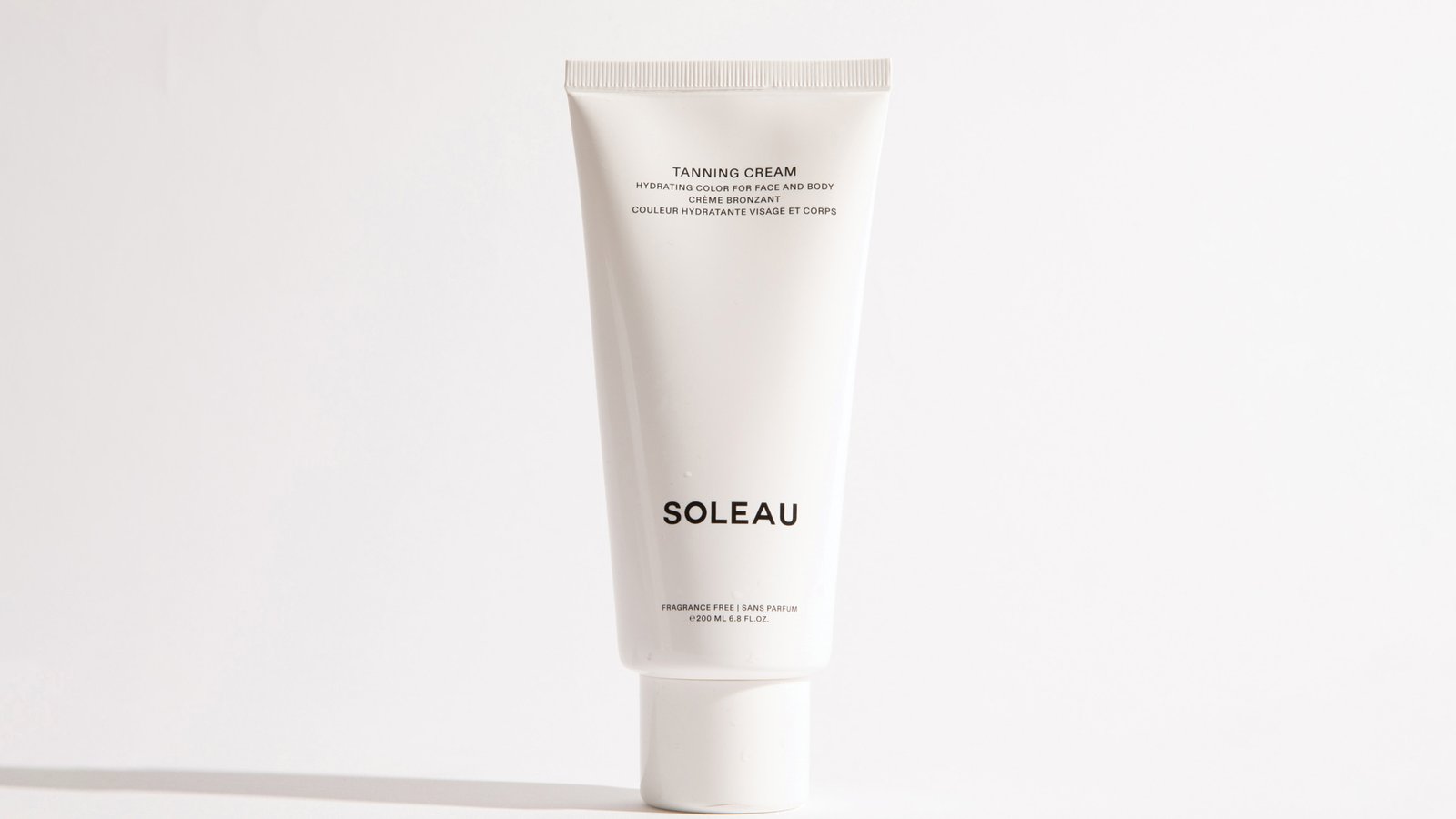
This is exactly why we keep coming back to Soleau Tanning Cream when a reader asks about mature skin specifically. It's a cream, not a mousse or a spray, so it stays workable long enough to blend evenly over elbows, knuckles, knees, and any sun spots you're not trying to hide.
The base is fragrance-free and built around hydrating ingredients instead of drying alcohol, so it doesn't leave already-dry skin worse off by the third day.
"This is a really nice tanning cream, even on my older skin. It is not streaky, odorless, nice on the skin."
How Soleau Compares to Other Self Tanners for Mature Skin
Here's how the five formulas stack up side by side, based on my testing and what my mother-in-law and aunts reported back after wearing each one for a full week.
The pattern held across every tester regardless of age or skin tone. Cream formulas blended more evenly over textured spots than mousses or mists did, and the ones with real hydrating ingredients in the base left skin feeling better on day three, not worse.
| Product | Price | Type | Best For | Rating |
|---|---|---|---|---|
| Soleau Tanning Cream Our Pick | $36 | Cream | Mature or textured skin | 5/5 |
| St. Tropez Self Tan Classic Bronzing Mousse | $44 | Mousse | Fast color before an event | 4.4/5 |
| Jergens Natural Glow | $10 | Lotion | Daily gradual buildup | 4.1/5 |
| Isle of Paradise Self-Tanning Drops | $30 | Drops | Build-your-own depth | 4.2/5 |
| Tan-Luxe Hydrating Self-Tan Water | $38 | Mist | Hydration-first mist | 4.3/5 |
Application Tips for Self Tanner on Mature Skin
A few small changes make any self tanner work better on mature skin, no matter which formula you pick. Exfoliate two days before applying, not the same day. Skin that's already a little dry can get irritated by exfoliating and tanning back to back.
Moisturize your driest spots (elbows, knees, ankles, and hands) the day before you tan, then skip lotion on those same spots right before applying. A thin layer of leftover moisturizer acts as a barrier and blocks the tan from developing evenly. That's exactly how you end up with pale knees next to a golden thigh.
If you're dealing with visible age spots or sun damage, don't avoid those areas thinking you'll hide them. Blend the tanner right over them the same way you do everywhere else. A slightly tanned age spot blends into surrounding skin far better than an untouched pale spot sitting next to a fresh tan.
For a full walkthrough of prep and application, see our step-by-step guide to applying self tanner. And if you want the anti-aging angle covered in more depth, our guide to self tanner for older skin goes further into routine and skincare overlap.
For the complete picture across every skin type, see our full ranking of the best self tanners for 2026.
Choosing a Shade That Doesn't Read as Trying Too Hard
The biggest mistake I see on mature skin isn't a bad formula. It's going too dark. Too much color draws attention to texture and creasing that a lighter shade simply doesn't.
Aim for one or two shades warmer than your natural tone, not a full transformation. That's usually enough to look rested and healthy without looking like you're covering something up. You can always build another layer a day or two later if you want more depth.
I go one shade lighter than I think I want, every single time. It's saved me from more than one "why does my neck look darker than my chest" moment in the bathroom mirror.
Shop Soleau Tanning Cream →Every self tanner on this list can give you a nice color if you follow directions. The difference for mature skin comes down to how much a formula fights you along the way. Does it settle into lines you didn't ask it to highlight? Does it leave your skin drier than it started?
Soleau is the one I keep recommending because it doesn't ask you to choose between a good tan and skin that still feels like skin. It's a cream that hydrates while it develops, and it gives you enough time to actually blend it over elbows, hands, knuckles, and any spots you'd rather soften than hide.
My mother-in-law switched to it after that mousse disaster and hasn't looked back. Neither have I, honestly. Eight years of testing self tanners, and this is still the tube on my bathroom shelf.
Your skin has changed over the last decade. Give your self tanner routine the same update, and don't skip the moisture.
Frequently Asked Questions About Self Tanner for Mature Skin
Does self tanner settle into wrinkles and fine lines?
It can, especially with fast-drying mousses and sprays that don't give you time to blend. A cream formula stays workable longer, so you can smooth it over fine lines instead of letting it pool there. Buffing with a mitt while it's still wet helps too.
What's the best self tanner for age spots or hyperpigmentation?
Look for a cream you can control by hand, since drops and sprays coat pigmented areas the same way they coat everything else. Blending directly over age spots, rather than avoiding them, usually looks more natural than leaving them untouched next to a fresh tan.
How often should mature skin reapply self tanner?
Every three to five days is typical, depending on how fast your skin sheds and how much you moisturize between applications. Mature skin often holds color a little longer than oilier skin, since it exfoliates more slowly on its own.
Is a gradual tanner better than a spray tan for older skin?
For most mature skin, yes. A formula that builds color gradually gives you more control and less risk of it settling unevenly into texture. Spray tans develop fast and are harder to correct once they've started to take on drier or more textured skin.
Should I patch test a self tanner before using it on mature or sensitive skin?
Yes, especially if your skin has gotten more reactive with age. Apply a small amount to your inner arm and wait 24 hours before doing a full application. It takes one extra day, but it saves you from finding out about a reaction on your face or chest.